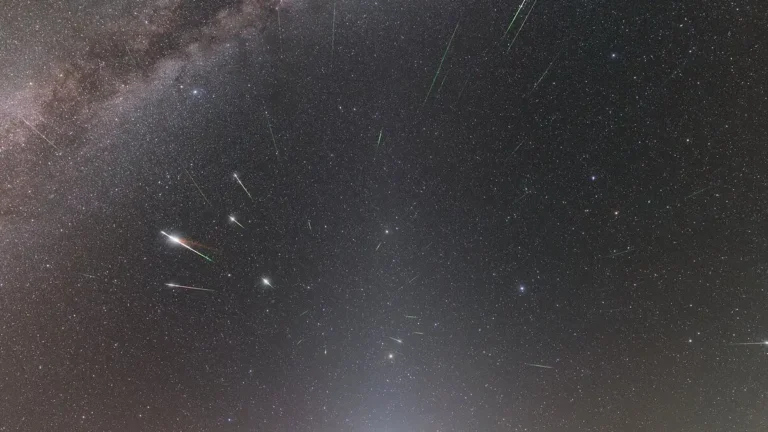
• Eta Aquariids peak May 5-6 under bright moonlight

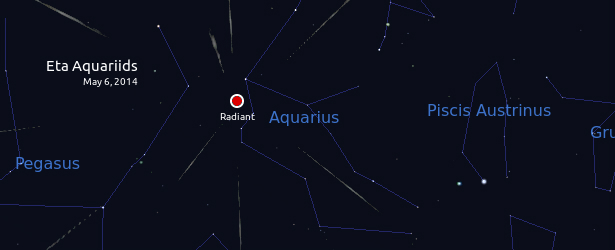
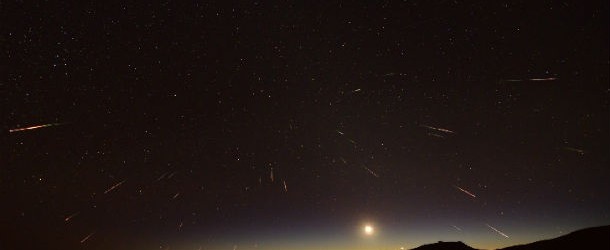
    The Eta Aquariid meteor shower peaks on the night of May 5-6, but strong moonlight will sharply reduce visible rates during this year’s maximum. Under ideal dark skies, the shower can produce up to about 50 meteors per hour, but bright moonlight in 2026 is expected to keep observed rates below 5 meteors per hour.

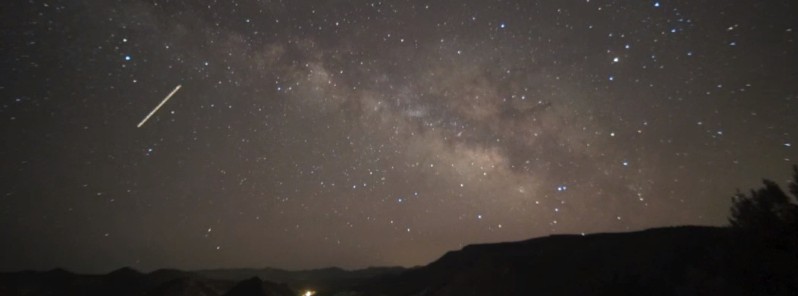
  • Eta Aquariid meteor shower peaks May 5–6, 2025

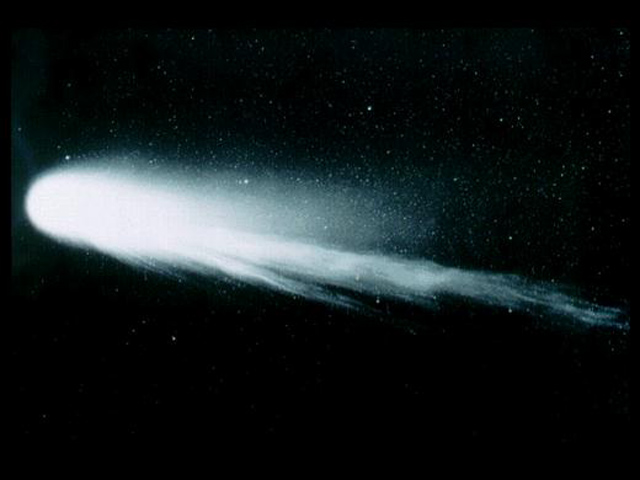
    The Eta Aquariid meteor shower, caused by debris from Halley’s Comet, peaks on May 5–6, 2025. Observers in the Southern Hemisphere may see up to 50 meteors per hour under dark skies before dawn, while those in mid-northern latitudes may observe 10–20 meteors per hour.

  • No moonlight to interfere with 2016 Eta Aquarids

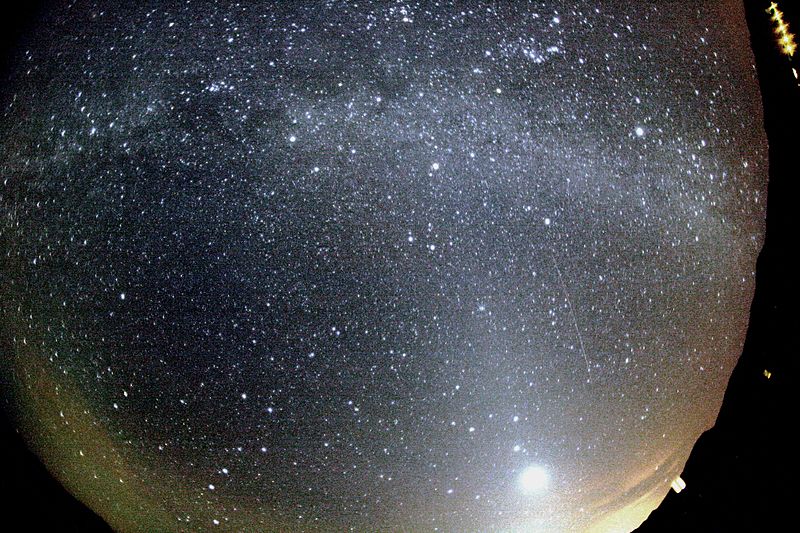
    The Eta Aquarid meteor shower will reach its maximum rate of activity this year on the night of May 5 and the morning of May 6. This is an above average shower, capable of producing up to 60 meteors per hour at its peak, with most of the activity seen in the…

  • 2013 Eta Aquarid meteor shower overview

    This year’s annual Eta Aquarid meteor shower peaked on May 5/6 as our planet passed through a stream of debris from Halley’s Comet. International Meteor Organization (IMO) reported peak of 135 meteors per hour on May 6, 2013. Far more than initially…

  • Halley’s Comet to put on meteor show next week

    If you step outside before dawn during the next week or so, you might try to catch a view of some “cosmic litter” that has been left behind in space by Halley’s Comet: the Orionid meteor shower.The Orionids can best be described as a junior version of the famous