• Astronomers detect birth of new solar system

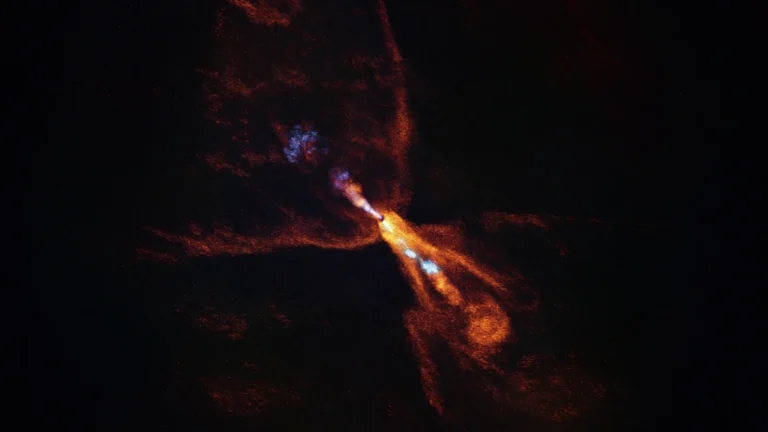
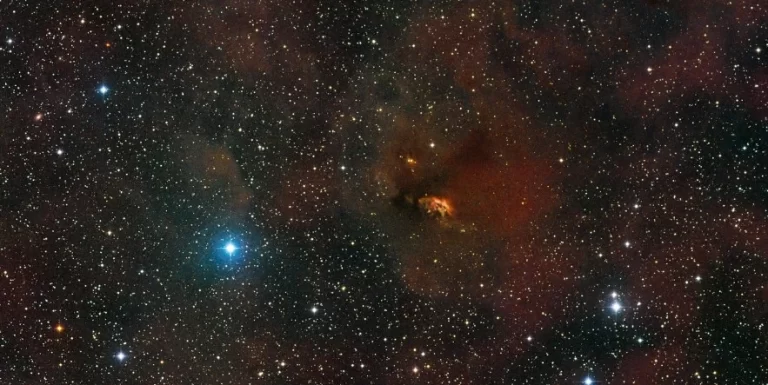
    For the first time, astronomers have observed the condensation of solid planet-forming material in the protoplanetary disc of the protostar HOPS-315, located in the Orion B molecular cloud, about 1 300 light-years away.
  • Astronomers discover oceans of water vapor in planet-forming disc around young star

    Astronomers using the Atacama Large Millimeter/submillimeter Array (ALMA) have discovered vast reservoirs of water vapor in the disc around HL Tauri, a young star 450 light-years away from Earth, unveiling processes that may lead to the birth of planets rich in water and redefining our search for life in the universe.

  • ESO’s VLT spots first direct evidence of planet birth

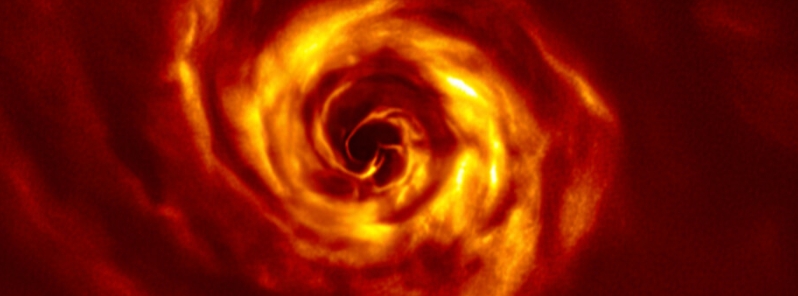
    The European Southern Observatory's Very Large Telescope (ESO's VLT) have revealed possible signs of a star system being born. Around young star, AB Aurigae lies a dense disc of gas and dust, where astronomers have spotted a prominent spiral structure with a…

  • ESO telescope captures mysterious dimming of Betelgeuse

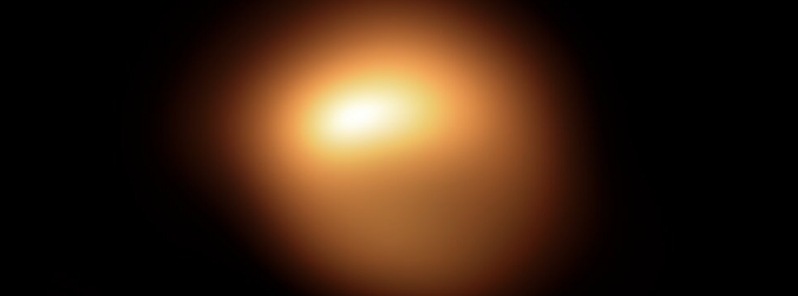
    The European Southern Observatory's (ESO) Very Large Telescope (VLT) has captured the unusual dimming of Betelgeuse, a red supergiant star in Orion constellation. The images of the star's surface not only show it losing luminosity but also its shape…

  • Closest temperate world orbiting quiet star discovered

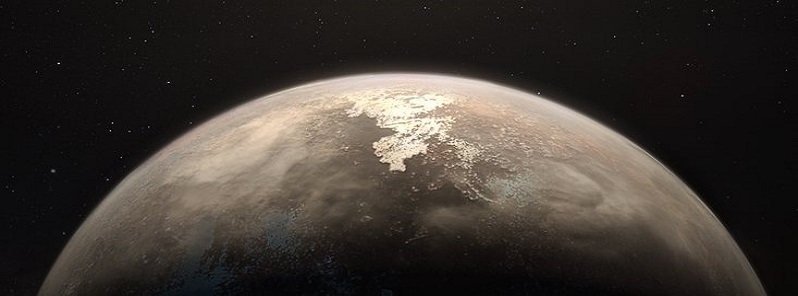
    A temperate Earth-sized planet has been discovered only 11 light-years from the Solar System by a team using ESO’s unique planet-hunting HARPS instrument. The new world has the designation Ross 128 b and is now the second-closest temperate planet to be…

  • ESO: Merging neutron stars scatter gold and platinum into space

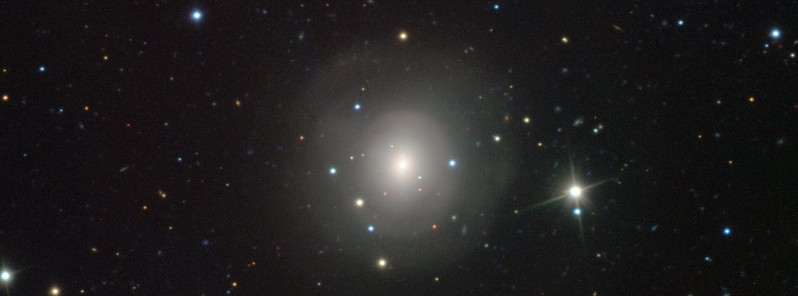
    ESO’s fleet of telescopes in Chile have detected the first visible counterpart to a gravitational wave source. These historic observations suggest that this unique object is the result of the merger of two neutron stars. The cataclysmic aftermaths of this kind…

  • The strange structures of the Saturn Nebula

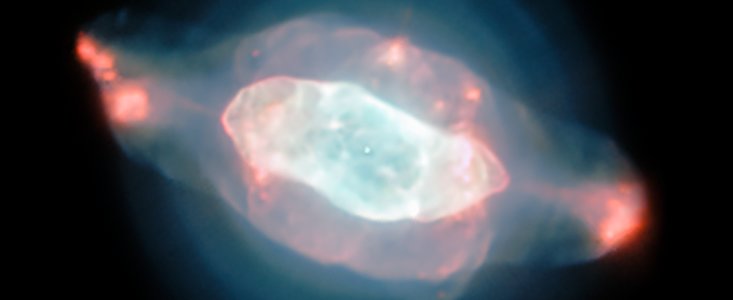
    The spectacular planetary nebula NGC 7009, or the Saturn Nebula, emerges from the darkness like a series of oddly-shaped bubbles, lit up in glorious pinks and blues. This colorful image was captured by the powerful MUSE instrument on ESO’s Very Large Telescope…

  • New infrared images of Jupiter

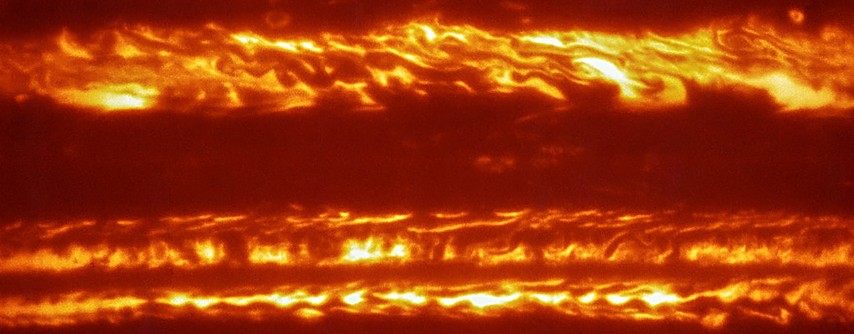
    Astronomers have used ESO’s Very Large Telescope to obtain spectacular new infrared images of Jupiter. They are part of a campaign to create high-resolution maps of the giant planet. A team led by Leigh Fletcher of the University of Leicester in the United…