
El Niño prompts drought alerts in El Salvador and Honduras, Panama declares national emergency
El Salvador declared a nationwide Red Alert for meteorological and agricultural drought on August 25, while Honduras expanded its drought Red Alert from 75 to 103 municipalities on August 26. Panama also declared a national state of emergency under Resolution No. 102-26 in response to El Niño-related risks, including drought, flooding and landslides. The measures come amid rainfall deficits, prolonged dry periods and increasing water stress as El Niño continues to strengthen.
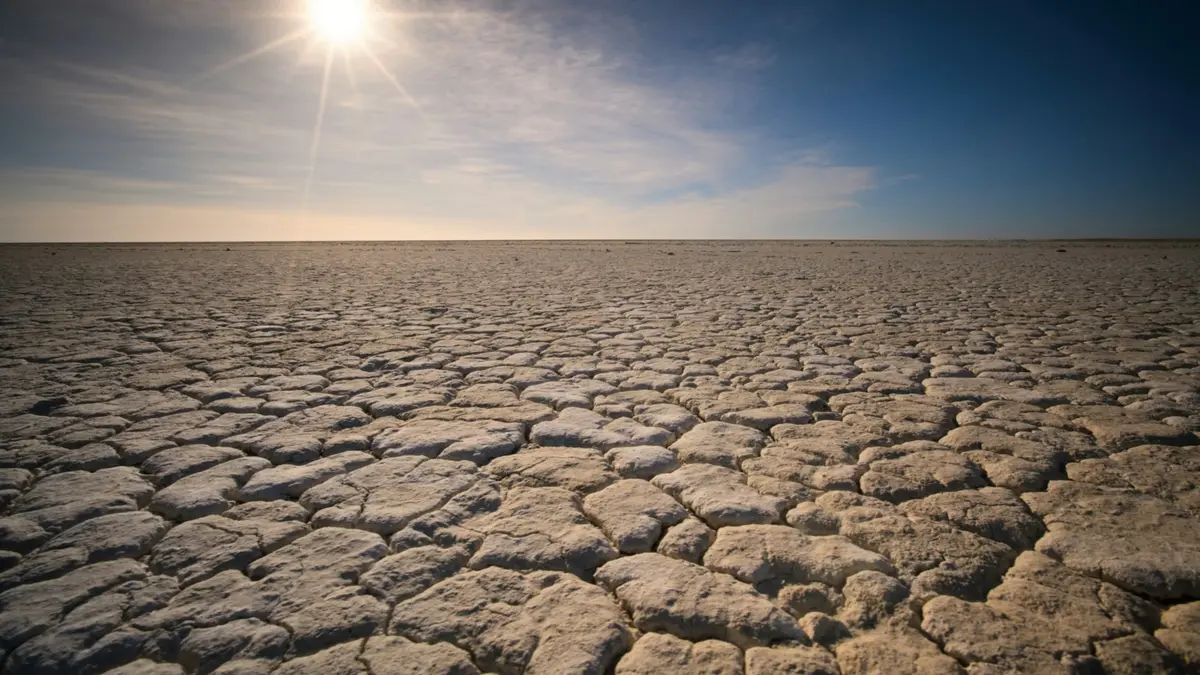
Image credit: Oleksandr Sushko
Honduras’ Secretariat of Risk Management and Contingencies (COPECO) expanded its drought Red Alert from 75 to 103 municipalities on August 26. The action followed a drought emergency declared on August 19.
El Salvador’s Directorate General of Civil Protection declared its nationwide Red Alert after technical assessments by the Ministry of Environment and Natural Resources (MARN) and the Ministry of Agriculture and Livestock documented persistent rainfall irregularities.
The declaration followed a 41% rainfall deficit in May and three meteorological drought episodes during 2026. The latest episode began on August 7 and produced up to 19 consecutive dry days at monitored locations.
El Salvador also registered 14 temperature records during August, including a maximum of 43.9°C (111°F) at Santa Rosa de Lima. Civil Protection said the heat and rainfall deficit were increasing pressure on water availability, agricultural and livestock production, livelihoods and food security.
MARN’s August–October climate outlook assigned a 70–90% probability of below-normal rainfall to the paracentral and eastern zones, 50–70% to the central zone and 40–50% to the western zone.
Civil Protection ordered continued monitoring of rainfall accumulation, dry-period duration, soil moisture, river flows, water-source levels, crop conditions and food-security indicators. The national civil-protection system and its departmental and municipal commissions were activated to coordinate preparedness and response measures.
Panama’s Council of Cabinet declared a broader national State of Emergency associated with El Niño under Resolution No. 102-26. Unlike the drought alerts in El Salvador and Honduras, Panama’s declaration covers existing flood impacts and the possibility of further flooding, landslides and drought in different parts of the country.
The resolution authorizes preventive, mitigation and response measures. It also permits special emergency procurement through June 30, 2027.
The Presidency said 11 watersheds were already experiencing water stress, with low river levels affecting hydroelectric facilities and drinking-water treatment plants. Other parts of Panama, particularly Bocas del Toro, had recorded above-normal rainfall and faced continued flooding and landslide risks.
The Institute of Meteorology and Hydrology of Panama forecast rainfall deficits from October through December 2026 and from January through March 2027. The associated heat and rainfall effects are expected to continue through May 2027.
Authorities said the forecast conditions could affect water resources, agriculture, livestock production and hydroelectric generation. Low lake and reservoir levels could also affect ship traffic and water availability for Panama Canal operations.
The three government actions came as the US National Oceanic and Atmospheric Administration’s Climate Prediction Center reported on August 13 that El Niño was strengthening, with a greater than 90% probability of a very strong event during the Northern Hemisphere fall and winter of 2026–27. NOAA also assigned a 69% probability that the October–December 2026 season would exceed the strength of previous El Niño events in its record dating to 1950, while cautioning that even an event of this magnitude does not guarantee typical impacts in every region.
El Salvador’s current drought conditions precede the expected transition into the dry season during the second half of October. The dry season is expected to become established near the end of October or beginning of November.
The nationwide Red Alert will remain in force until Civil Protection modifies, extends, or withdraws it based on subsequent hydrometeorological, agricultural, and water-supply monitoring.
References:
1 Latin America & The Caribbean Weekly Situation Update – Relief Web – August 28, 2026
2 Declaration of Red Alert for Meteorological and Agricultural Drought – General Directorate of Civil Protection – August 25, 2026
3 Government Declares National State of Emergency Due to El Niño – Presidency of the Republic of Panama – August 26, 2026

I am an Assistant Editor and Severe Weather & Science Journalist at The Watchers, specializing in real-time severe weather coverage, geophysical event reporting, and research-driven scientific analysis. You can reach me at rishav(at)watchers(.)news.

Commenting rules and guidelines
We value the thoughts and opinions of our readers and welcome healthy discussions on our website. In order to maintain a respectful and positive community, we ask that all commenters follow these rules.