
Second deadly landslide in six weeks devastates Rubaya coltan mines in eastern DR Congo
A landslide triggered by heavy rainfall struck the Rubaya coltan mining area in North Kivu, eastern Democratic Republic of the Congo, on March 3–4, 2026, collapsing artisanal mining tunnels and killing more than 200 people just weeks after a similar disaster at the same site in late January.
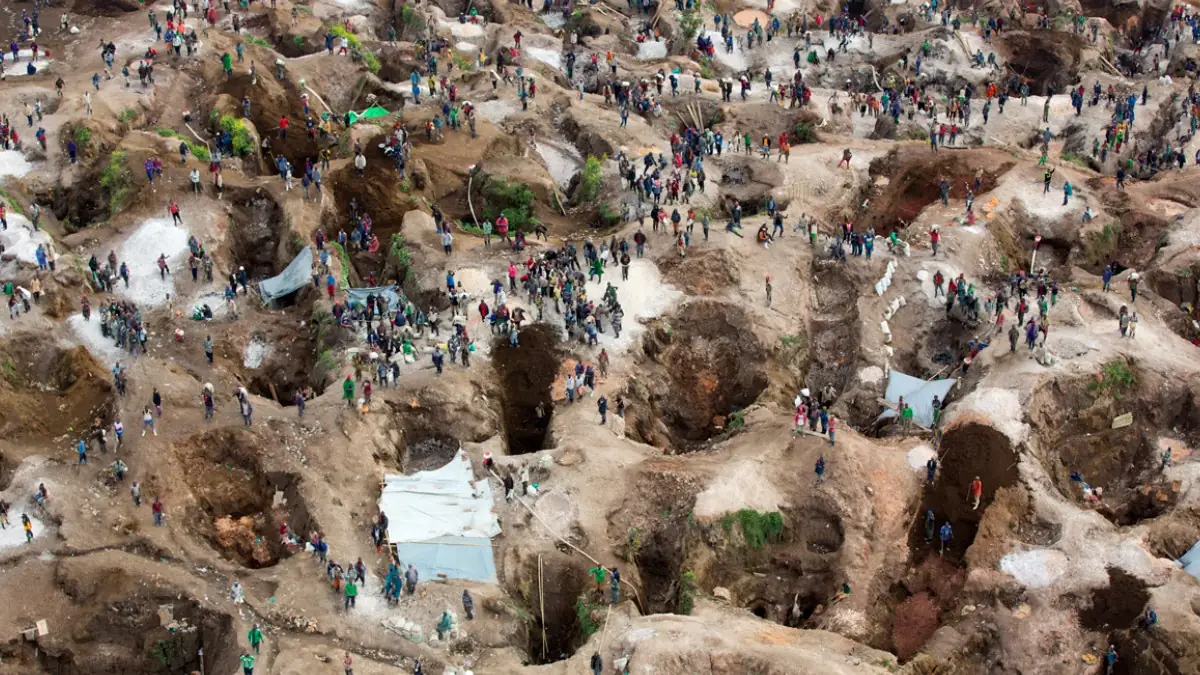
Luwowo Coltan mine near Rubaya, North Kivu, Democratic Republic of Congo. Credit: MONUSCO
A deadly landslide struck the Rubaya coltan mining area in North Kivu province, eastern Democratic Republic of the Congo, on March 3–4, 2026, collapsing artisanal mining tunnels and killing more than 200 people, according to officials and media reports.
Authorities said heavy rainfall destabilized slopes above a network of hand-dug tunnels used by thousands of artisanal miners extracting coltan, a mineral widely used in electronic components.
The collapse occurred only weeks after another deadly landslide struck the same mining complex in late January 2026, when several artisanal mining tunnels at the Rubaya coltan site collapsed and killed more than 200 miners.
The Rubaya mining area lies in Masisi Territory, about 50 km (31 miles) northwest of the provincial capital Goma, and is one of the most important coltan-producing regions in the Democratic Republic of the Congo. Coltan (columbite-tantalite) is the primary source of tantalum, a metal widely used in electronic components such as capacitors found in smartphones, computers, and other electronic devices.
Officials cited in international media said the landslide buried large numbers of miners working underground as well as people living in nearby settlements connected to the mining operation.
Rescue efforts were complicated by unstable ground conditions and the depth of the collapsed tunnels. Many victims remained trapped beneath mud and debris as recovery operations continued, and authorities warned the final death toll could rise.
Humanitarian summaries released several days after the disaster suggested the number of fatalities could exceed 300, although that figure has not yet been independently confirmed by primary authorities.
Local authorities temporarily halted mining activities following the latest landslide and ordered residents living near the mining zone to relocate amid concerns that additional collapses could occur.
Rubaya is dominated by artisanal mining operations, where workers dig narrow shafts and tunnels manually using basic tools and minimal engineering support. The underground galleries often branch into complex networks extending into hillsides, leaving large unsupported cavities beneath the surface.
Over time, these excavations weaken the structural integrity of the slopes. When multiple tunnels intersect within the same hillside, the ground can behave like a honeycomb structure, significantly increasing the risk of sudden collapse.
Heavy rainfall is one of the most common triggers for mine collapses and landslides in the region. Rainwater infiltrates soil and mining waste, saturating the ground and increasing its weight while raising pore-water pressure inside fractures and tunnels. Under these conditions, weakened slopes can fail rapidly.
Rubaya lies in steep mountainous terrain within the Albertine Rift, part of the East African Rift system, where highly weathered volcanic soils and fractured rock formations are naturally prone to landslides.
Large numbers of miners working simultaneously underground further increase exposure. Thousands of workers are believed to operate across the Rubaya mining complex, and hundreds may be present inside tunnels at any given time.
The mining district lies in territory controlled by the M23 rebel movement, which has held the area since 2024 amid the ongoing conflict in eastern parts of the country.
Limited regulatory oversight and the rapid expansion of informal mining operations have contributed to unsafe working conditions, with tunnels frequently excavated without structural reinforcement or geological assessment.
References:
1 Democratic Republic of the Congo – Landslide – DG ECHO – March 11, 2026
2 At least 300 dead in landslide in Congo – DW – March 8, 2026
3 Landslide kills over 200 people at Congo’s Rubaya mine, mines ministry says – Reuters – March 4, 2026

I'm a dedicated researcher, journalist, and editor at The Watchers. With over 20 years of experience in the media industry, I specialize in hard science news, focusing on extreme weather, seismic and volcanic activity, space weather, and astronomy, including near-Earth objects and planetary defense strategies. You can reach me at teo /at/ watchers.news.

Commenting rules and guidelines
We value the thoughts and opinions of our readers and welcome healthy discussions on our website. In order to maintain a respectful and positive community, we ask that all commenters follow these rules.