
Storm Goretti brings widespread winter disruption across the UK, heavy snow in Wales
Storm Goretti underwent explosive cyclogenesis, bringing widespread snow, ice, and strong winds across the United Kingdom this week. The storm was named by Meteo France on January 6, 2026. It caused major transport disruption, school closures, and power interruptions across Wales, northern England, Scotland, and Northern Ireland. The UK Met Office has issued multiple yellow and amber warnings for snow and ice, remaining in effect through January 8, 2026.
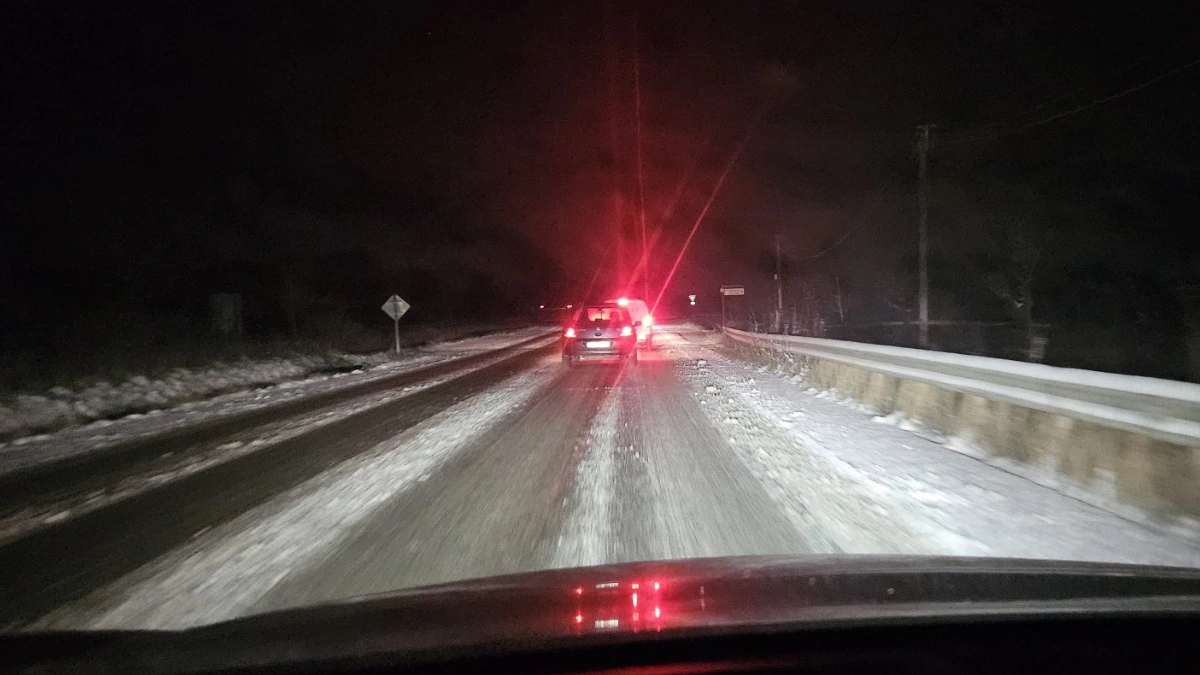
Snow-covered roads in France on January 6, 2026. Credit: Meteo France
Storm Goretti is currently located over the Irish Sea, with central pressure dropping to around 970 hPa, producing severe wintry weather across the UK.
The system formed over the North Atlantic and underwent explosive cyclogenesis, with pressure falling more than 24 hPa within 24 hours.
Meteorologists warned that it could be one of the strongest snowstorms to strike the UK in 20 years.
Widespread snowfall has been reported across Scotland, northern England, and parts of Wales, with snow depths reaching 10–20 cm (4–8 inches) in upland areas.
Localized accumulations of over 30 cm (12 inches) have been reported in the Scottish Highlands. Sleet and freezing rain have produced hazardous ice formation on untreated surfaces in lower elevation regions.
Storm Goretti (named by Météo‑France) is expected to bring a spell of wet and windy weather across parts of the country on Thursday and into Friday. With cold air in situ across the UK, rain is likely to turn readily to snow in places
— Met Office (@metoffice) January 6, 2026
Latest info https://t.co/QwDLMfRBfs pic.twitter.com/5V8Gskl7i3
The UK Met Office issued multiple warnings on January 7, including an amber snow warning for northern England and parts of Scotland, yellow snow and ice warnings for Wales, the Midlands, and southern England.
Meanwhile, yellow wind warnings are in place for coastal areas exposed to the Irish Sea. Wind gusts reached 115 km/h (70 mph) along western coasts, with inland gusts of 70–90 km/h (45–55 mph).
Hundreds of school closures have been reported across Scotland, Northern Ireland, and parts of England. Several key transport corridors, including the M62, A9, and A55, experienced severe travel disruption due to drifting snow and ice.
Some 380 schools have been shut in Wales, at least 300 in Scotland, 203 in Northern Ireland, and more than 230 in England. Airports in Manchester, Glasgow, and Belfast reported delays and cancellations as visibility dropped below operational thresholds, reported BBC.
Multiple trains were delayed and cancelled through January 6. London North Eastern Railway (LNER) has advised people not to travel between Edinburgh and Aberdeen, adding that there is “major disruption” across its network following heavy snowfall.
Train services in northern Scotland are subject to cancellations, alterations, and heavy delays, with disruption expected until the end of the day on January 8, National Rail. Snowplows have been used between Aberdeen and Inverness in an attempt to clear snowdrifts.
Snowfall intensified overnight into January 7, particularly across Snowdonia and mid-Wales uplands in Wales, with snow depths reaching 15 cm (6 inches). Rural communities experienced localized power outages and road closures as temperatures fell below −8°C (17°F).
As of 12:00 UTC on January 7, the Met Office forecast indicated that snow and high winds would continue through January 8–9, with further risk of drifting snow, freezing rain, and ice formation. Conditions are expected to gradually ease from the northwest by the weekend as the low-pressure system weakens over the North Sea.
Up to 20 cm (5 inches) of snow is forecast to fall in parts of England and Wales on the nights of January 8 and 9, with a yellow warning running from 18:00 local time (LT) on January 8 until 12:00 LT on January 9, covering parts of central and southern England and Wales.
Residents have been advised to follow official warnings and travel updates from national and local authorities, as hazardous travel, ice accumulation, and localized blizzard conditions continue through January 8.
Storm Goretti comes after a severe winter storm killed at least six people in France and Bosnia, bringing heavy snow, freezing rain, and temperatures below −10°C (14°F). The storm caused flight cancellations in Paris and Amsterdam, and widespread power and travel disruptions across Europe.
Read more:

I am an Assistant Editor and Severe Weather & Science Journalist at The Watchers, specializing in real-time severe weather coverage, geophysical event reporting, and research-driven scientific analysis. You can reach me at rishav(at)watchers(.)news.

Commenting rules and guidelines
We value the thoughts and opinions of our readers and welcome healthy discussions on our website. In order to maintain a respectful and positive community, we ask that all commenters follow these rules.