
Category 5 Hurricane Melissa makes historic landfall in Jamaica
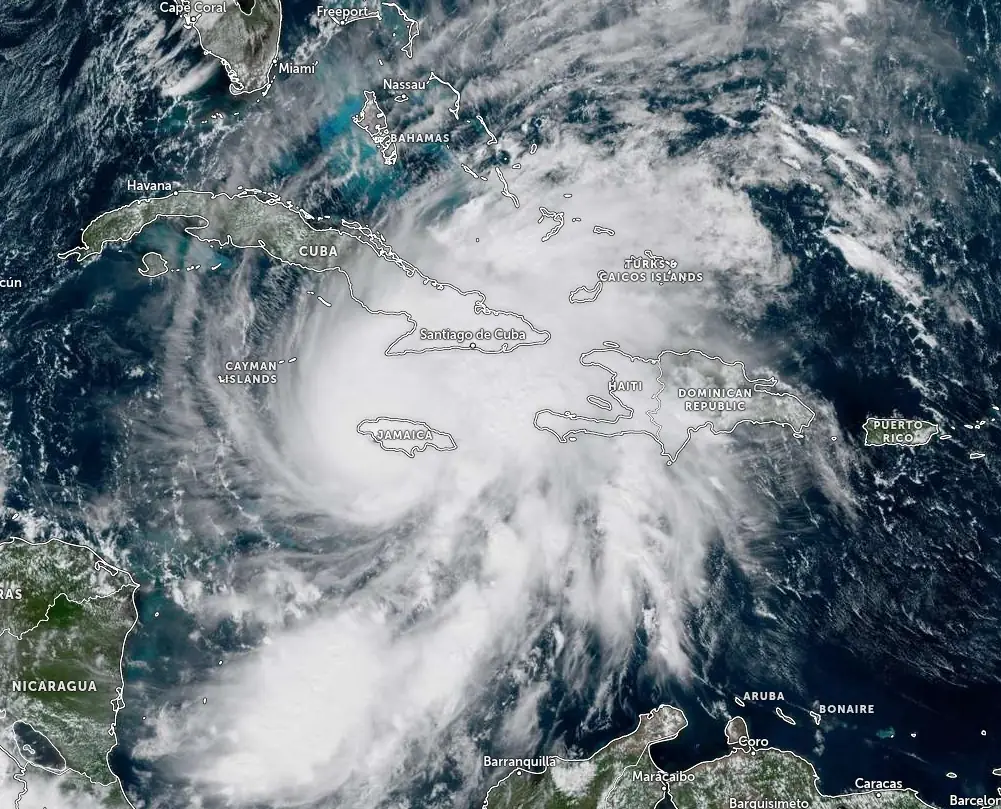
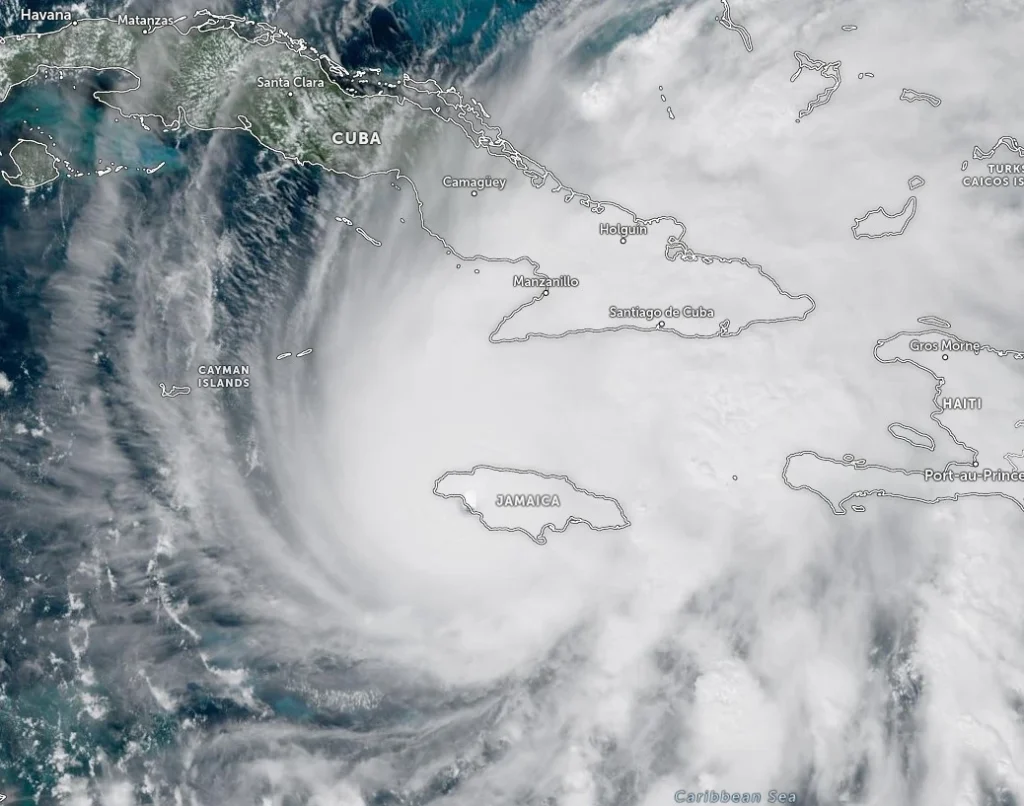
Category 5 Hurricane Melissa made historic landfall over southwestern Jamaica near New Hope at 17:00 UTC (12:00 local time) on October 28, 2025. Melissa is one of the most powerful hurricane landfalls on record in the Atlantic basin.

Satellite image of Category 5 Hurricane Melissa as of making landfall over Jamaica 17:00 UTC on October 28, 2025. Credit: NOAA/GOES-19, RAMMB/CIRA, The Watchers
THIS IS AN EXTREMELY DANGEROUS AND LIFE-THREATENING SITUATION!
- NHC advises residents in the affected region not to leave shelter when the eye passes overhead, as winds will rapidly intensify on the opposite side. Remain sheltered until hazardous conditions have fully passed.
- Use an interior room without windows, with as many walls as possible between you and the exterior. Avoid areas exposed to trees that could fall.
- For added protection, cover yourself with a mattress and wear a helmet to reduce injury from debris.
At the time of landfall, Melisa had maximum sustained winds of 295 km/h (185 mph), and a minimum central pressure of 892 hPa.
The National Hurricane Center (NHC) started issuing hourly advisories as the storm moved onshore, warning people that this was the “last chance to protect your life.”
“This is an extremely dangerous and life-threatening situation,” NHC forecasters said. “Take cover now! Failure to adequately shelter may result in serious injury and loss of life. Residents in Jamaica who experience the eye should not leave their shelter, as winds will rapidly increase within the backside of the eyewall of Melissa.”
At least eight deaths have already been attributed to Melissa, including five from flooding and landslides in Hispaniola and three indirect fatalities in Jamaica. At least 28 have been injured.
The storm forced a NOAA Hurricane Hunter aircraft to abort its mission inside Hurricane Melissa on October 28, the second day in a row, due to extreme turbulence.
“During the event, the aircraft briefly experienced forces stronger than normal due to turbulence,” officials said. “While this does not automatically indicate damage, standard safety procedures require an inspection before returning to operations.”
Melissa is the thirteenth named storm, fifth hurricane, fourth major hurricane, and third Category 5 hurricane of the 2025 Atlantic hurricane season.
From October 25 to 27, Melissa rapidly intensified into a Category 5 hurricane, becoming the strongest hurricane of the season and the strongest tropical cyclone of 2025 globally.
Melissa’s central pressure had dropped to 892 hPa by 11:00 EDT (15:00 UTC), surpassing Hurricane Katrina (2005), which had an estimated minimum central pressure of 902 hPa at its peak. It is now tied with the Labor Day hurricane (1935) as the third strongest Atlantic hurricane on record.
The first place is currently held by Hurricane Wilma (2005), which had a minimum central pressure of 882 hPa, and is followed by Hurricane Gilbert (1988) with a central pressure of 888 hPa at its peak.
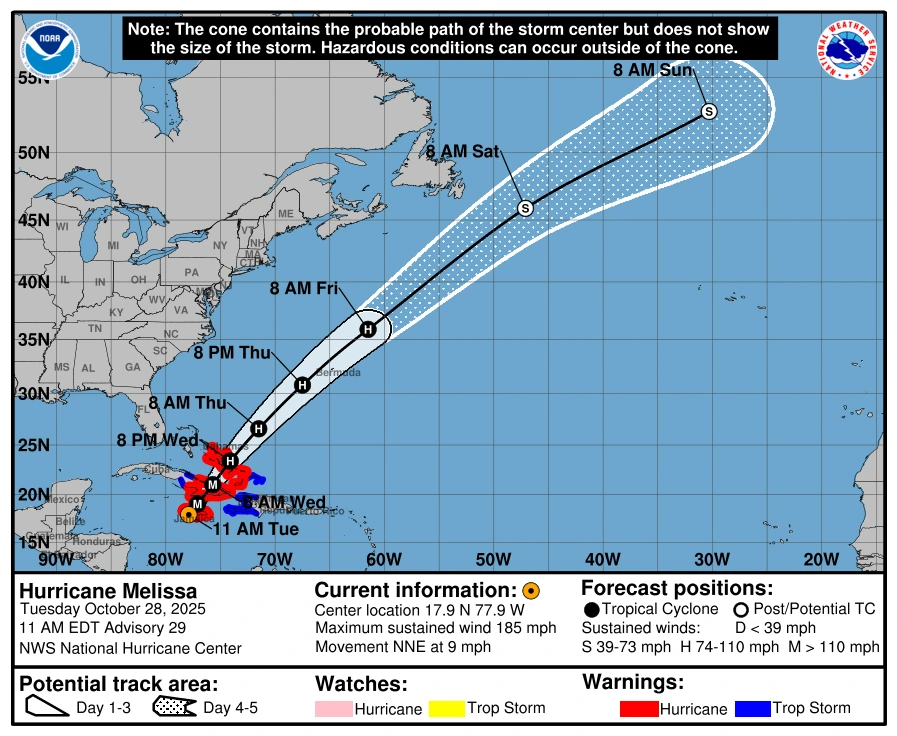
Catastrophic hurricane-force winds are spreading over Jamaica within the eyewall of Melissa. Total structural failure is likely near the path of Melissa, especially in higher elevation areas where wind speeds atop and on the windward sides of hills and mountains could be up to 30 percent stronger.
Melissa is expected to bring rainfall of 380 to 760 mm (15 to 30 inches) to portions of Jamaica and additional rainfall of 150 to 200 mm (6 to 8 inches) with localized maxima up to 300 mm (12 inches) for southern Hispaniola through Wednesday, with storm total local maxima of 1 020 mm (40 inches) possible. Catastrophic flash flooding and numerous landslides are likely.
For eastern Cuba, storm-total rainfall of 250 to 510 mm (10 to 20 inches), with local amounts up to 640 mm (25 inches), is expected through Wednesday, resulting in life-threatening, potentially catastrophic flash flooding and numerous landslides.
Over the Southeast Bahamas, rain is expected to develop later today and continue into Wednesday. Total rainfall of 130 to 250 mm (5 to 10 inches) is expected, leading to areas of flash flooding. For the Turks and Caicos, rainfall totals of 50 to 100 mm (2 to 4 inches) are expected. Heavy rain may begin to affect Bermuda on Thursday night.
References:
1 Hurricane Melissa Tropical Cyclone Update – NHC – October 28, 2025

I am an Assistant Editor and Severe Weather & Science Journalist at The Watchers, specializing in real-time severe weather coverage, geophysical event reporting, and research-driven scientific analysis. You can reach me at rishav(at)watchers(.)news.

A correlation exists between the intensity of hurricanes, typhoons, and solar activity, and Earth’s magnetic field.
Namely, Solar activity and Earth’s magnetic field are the drivers of these powerful storms. And since, solar activity has increased and the strength of Earth’s magnetic field is declining, then expect horrific storms to become the norm.