
Dozens of homes damaged after tornado strikes Bojongsoang, West Java
A brief but intense tornado struck Bojongsoang District, Bandung, West Java, at around 14:00 LT (07:00 UTC) on October 5, 2025, damaging at least 67 houses and injuring one resident. The event affected Bojongsoang and Lengkong villages, causing roof damage and downed trees before dissipating minutes later.
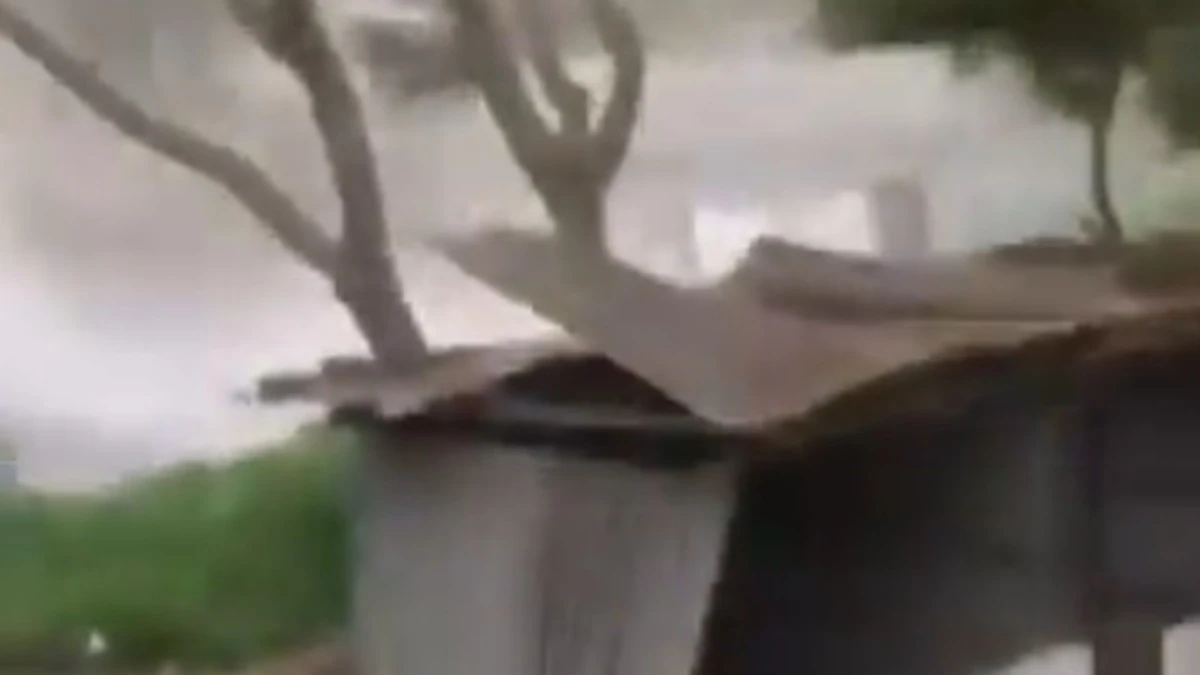
Dozens of homes damaged after tornado strikes Bojongsoang, West Java on October 5, 2025. Credit: FPMKI
The tornado struck the villages of Bojongsoang and Lengkong, producing strong rotating winds that caused localized damage across residential areas.
Preliminary assessments by local authorities and the Regional Disaster Management Agency (BPBD) recorded 67 damaged houses, mostly with torn or lifted roofs. One resident sustained minor injuries after being struck by debris and was taken to Welas Asih Hospital for treatment.
Fallen trees temporarily blocked access routes, including at Jembatan Biru Cijagra, where debris hindered traffic. Requests for emergency relief materials such as tarpaulins, food, and basic supplies were submitted to the subdistrict and BPBD offices.
Meteorological conditions at the time indicated convective cloud buildup and atmospheric instability over southern Bandung, consistent with early wet-season transition patterns in West Java.
The Meteorology, Climatology, and Geophysics Agency (BMKG) has not yet released an official wind speed analysis or classification on the Fujita scale.
Tornadoes are not rare in West Java, though they usually peak between November and January during the early wet season. Events in early October, such as the Bojongsoang case, are less frequent but still possible as convection increases with the seasonal transition.
West Java’s terrain and humid basin conditions around Bandung favor brief rotating updrafts when warm surface air meets upper-level shear. They are typically short-lived, lasting only a few minutes but capable of damaging roofs and trees.

I'm a dedicated researcher, journalist, and editor at The Watchers. With over 20 years of experience in the media industry, I specialize in hard science news, focusing on extreme weather, seismic and volcanic activity, space weather, and astronomy, including near-Earth objects and planetary defense strategies. You can reach me at teo /at/ watchers.news.

Commenting rules and guidelines
We value the thoughts and opinions of our readers and welcome healthy discussions on our website. In order to maintain a respectful and positive community, we ask that all commenters follow these rules.