
Isesaki breaks Japan’s all-time heat record with 41.8°C (107.2°F) on August 5
Isesaki in Gunma Prefecture recorded 41.8°C (107.2°F) at 14:26 LT on August 5, 2025, setting Japan’s highest temperature on record and marking the second time in one week that the national record was broken.
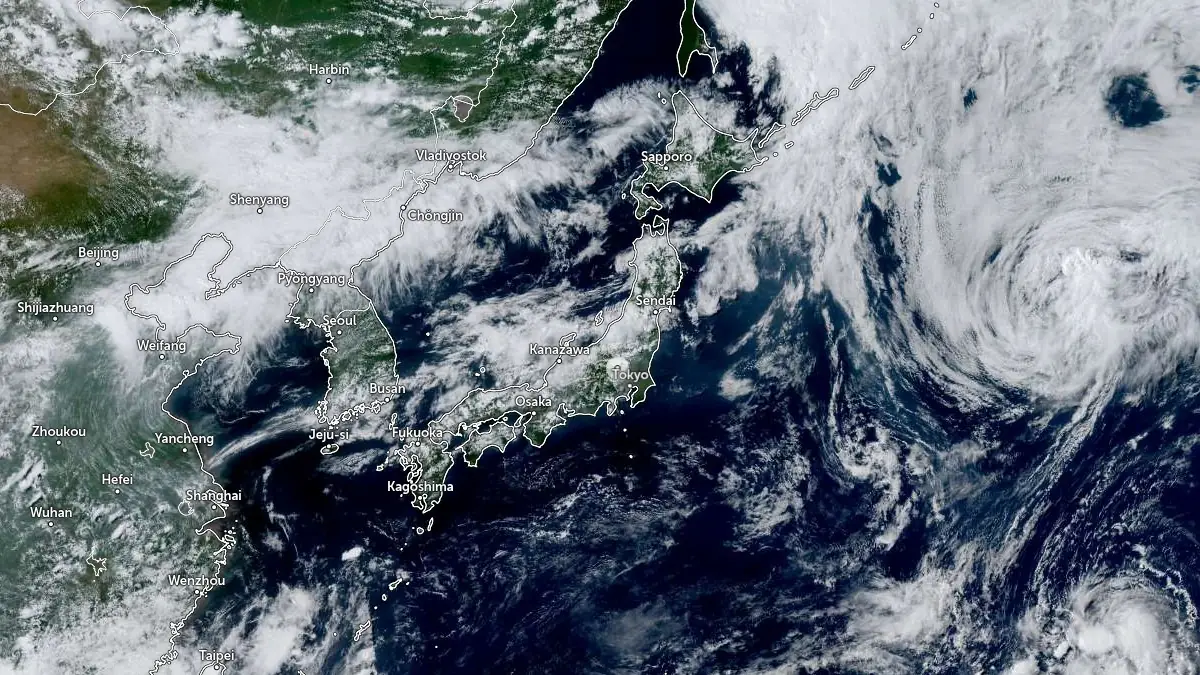
Satellite image of Japan at 05:30 UTC on August 5, 2025 when new national temperature record was set in Isesaki, Gunma. Credit: JMA/Himawari-9, Zoom Earth, The Watchers
The Japan Meteorological Agency (JMA) measured 41.8°C (107.2°F) in Isesaki, Gunma Prefecture, at 14:26 LT on August 5, surpassing the previous national record of 41.2°C (106.2°F) set in Tanba, Hyōgo Prefecture, on July 30, 2025.
At least 14 locations exceeded 40°C (104°F), marking the highest number ever recorded in a single day. For the first time, four locations registered temperatures above 41 °C (106 °F), as of 16:00 LT today, according to meteorologist Sayaka Mori.
Hatoyama in Saitama Prefecture recorded 41.4°C (106.5°F), Kiryū in Gunma 41.2°C (106.2°F), and Maebashi in Gunma 41°C (105.8°F).
In western Tokyo, Ōme reached 40.4°C (104.7°F) and Hachioji 40.3°C (104.5°F).
The extreme heat was caused by the persistent overlap of a Pacific high‑pressure system and a Tibetan Plateau anticyclone, which produced stagnant, cloud‑free air and strong solar heating.
The Fire and Disaster Management Agency reported over 53 000 hospitalizations due to heatstroke this summer.
Heatstroke alerts were issued in 44 of Japan’s 47 prefectures. Authorities urged the public to avoid outdoor activity during peak hours and to maintain hydration.
July 2025 was among the driest on record in several rice‑growing prefectures along the Sea of Japan coast.
Yamagata Prefecture received only 8 mm (0.31 inches) of rain, about 4% of the normal July total, while Niigata recorded 3.5 mm (0.14 inches), about 2% of normal.
Key reservoirs are at critically low levels, the Naruko Dam in Miyagi Prefecture is nearly dry, and the Hanamaki Dam in Iwate Prefecture is operating at only 20 percent capacity, forcing irrigation cutoffs to paddy fields.
High temperatures and drought have contributed to a surge in stink bug infestations, pests that damage rice kernels and reduce quality.
As of July 30, the Ministry of Agriculture had issued 33 pest warnings across 27 prefectures, one of the highest tallies in a decade.
“We need to act with speed and a sense of crisis to prevent damage,” Farm Minister Shinjiro Koizumi said. The government is implementing emergency pest control, drought‑relief measures, and a new rice production policy to reduce the risk of shortages, referencing the severe supply and quality issues experienced in 2023.
The JMA confirmed that July 2025 was the third consecutive record‑hot July in Japan, with average temperatures 2.89°C (5.20°F) above the 1991–2020 baseline.

I’m a science journalist and researcher at The Watchers, contributing to the Epicenter edition, where I cover peer-reviewed scientific research and emerging discoveries across Earth and space sciences. With a background in astronomy and a passion for environmental science, I’ve worked in shark and coral conservation in Fiji, conducting reef and shark-behavior research, contributing to mangrove restoration, and earning PADI Open Water and Coral Reef Certifications. I bring a blend of scientific rigor and storytelling to illuminate the discoveries shaping our planet and beyond.

Commenting rules and guidelines
We value the thoughts and opinions of our readers and welcome healthy discussions on our website. In order to maintain a respectful and positive community, we ask that all commenters follow these rules.