
Flash floods along the San Gabriel river injure 14 at Camp Williams in Azusa, Los Angeles County
At least 14 people were injured near Camp Williams after flash floods struck Azusa and areas along the San Gabriel River in Los Angles County on July 18, 2025.

An hour of continuous rainfall caused flash floods in parts of Los Angeles County on the evening of July 18, particularly affecting the hilly areas of Azusa.
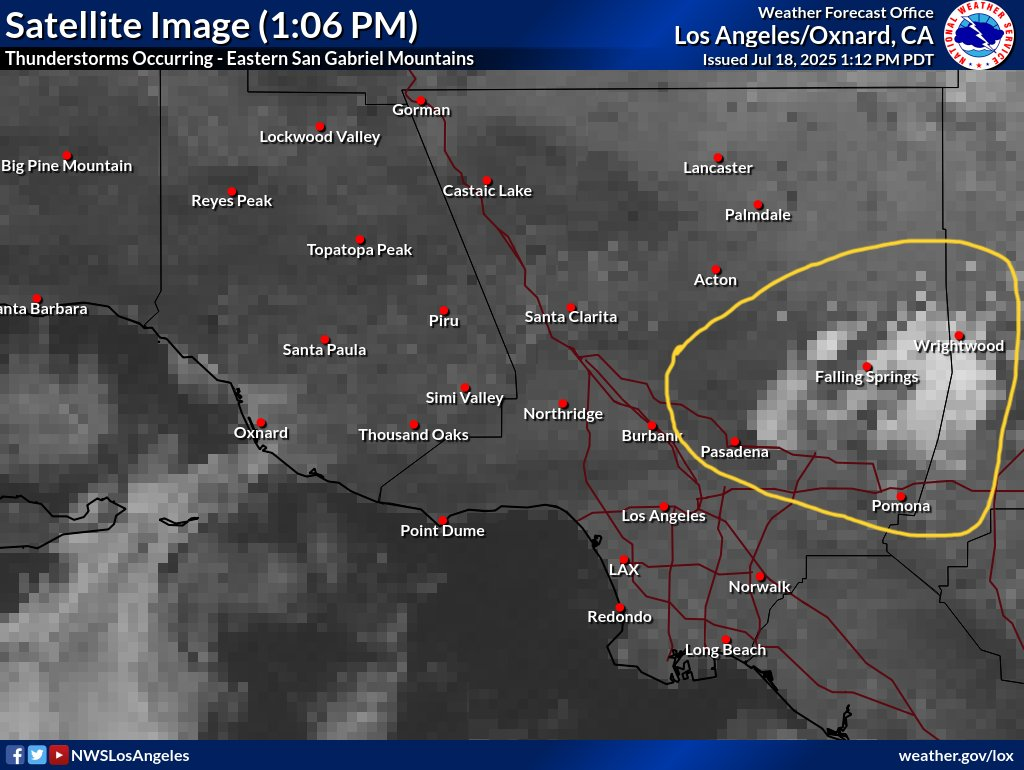
A National Weather Service (NWS) report issued at 16:20 local time (LT) on July 18 stated that at least 14 people were rescued with minor injuries after flooding struck 9.7 km (6 miles) south-southeast of Falling Springs.
Based on media reports, the 14 injuries were reported at Camp Williams after flash floods affected areas along the San Gabriel River, prompting aerial rescues by the Los Angeles Fire Department.
A total of 24 hikers were reportedly present in the area when the flash flood occurred. While five hikers were rescued by helicopter, it was not immediately clear how the remaining nine were rescued.
The Sierra Madre Search and Rescue Team was also at the scene, coordinating the rescues and assisting hikers to safety.

Flash floods are not uncommon in the hilly areas of Azusa. While intense rainfall occurred only for brief 20 to 30 minutes, the narrow trails and valley-like terrain allow water to accumulate and flow rapidly, even with low rainfall amounts.
The NWS had issued warnings of downpours in the area earlier in the afternoon. A Flash Flood Warning was also in effect for Los Angeles County until 19:00 local time (LT).
“Thunderstorms are developing over the San Gabriel Mountains. Over the next couple of hours, the areas circled in YELLOW are at high risk of storms with lightning, damaging winds, and heavy downpours,” the NWS said in a statement issued yesterday.
Featured image credit: KCAL (stillshot from the video)

Rishav Kothari is Editor-in-Chief of The Watchers, where he runs the newsroom and covers earthquakes, volcanoes, severe weather and space weather.
Published in the last 24 hours
- In September 1859, a solar storm lit up the night sky so brightly that gold miners in the Rocky Mountains woke up after midnight and started cooking breakfast, convinced the aurora glowing over their camp was the sunrise Epicenter
- A patch of warm Pacific water that could become the strongest El Niño in more than 70 years sits thousands of miles from any American town, yet it is already the main reason NOAA expects a wetter winter across the South and a milder one across the North
- A 19-year-old Nebraska teacher reportedly tied her pupils together with twine and led them to safety through a blizzard in January 1888 Epicenter
- NASA built the Opportunity rover to last 90 days on Mars, and Martian winds helped keep it alive for nearly 15 years by blowing dust off its solar panels, until a planet-wide dust storm in 2018 blocked sunlight and silenced the rover Epicenter
