
New volcanic eruption opens 1 km-long fissure southeast of Litla-Skógfell, Iceland
A fissure eruption began at the Sundhnúksgígar crater row, southeast of Litla-Skógfell, Iceland, around 03:54 UTC on July 16, 2025. The eruptive fissure is approximately 700–1 000 m (2 300–3 280 feet) long and appears to be propagating northward, with lava flowing southeast and no immediate threat to infrastructure.
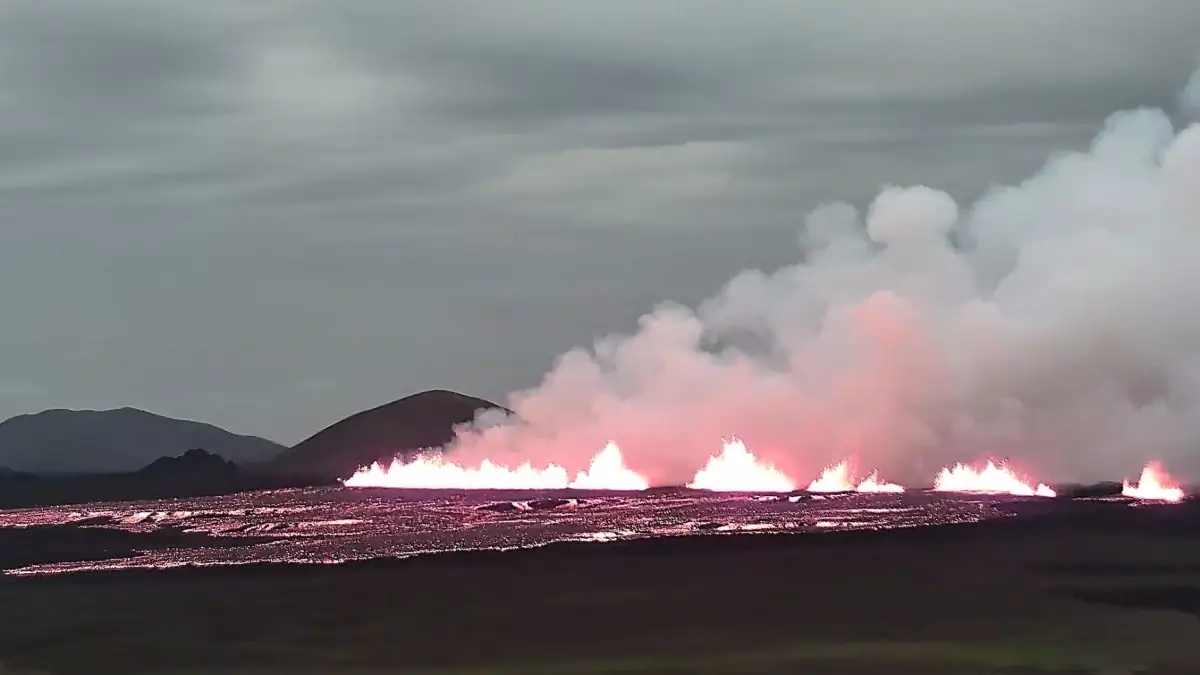
Image credit: IMO
A new volcanic eruption began around 03:54 UTC on July 16, along the Sundhnúksgígar crater row, southeast of Litla-Skógfell on the Reykjanes Peninsula.
According to the Icelandic Meteorological Office (IMO), the fissure is estimated to be 700–1 000 m (2 300–3 280 feet) long. After an initial extension to the north, it has remained stable over the following hour.
Lava flows are currently advancing southeast and are not threatening any infrastructure. Given the fissure’s position and the estimated size of the eruption, IMO indicates that lava is not expected to reach Grindavík or key transport routes in the near term. Nonetheless, the area is under close monitoring in case of changes in flow direction or intensity.
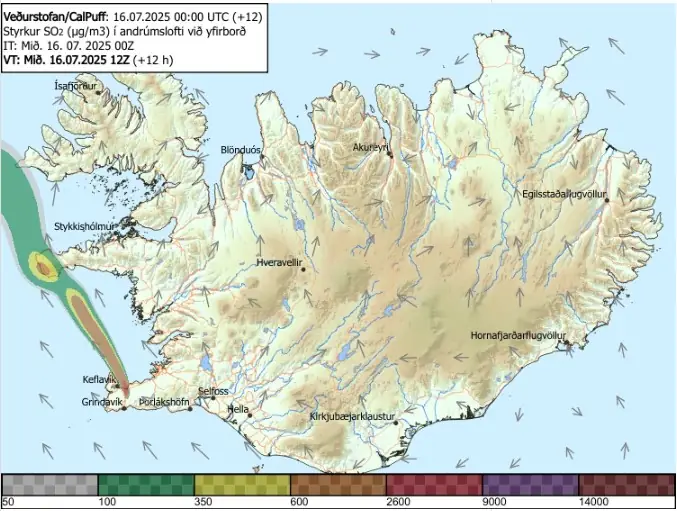
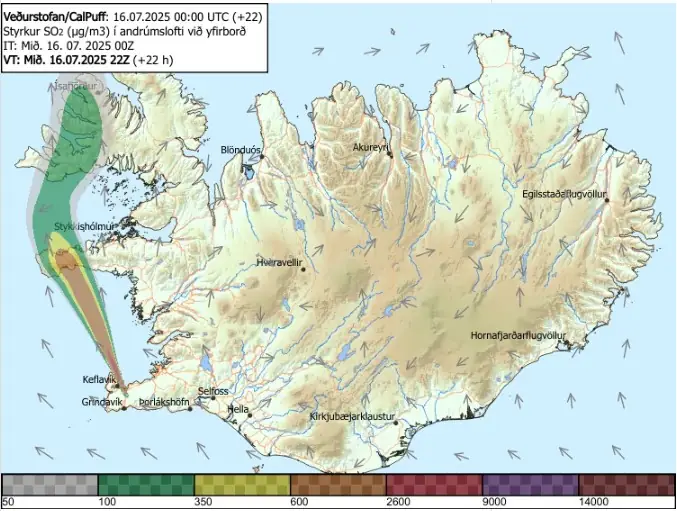
Gas pollution from the eruption is dispersing northwest due to prevailing southeasterly winds and is expected to affect areas including Reykjanesbær, Vogar, Sandgerði, and Garð.
Deformation data and GPS measurements indicate this is a relatively small eruption. Prior to onset, the magma volume beneath Svartsengi was approximately two-thirds that of the last eruption in the same system. Most earthquake activity occurred at depths of 4–6 km (2.5–3.7 miles), and IMO estimates the magma tunnel beneath the area is approximately 6.5 km (4 miles) long, substantially shorter than the ~20 km (12.4 miles) tunnel involved in the March 2024 event.
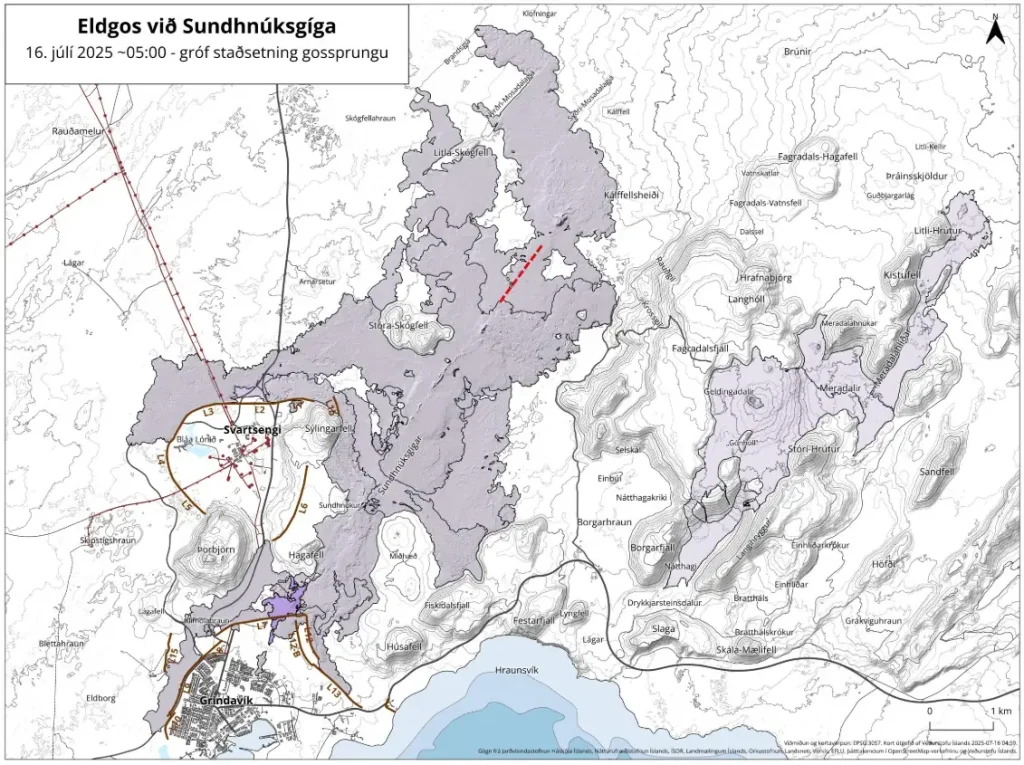
The current eruption was preceded by an intense seismic swarm that began around 01:20 UTC. Over 300 earthquakes have been recorded since midnight, with activity concentrated between Stóra-Skógfell and Sýlingarfell.
This is consistent with the locations of previous dike intrusions in the region. Early seismic and GPS data showed the magma body expanding southward, although the fissure ultimately formed to the north.


The Sundhnúksgígar crater row has experienced 8 eruptive episodes since late 2023. This is also the 12th eruption in Reykjanes Peninsula since volcanic activity in the area increased in 2021, starting a series of eruptions expected to last decades or even centuries. These events typically involve lateral fissure eruptions, with lava output shaped by the underlying dike system and local topography.
Past eruptions have occasionally impacted infrastructure, prompting the construction of protective barriers and the preemptive evacuation of nearby sites, including Svartsengi and the Blue Lagoon.
The eruption’s duration remains uncertain and will depend on the magma supply rate and dike pressure dynamics. Previous events in this system have lasted from hours to several weeks.

Updates
09:12 UTC, July 16
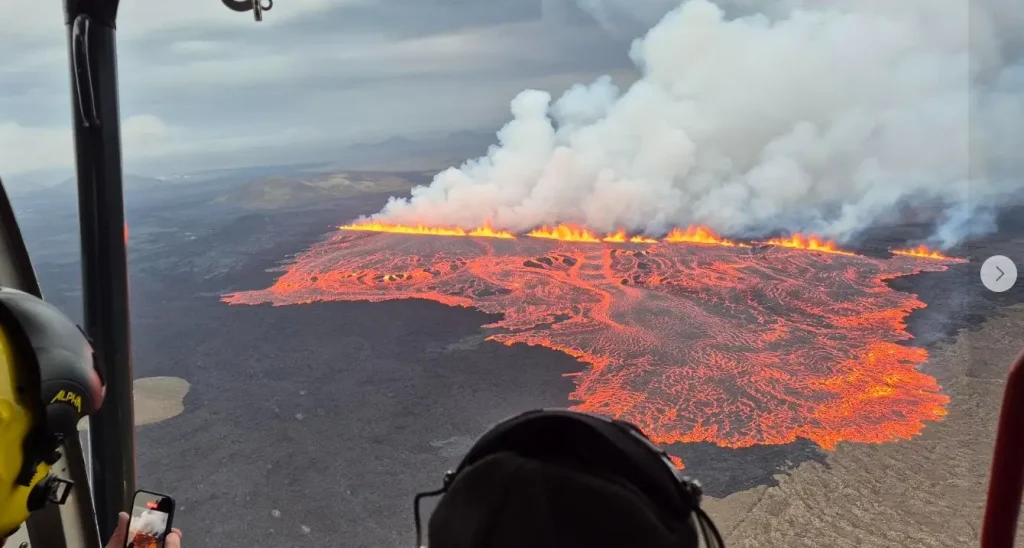
The Blue Lagoon resort and the town of Grindavík (population 4 000), already largely deserted due to frequent eruptions, have now been fully evacuated.
High levels of gas pollution have already been measured in Reykjanesbæ. The maps below show the areas in the country where sulfur pollution (SO2) is expected today.


Teo Blašković founded The Watchers in 2011 and edited it until 2026, covering seismic and volcanic activity, extreme weather, space weather and near-Earth objects. Articles on this page are his archive.
Published in the last 24 hours
- Second nationwide US flight halt since 9/11: how the November 13 FAA ground stop compares with September 2001 and January 2023 Epicenter
- FAA grounds all departing flights across the US after communications outage hits air traffic control centers nationwide
- In September 1859, a solar storm lit up the night sky so brightly that gold miners in the Rocky Mountains woke up after midnight and started cooking breakfast, convinced the aurora glowing over their camp was the sunrise Epicenter
- A patch of warm Pacific water that could become the strongest El Niño in more than 70 years sits thousands of miles from any American town, yet it is already the main reason NOAA expects a wetter winter across the South and a milder one across the North
