
Low-level tremor and ice subsidence observed at Grímsvötn volcano, Iceland
Low-level seismic tremor detected at Grímsfjall in recent days indicates possible internal water movement within the Grímsvötn subglacial lake system, southeast Iceland. The last eruption of this volcano took place in 2011 (VEI 4).

Vatnajökull, Iceland's largest glacier, captured on May 17, 2025. In the center of the ice cap lies the Grímsvötn volcano, beneath the glacier. Image credit: CopernicusEU/Sentinel-2, EO Browser, The Watchers
Low-level seismic tremor detected in recent days at Grímsfjall suggests water movement is occurring within the subglacial lake system of Grímsvötn volcano, southeast Iceland. The signal may indicate the onset of a minor jökulhlaup (glacial outburst flood), although no significant hydrological or geochemical changes have been observed.
The last jökulhlaup occurred in January 2025, and historically, there has been a roughly annual recurrence. However, given the short interval since the previous flood, the water volume currently available for discharge is limited, and any resulting outburst is expected to be small in magnitude.
Monitoring stations in the Gígjukvísl River basin have not registered substantial changes. It is considered possible that water is redistributing internally within Grímsvötn rather than flowing outward, potentially occupying previously sealed cavities within the lake system.
Ice surface subsidence has been observed in the vicinity of the GPS station operated by the Institute of Earth Sciences, University of Iceland.
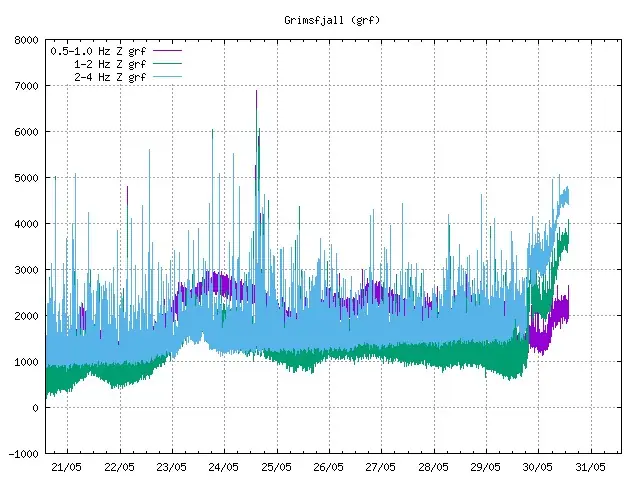
Increased seismic tremor detected overnight may reflect enhanced geothermal activity, which often coincides with pressure drops during jökulhlaups. However, such pressure reductions can also occur during internal water redistribution and do not confirm an active flood.
There have been no associated increases in volcanic seismicity or gas emissions.
The Icelandic Meteorological Office (IMO) continues 24-hour surveillance of the area, with further assessments expected after the weekend.
Grímsvötn is Iceland’s most active volcano, located beneath the western sector of the Vatnajökull ice cap. It features a large subglacial caldera and a high geothermal heat output that maintains a persistent subglacial lake.
Eruptions are typically basaltic and phreatomagmatic due to magma-ice interactions. The volcano is frequently associated with jökulhlaups originating from lake drainage events. The last major eruption occurred in May 2011, reaching VEI 4.

I'm a dedicated researcher, journalist, and editor at The Watchers. With over 20 years of experience in the media industry, I specialize in hard science news, focusing on extreme weather, seismic and volcanic activity, space weather, and astronomy, including near-Earth objects and planetary defense strategies. You can reach me at teo /at/ watchers.news.

Commenting rules and guidelines
We value the thoughts and opinions of our readers and welcome healthy discussions on our website. In order to maintain a respectful and positive community, we ask that all commenters follow these rules.