
Ancient rocks link Late Antique Little Ice Age to Roman Empire decline
Historians have long debated whether climate change contributed to the fall of the Roman Empire. New geological evidence from Iceland supports that link, showing that a sudden surge of Greenlandic iceberg transport during the Late Antique Little Ice Age coincided with a period of instability, famine, and migration across Europe. The ice age is thought to have been triggered by volcanic ash from three massive eruptions, which blocked out sunlight and lowered global temperatures.
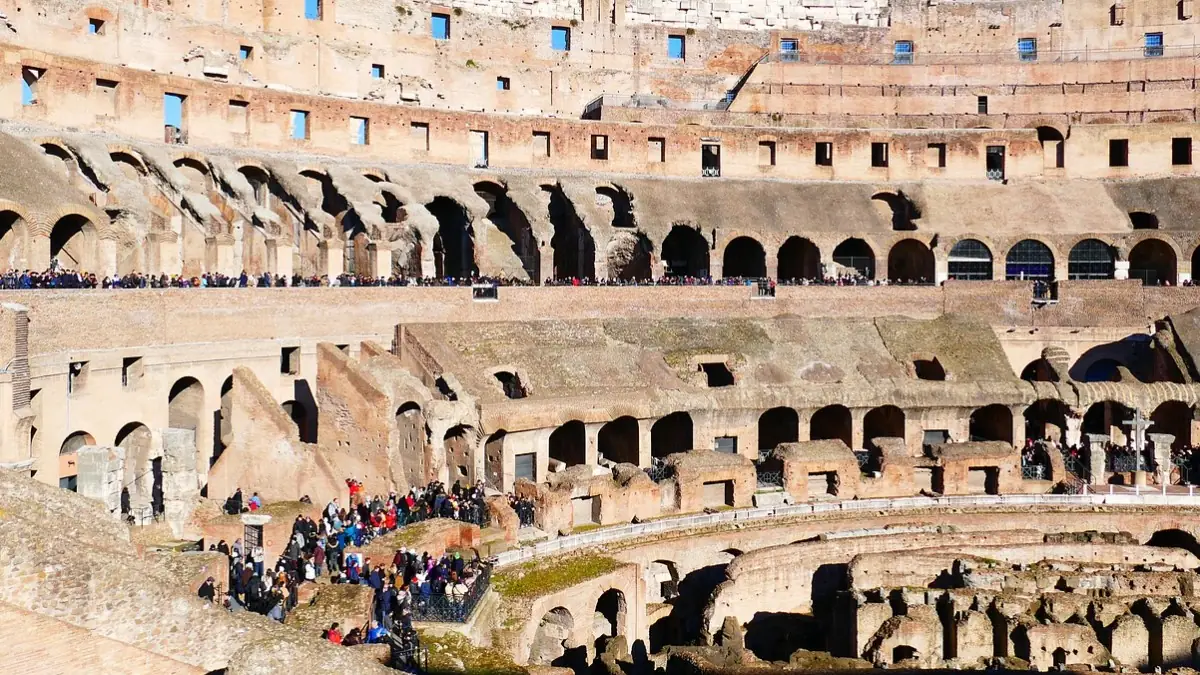
Image credit: Logga Wiggler
A cluster of ancient stones discovered on Iceland’s west coast is shedding new light on one of history’s most debated collapses.
Carried across the North Atlantic by icebergs more than 1 300 years ago, these rocks originate from Greenland and date to a time of abrupt cooling now known as the Late Antique Little Ice Age (LALIA), a period lasting from 536–660 CE, marked by volcanic eruptions, crop failures, pandemics, and large-scale migrations that coincided with the final centuries of the Roman Empire.
To trace the origins of these misplaced cobbles, researchers from the University of Southampton, Queen’s University Canada, and the Chinese Academy of Sciences conducted a detailed geochemical investigation at raised beach deposits near Breiðavík, Iceland. These include quartzofeldspathic gneiss, granitoid, rhyolite, sandstone, and serpentinite, unlike the local basaltic material in the upper terraces.
“We knew these rocks seemed somewhat out of place because the rock types are unlike anything found in Iceland today,” said Dr. Christopher Spencer of Queen’s University, “but we didn’t know where they came from.”
U-Pb geochronologic analysis of zircon crystals revealed age modes of approximately 2 800, 1 150, 5 00, and 2 40 million years. Lu-Hf isotopic compositions point to Greenland’s North Atlantic craton and Caledonian fold belt as the source. This method, which analyzes the age and composition of microscopic zircon crystals, enables precise tracing of the rocks’ geological origins, similar to forensic techniques.
“On one hand, you’re surprised to see anything but basalt in Iceland,” said Professor Ross Mitchell of the Chinese Academy of Sciences, “but having seen them for the first time, you instantly suspect they arrived by iceberg from Greenland.”
The technique’s ability to fingerprint specific regions opens new possibilities for investigating past climate events and their effects on human societies, such as the collapse of ancient civilizations.
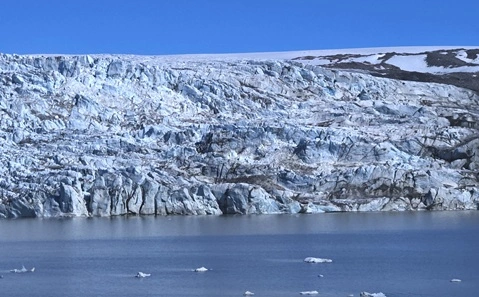
The cobbles were likely transported by icebergs during the LALIA, a cooling period triggered by volcanic eruptions around 536 and 547 CE that blocked sunlight. This led to enhanced iceberg calving from Greenland’s ice sheet, increasing ice-rafted debris. “This is the first direct evidence of icebergs carrying large Greenlandic cobbles to Iceland,” Dr. Spencer said.
The East Greenland and East Iceland currents carried the debris across the North Atlantic, depositing it on Iceland’s coast as icebergs melted during Bond event 1 in the 7th century. Professor Tom Gernon from the University of Southampton stated, “This timing coincides with a known major episode of ice-rafting, where vast chunks of ice break away from glaciers, drift across the ocean, and eventually melt, scattering debris along distant shores.”
The deposits, consisting of alternating cobble-, sand-, and silt-dominated facies, indicate varied depositional conditions. Nearby sands and silts, dated to the LALIA, constrain the age of the raised terraces, which formed as Iceland’s land rebounded post-glaciation. Dr. Spencer added, “The fact that the rocks come from nearly all geological regions of Greenland provides evidence of their glacial origins.”
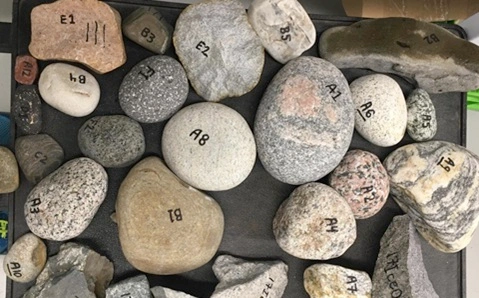
Zircon crystals, described by Dr. Spencer as “essentially time capsules that preserve vital information,” were analyzed after crushing the cobbles. Their ages, spanning nearly three billion years, and chemical compositions traced the rocks to Greenland’s ancient crust. This method allowed fingerprinting specific Greenland regions, similar to forensic techniques.
The LALIA’s colder conditions may have disrupted agriculture and spurred migrations, potentially impacting the Western Roman Empire, which fell in 476 CE.
Although the Western Roman Empire had collapsed by the start of the LALIA, the Eastern Roman Empire faced significant challenges during this period, including the Plague of Justinian (541–542 CE), a devastating pandemic that killed millions. Historical records describe the ‘year without summer’ in 536 CE, where a mysterious fog—likely caused by volcanic ash—dimmed the sun for months, leading to crop failures and famine across Europe and the Mediterranean.
These conditions would have strained resources and weakened societal resilience, contributing to the empire’s decline and exacerbating pressures from earlier migrations, such as those of the Huns and Germanic tribes in the 4th and 5th centuries.
“When it comes to the fall of the Roman Empire, this climate shift may have been the straw that broke the camel’s back,” said Tom Gernon, Professor of Earth Science at the University of Southampton, and co-author of the new research. Historians say that multiple factors, including political instability, economic troubles, and military pressures, contributed to the decline.
The lowermost terraces, about 2 m (6.5 feet) above high tide, contain the mixed basaltic and nonbasaltic cobbles, reflecting the chaotic glacial transport.
“What we’re seeing is a powerful example of how interconnected the climate system is,” Spencer noted. “When glaciers grow, icebergs calve, ocean currents shift, and landscapes change.”
References:
1 Greenlandic debris in Iceland likely tied to Bond event 1 ice rafting in the Dark Ages – Christopher J. Spencer, Thomas M. Gernon, Ross N. Mitchell – Geology – April 8, 2025 – https://doi.org/10.1130/G53168.1
2 Ancient rocks reveal how ice age weakened the Roman Empire – University of Southampton – April 9, 2025

I’m a science journalist and researcher at The Watchers, contributing to the Epicenter edition, where I cover peer-reviewed scientific research and emerging discoveries across Earth and space sciences. With a background in astronomy and a passion for environmental science, I’ve worked in shark and coral conservation in Fiji, conducting reef and shark-behavior research, contributing to mangrove restoration, and earning PADI Open Water and Coral Reef Certifications. I bring a blend of scientific rigor and storytelling to illuminate the discoveries shaping our planet and beyond.

Commenting rules and guidelines
We value the thoughts and opinions of our readers and welcome healthy discussions on our website. In order to maintain a respectful and positive community, we ask that all commenters follow these rules.