
Volcanic ash emissions at Santa Maria reach 5 km (16 000 feet) a.s.l., Guatemala
Fresh volcanic ash emissions were observed from the Santa María volcano in Guatemala on January 21, 2025. The ash clouds reached an altitude of approximately 5 km (16 000 feet) above sea level (a.s.l.) and were carried westward at a speed of 18 km/h (11 mph). Residents in the San Marcos Palajunoj and San Martín Sacatepéquez areas may experience light ashfall, with further activity posing risks of long-range pyroclastic flows towards the southwest, south, and southeast.
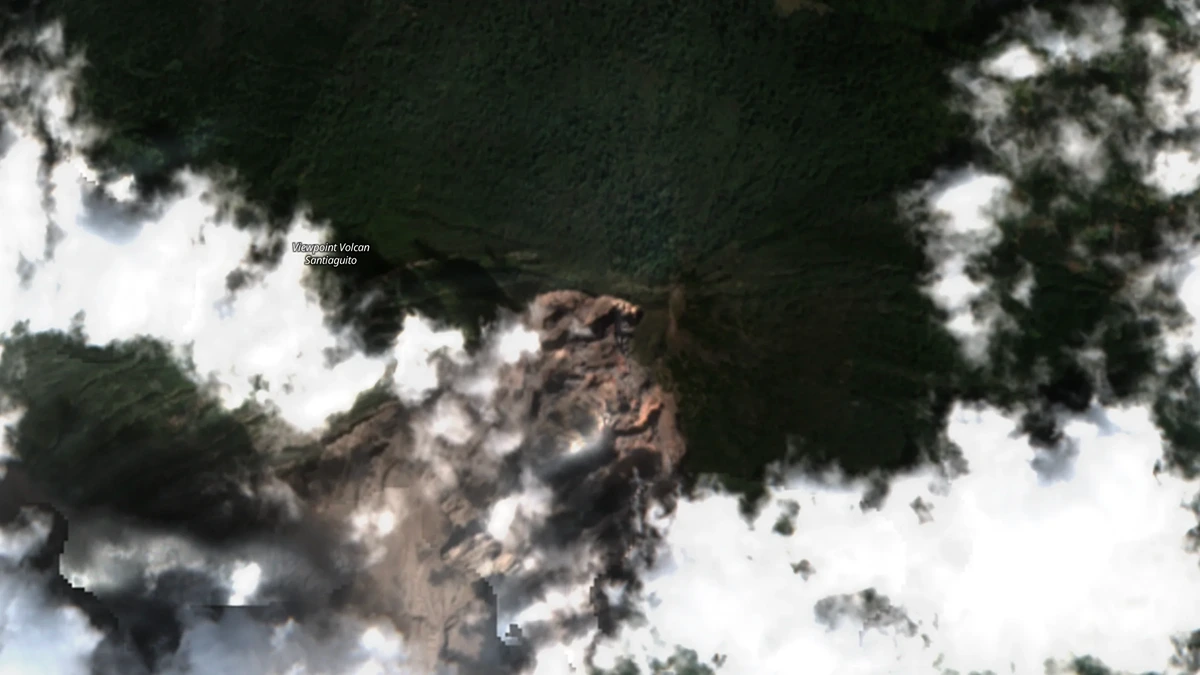
A satellite image of Santa Maria's Santiaguito dome complex in Guatemala captured on January 16, 2025. Image credit: CopernicusEU/Sentinel-2, EO Browser, The Watchers
A new volcanic ash emission was observed from Santa Maria’s Santiaguito dome complex at 09:50 UTC on January 21, with ash clouds reaching up to 4.9 km (16 000 feet) above sea level (a.s.l.), drifting west at 18 km/h (11 mph).
On January 20, Instituto Nacional de Sismología, Vulcanología, Meteorología e Hidrología (INSIVUMEH) reported the activity at the Caliente dome consisted of weak degassing with water vapor columns rising 300 m (984 feet) above the dome.
Explosions, ranging from weak to moderate, were occurring at a rate of 1 to 4 per hour, generating gas and ash plumes that reached up to 700 m (2 300 feet) above the summit and drifted westward.
At least 3 explosions produced short-range pyroclastic flows during the early hours of January 20 and affected the southwestern and eastern flanks.
The ongoing lava extrusion at the Caliente dome continues to accumulate unstable blocky material on the southwestern flank and is increasing the likelihood of short-range pyroclastic flows.
Residents in the San Marcos Palajunoj and San Martín Sacatepéquez areas may experience light ashfall, with further activity posing risks of long-range pyroclastic flows towards the southwest, south, and southeast.

The forecasts predict sustained emissions until at least 16:00 UTC before potential dissipation. The current volcanic activity is classified as moderate, with continued emissions expected in the short term.
The Civil Aviation Authority has been advised to exercise caution as volcanic ash dispersal may reach distances exceeding 30 km (18.6 miles) westward, with altitudes ranging between 3 000 m and 4 600 m (9 843 feet and 15 092 feet).
The Municipality of Quetzaltenango has reaffirmed a 5 km (3.1 miles) exclusion zone around the Santiaguito dome.
INSIVUMEH documented ongoing lava extrusion at the Caliente dome between January 7 and January 14, with daily explosions, sometimes as many as 11 per hour which produced gas and ash plumes reaching 1.2 km (3 937 feet) above the summit. Ash plumes drifted up to 40 km (25 miles) in multiple directions, including northwest, west, southwest, south, and southeast.
Frequent block avalanches triggered by collapses on the lava flow flanks generated short pyroclastic flows, with some events audible kilometers away. Ashfall was reported in San Marcos (10 km SW), Finca El Patrocinio (9 km SSW), Loma Linda Palajunoj (7 km SW), Llanos de Pinal, and surrounding areas.
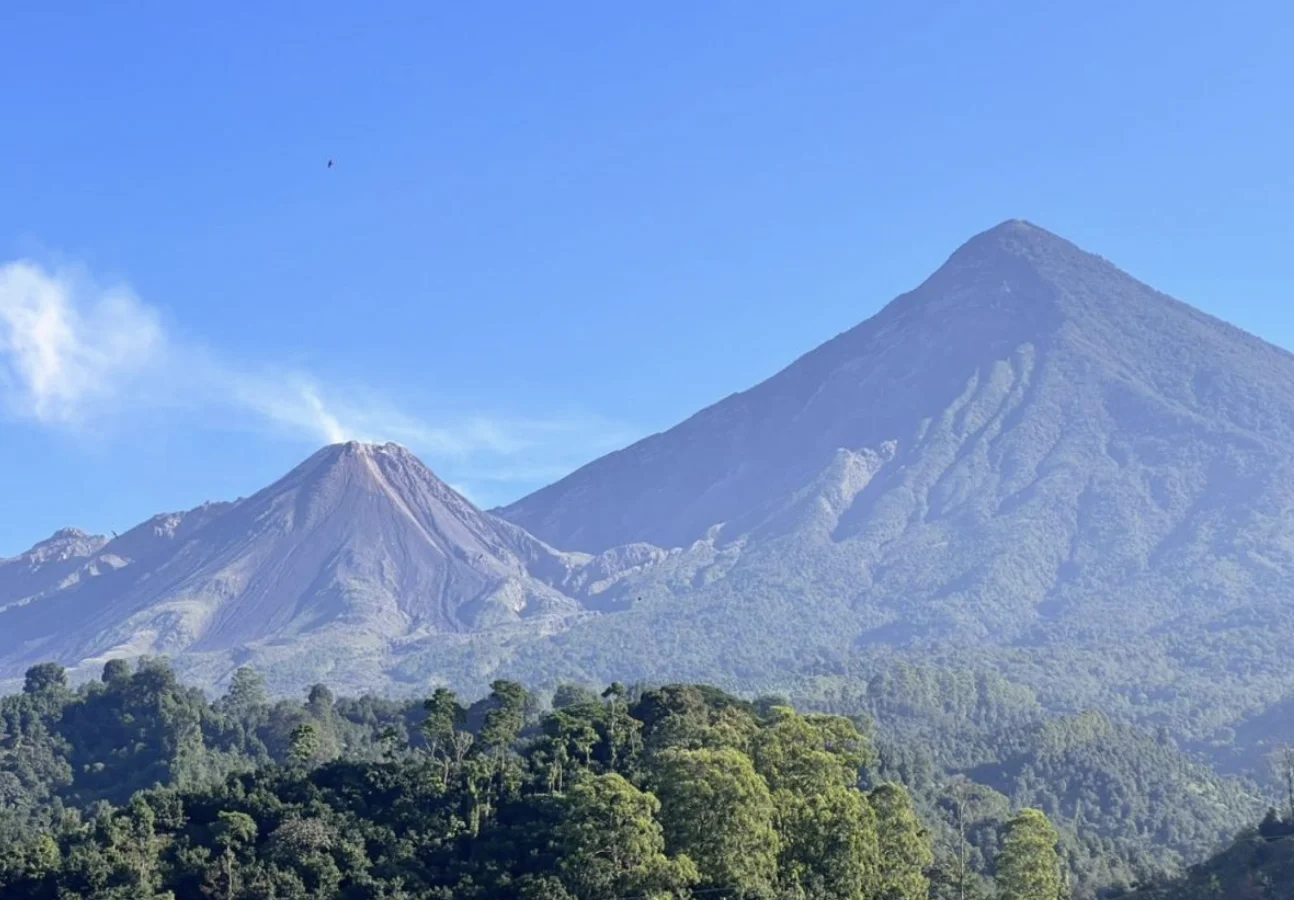
Santa Maria is a 3 745 m (12 287 feet) stratovolcano in Guatemala’s Central American Volcanic Arc and is known for its catastrophic 1902 Plinian eruption, which resulted in a 1.5 km (0.9 miles) wide summit on the southwest flank. The Santiaguito lava-dome complex has been forming within this summit since 1922, with persistent lava extrusion and episodic eruptions.
The volcano has produced dacitic and andesitic lava which forms 4 domes. The most recent one is Caliente which remains the site of active eruptions. Historical activity has included minor explosions, periodic lava flows, larger eruptions, and pyroclastic flows.
Santa Maria’s Holocene eruptions include 3 confirmed periods of activity. The 1902 eruption was a devastating Plinian event classified as VEI 6. The volcano exhibited ongoing activity following the 1902 eruption from 1903 to 1913, with a classification of VEI 2. Santa Maria has been engaged in continued dome-building activity since 1922, classified as VEI 3.
References:
1 Santa María – Santiaguito volcano – INSIVUMEH – January 20, 2025
2 Santa María volcano – NOAA/Washington VAAC – January 21, 2025
3 Santa María – GVP – Accessed on January 21, 2025

Rishika holds a Master’s in International Studies from Stella Maris College, Chennai, India, where she earned a gold medal, and an MCA from the University of Mysore, Karnataka, India. Previously, she served as a Research Assistant at the National Institute of Advanced Studies, Indian Institute of Science, Bengaluru, India. During her tenure, she contributed as a Junior Writer for Europe Monitor on the Global Politics website and as an Assistant Editor for The World This Week. Her work has also been published in The Hindu newspaper, showing her expertise in global affairs. Rishika is also a recipient of the Women Empowerment Award at the district level in Haryana, India, in 2022.

Commenting rules and guidelines
We value the thoughts and opinions of our readers and welcome healthy discussions on our website. In order to maintain a respectful and positive community, we ask that all commenters follow these rules.