
Rare double lunar impact flashes captured hours apart on the same night
Two lunar impacts were recorded on December 8, 2024, by Japanese astronomer Daichi Fujii, who captured the events using high-speed recording equipment. The observations were made during routine skywatching activities, which coincided with a Saturn eclipse.
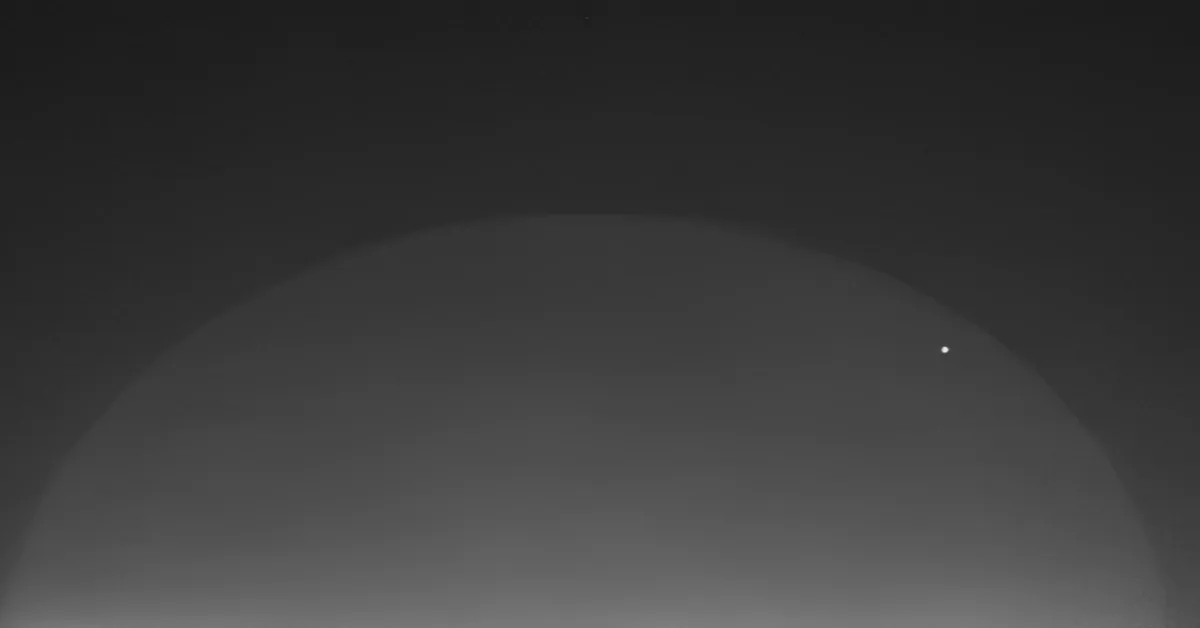
Image of the second lunar impact on December 8, 2024. Image credit: Daichi Fujii
Two lunar impacts were recorded by Japanese astronomer and curator of the Hiratsuka City Museum Daichi Fujii on December 8, 2024.
Using advanced high-speed recording equipment, Fujii captured the first event at 10:41 UTC (19:41 local time (LT)) from Hiratsuka, Japan, at an impressive 620 fps. Just hours later, a second impact flash was documented at 13:38 UTC (22:38 LT).
“Since the Moon has no atmosphere, meteors cannot be seen, and they only shine when craters form,” Fujii explained.
今夜はもう1つ月面衝突閃光がありました。2024年12月8日22時34分35秒に自宅から360fpsで撮影し(スロー再生)、複数台の望遠鏡で確認できました。連日明るい流星や火球が流れていますが、月面衝突閃光も続けて捉えられています。 pic.twitter.com/iHUq9EuXQg
— 藤井大地 (@dfuji1) December 8, 2024
Fujii added that he is still sorting the data and noted that he had confirmed two lunar impacts prior to this. One lunar impact flash was confirmed at approximately 17:26 LT on December 6, and another was confirmed at 18:03 LT on December 7.
“Bright meteors and fireballs have been appearing daily, but lunar impact flashes have also been captured in succession,” Fujii noted.
今夜はもう1つ月面衝突閃光がありました。2024年12月8日22時34分35秒に自宅から360fpsで撮影し(スロー再生)、複数台の望遠鏡で確認できました。連日明るい流星や火球が流れていますが、月面衝突閃光も続けて捉えられています。 pic.twitter.com/iHUq9EuXQg
— 藤井大地 (@dfuji1) December 8, 2024
Lunar impact flashes occur when meteoroids strike the Moon’s surface at high speeds, converting kinetic energy into heat and light visible from Earth. Unlike Earth, the Moon lacks an atmosphere to burn up incoming meteoroids, making such impacts a direct and unfiltered phenomenon.
These events offer valuable insights into meteoroid flux in near-Earth space while also having practical implications for future lunar exploration and the safety of upcoming lunar bases.
As the curator of the Hiratsuka City Museum, Fujii has documented such events before, including a notable meteorite impact flash on the Moon’s surface on February 23, 2023. He described it as his most significant observation of lunar impacts, noting the flash as an exceptionally bright event that lasted for more than one second.
私の観測史上最大の月面衝突閃光を捉えることができました!2023年2月23日20時14分30.8秒に出現した月面衝突閃光を、平塚の自宅から撮影した様子です(実際の速度で再生)。なんと1秒以上も光り続ける巨大閃光でした。月は大気がないため流星や火球は見られず、クレーターができる瞬間に光ります。 pic.twitter.com/Bi2JhQa9Q0
— 藤井大地 (@dfuji1) February 24, 2023
However, capturing two lunar impacts in a single night is an even rarer and more remarkable achievement, made possible by Fujii’s dedication and advanced recording techniques.

Rishav Kothari is Editor-in-Chief of The Watchers, where he runs the newsroom and covers earthquakes, volcanoes, severe weather and space weather.
Published in the last 24 hours
- Male toads abandoned a pond in Italy five days before a deadly 2009 earthquake, while a scientist was counting them Epicenter
- An asteroid was spotted 19 hours before it exploded over Sudan in 2008, and students picked its pieces off the desert Epicenter
- A wave up to 3 m (10 feet) high rose out of Lake Michigan on a sunny June morning in 1954 and swept fishermen off Chicago’s piers, and when a second came 10 days later, warnings had cleared the shore Epicenter
- Just 12 inches of rushing water can carry away most cars, and more than half of US flood drownings happen to people who drive into flood water Epicenter
