
Shallow M6.2 earthquake hits southeast of the Ryukyu Islands, Japan
A strong and shallow earthquake, registered by the USGS and EMSC as M6.2, hit southeast of the Ryukyu Islands, Japan at 12:16 UTC on November 17, 2024. Both agencies are reporting a depth of 10 km (6.2 miles). JMA is reporting M6.0 at a depth of 10 km.
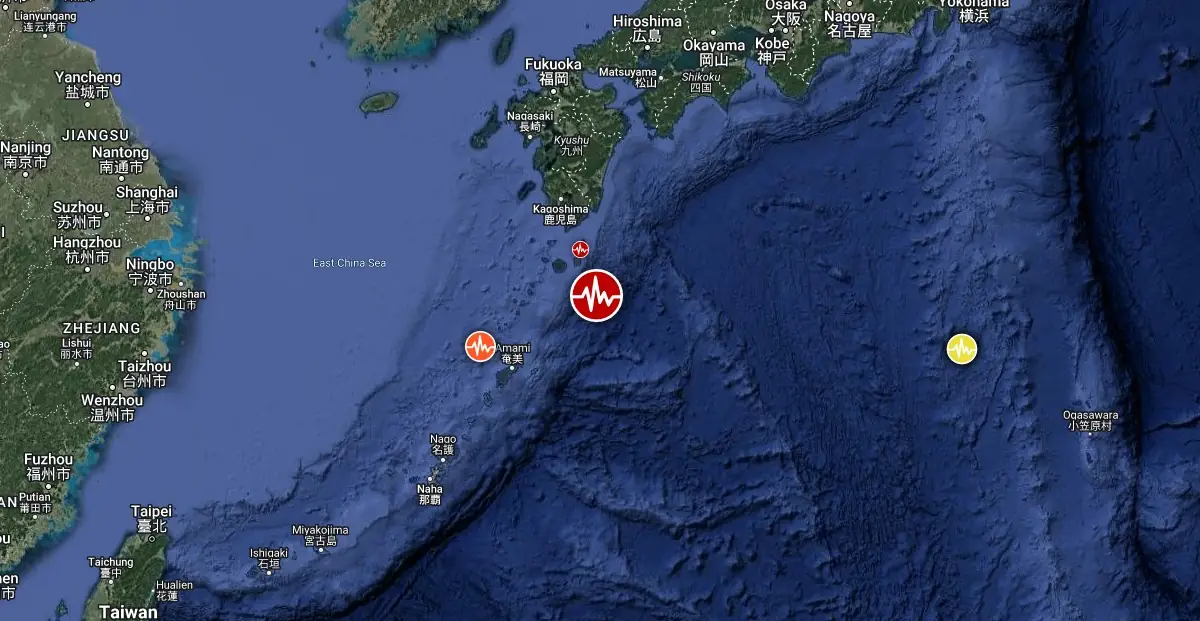
Image credit: TW/SAM, Google
The epicenter was located 151.4 km (94.1 miles) SSE of Koshima (population 1 245), 187.9 km (116.8 miles) S of Nishinoomote (population 17 832), 198.1 km (123.1 miles) ENE of Naze (population 41 365), and 249.7 km (155.2 miles) SSE of Ibusuki (population 29 710), Kagoshima, Japan.
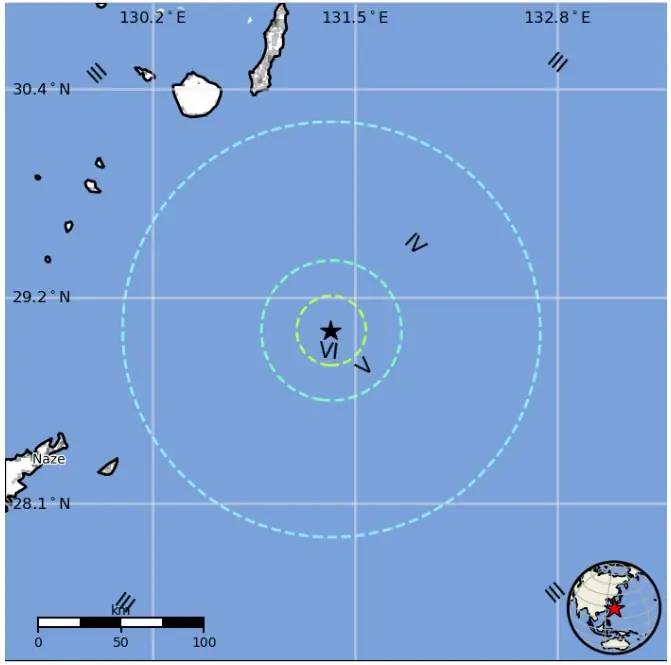
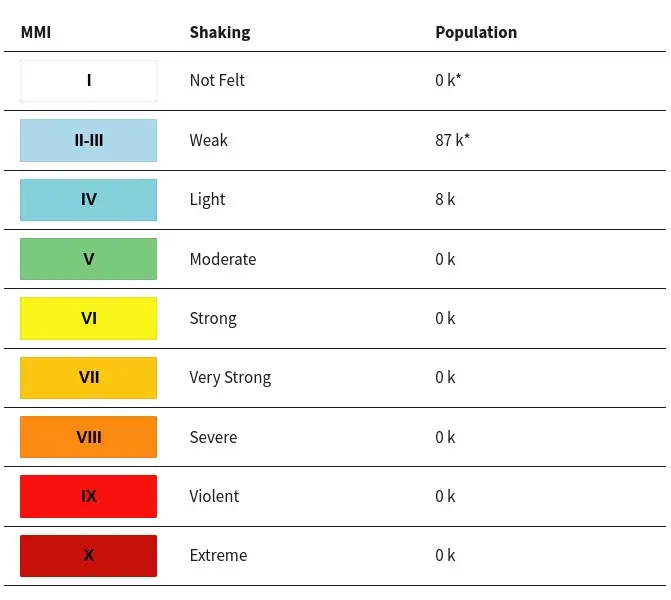
8 000 people are estimated to have felt light shaking and 87 000 weak.
There is no tsunami threat from this earthquake.
The USGS issued a Green alert for shaking-related fatalities and economic losses. There is a low likelihood of casualties and damage.
Overall, the population in this region resides in structures that are resistant to earthquake shaking, though vulnerable structures exist. The predominant vulnerable building types are heavy wood frame and reinforced/confined masonry construction.
Recent earthquakes in this area have caused secondary hazards such as landslides that might have contributed to losses.

Estimated population exposure to earthquake shaking
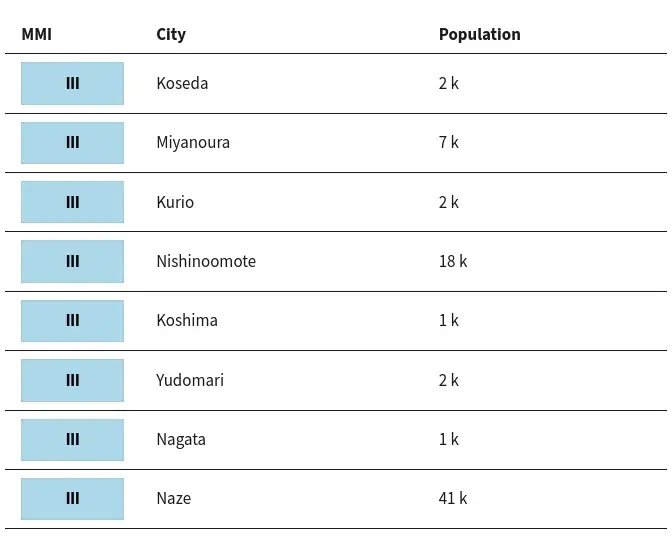
Selected cities exposed
Regional seismicity

References:
1 M6.2 earthquake southeast of Ryukyu Islands, Japan – USGS – November 17, 2024
2 M6.2 earthquake southeast of Ryukyu Islands, Japan – EMSC – November 17, 2024
3 M6.0 earthquake southeast of Ryukyu Islands, Japan – JMA – November 17, 2024

Teo Blašković founded The Watchers in 2011 and edited it until 2026, covering seismic and volcanic activity, extreme weather, space weather and near-Earth objects. Articles on this page are his archive.
Published in the last 24 hours
- In 1920, a man out hunting on a farm in Namibia sat down on a strange black rock, scratched it with his knife and saw metal shine underneath. It was Hoba, a 60-ton meteorite, the largest ever found, and there is no crater around it Epicenter
- On December 26, 2004, a 10-year-old British girl on a Phuket beach recognized the frothing sea from a recent geography lesson, and her warning helped clear the beach before the tsunami struck Epicenter
