
Deep M5.9 earthquake hits Hindu Kush, Afghanistan
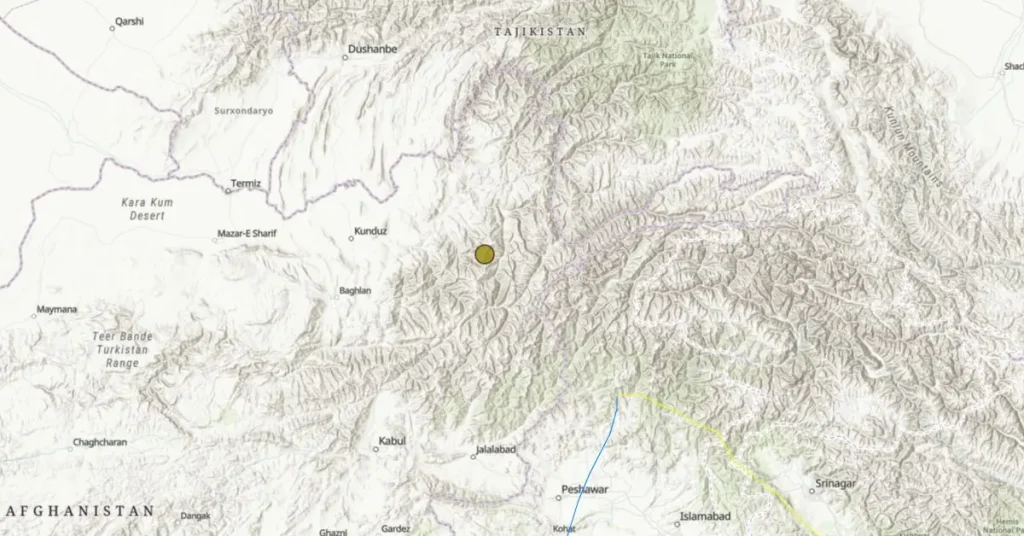
A deep earthquake registered by the USGS as M5.9 hit the Hindu Kush region of Afghanistan at 18:56 UTC (23:26 LT) on October 16, 2024. The agency is reporting a depth of 203 km (126 miles). EMSC is reporting M5.7 at a depth of 190 km (118 miles).
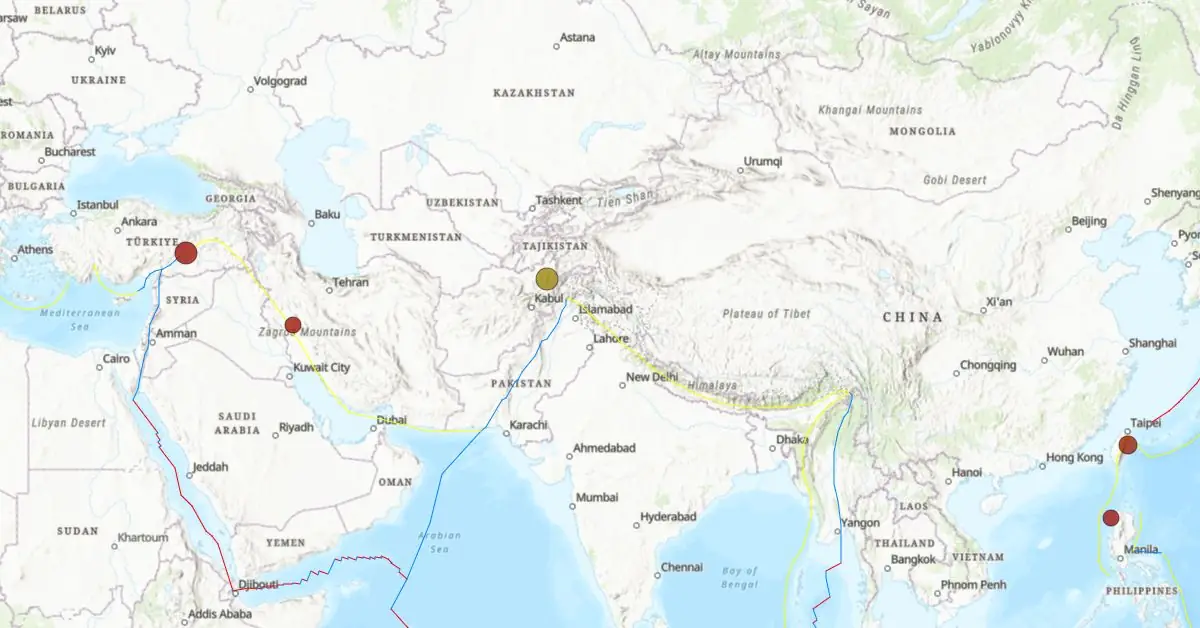
Image credit: TW/SAM, ESRI
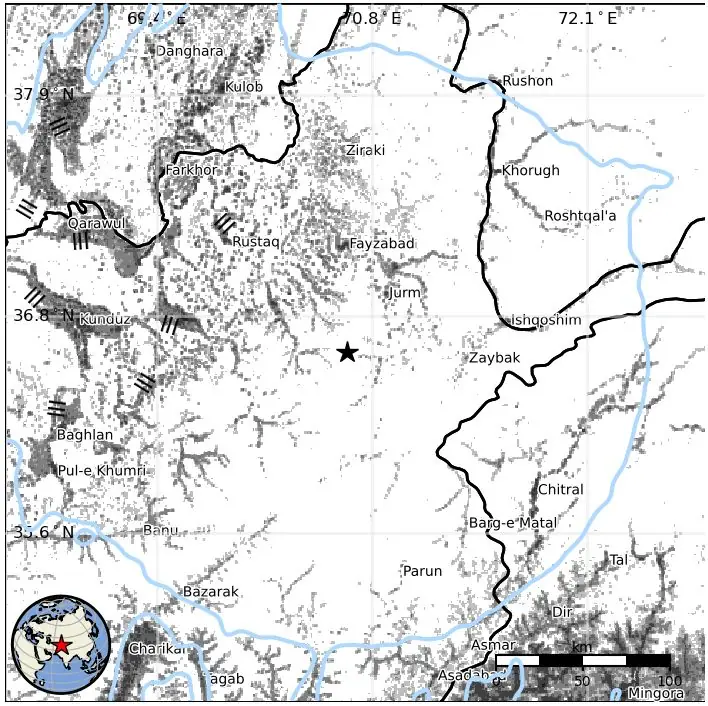
The epicenter was located 40.2 km (25 miles) SSW of Jurm (population 12 106), 61.8 km (38.4 miles) S of Fayzabad (population 44 421), and 92.3 km (57.4 miles) SE of Rustāq, Takhar, Afghanistan.
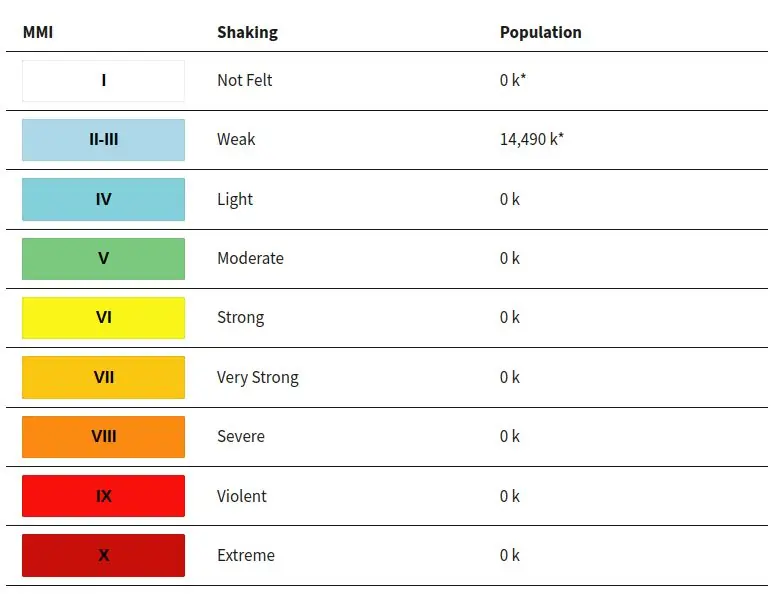
14 490 000 people are estimated to have felt weak shaking.
The USGS issued a Green alert for shaking-related fatalities and economic losses. There is a low likelihood of casualties and damage.
Overall, the population in this region resides in structures that are vulnerable to earthquake shaking, though resistant structures exist. The predominant vulnerable building types are adobe block and log construction.
Recent earthquakes in this area have caused secondary hazards such as landslides and liquefaction that might have contributed to losses.
Estimated population exposure to earthquake shaking
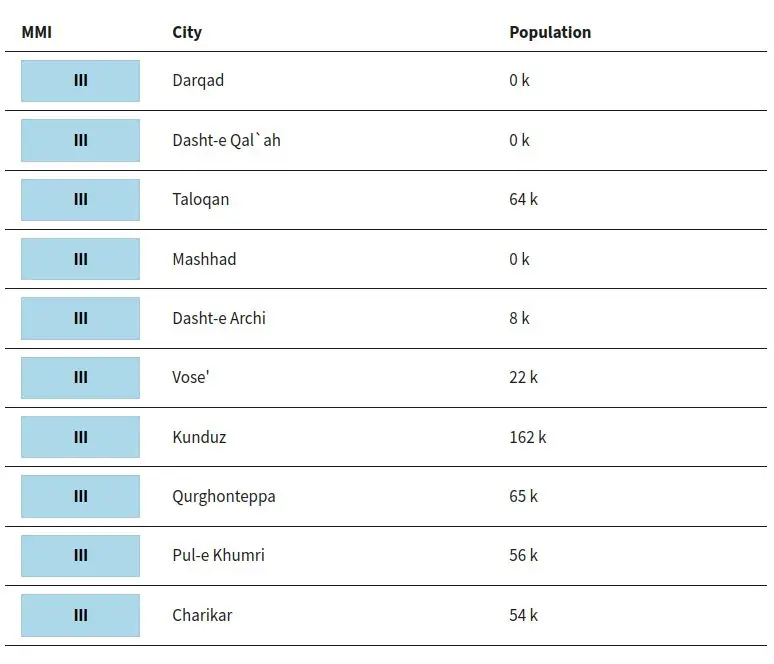
Selected cities exposed
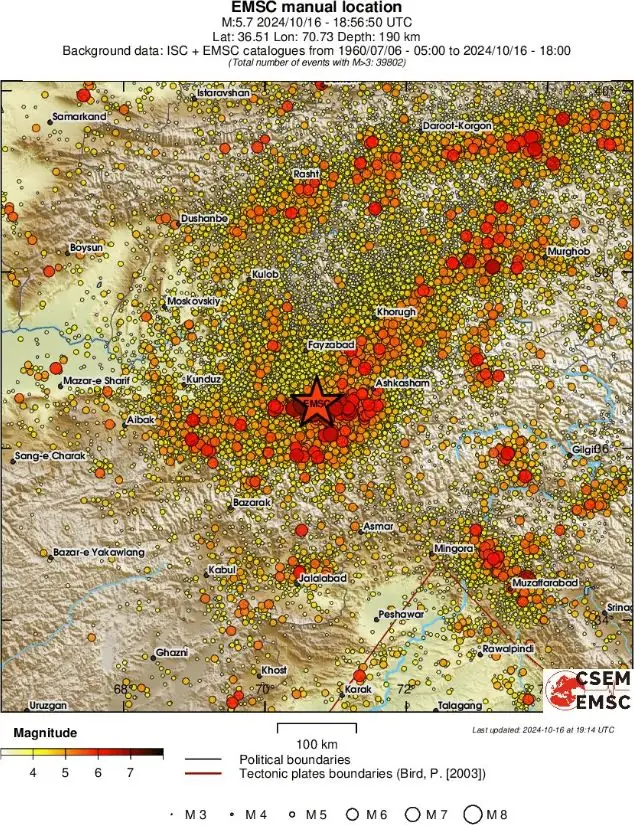
Regional seismicity
References:
1 M5.9 earthquake in Afghanistan – USGS – October 16, 2024
2 M5.7 earthquake in Afghanistan – EMSC – October 16, 2024

Teo Blašković founded The Watchers in 2011 and edited it until 2026, covering seismic and volcanic activity, extreme weather, space weather and near-Earth objects. Articles on this page are his archive.
Earlier reporting
Nothing on Watchers was published in the last 24 hours. These are older articles.
- M6.6 earthquake hits the Banda Sea 148 km west-southwest of Tual, Indonesia, at 68 km depth, USGS issues Green alert
- On October 22, 2017, a single flash of lightning stretched 515 miles from eastern Texas to near Kansas City, a distance that takes eight hours to drive, and nobody realized how far it had gone until scientists went back through the satellite data years later Epicenter
- CPC posts a slight risk of heavy rain from the Gulf Coast to the Northeast urban corridor November 25-29, and a moderate risk of West Coast wind and Sierra snow on November 25
- Florida's east coast faces a moderate flash flood risk Wednesday through Friday, with 4 to 8 inches of rain forecast and the St. Johns River near Cocoa already in major flood at 17.13 feet
