
At least 28 dead after flooding and landslides hit multiple provinces in Afghanistan
Floods, landslides and thunderstorms across multiple provinces in Afghanistan left at least 28 people dead and 49 injured by Monday, March 30, 2026. Afghan authorities said roads, irrigation systems and agricultural land were damaged, with 1 130 families affected.
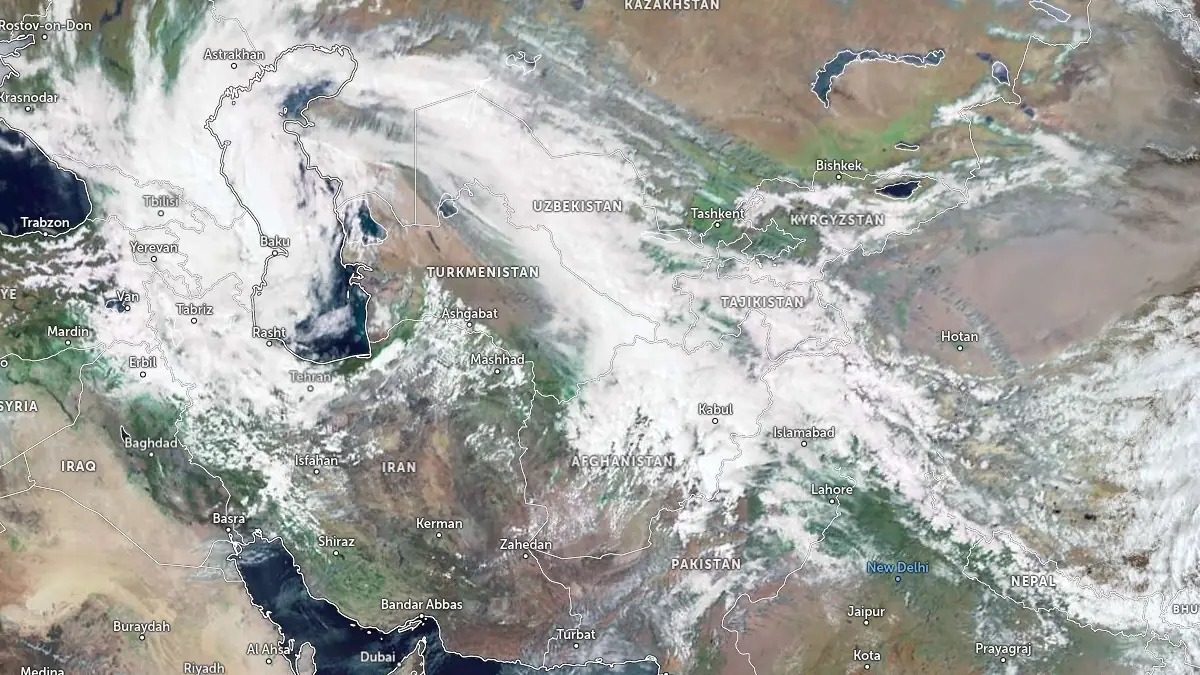
Image credit: EUMETSAT/Meteosat, Zoom Earth, The Watchers. Acquired at 10:00 UTC on March 28, 2026
Afghanistan’s National Disaster Management Authority (NDMA) said the severe weather also killed more than 240 animals and destroyed about 93 km (58 miles) of roads, in addition to damaging irrigation systems and agricultural land.
The reported impacts were spread across several provinces, with the worst-affected being Parwan, Maidan Wardak, Daikundi, Logar, Herat, Farah, Badghis, Ghor, Samangan, Sar-e Pol, Jawzjan, Faryab, and Laghman.
On March 29, authorities reported 17 deaths and 26 injuries over the previous 24 hours, with 13 of Afghanistan’s 34 provinces affected, mainly in the west, center, and northwest. At that stage, about 530 families were reported affected, and around 80 km (50 miles) of roads had been damaged.
The death toll has increased to 28 and the number of affected families to 1 130 on Monday, March 30.
Moderate to locally heavy rainfall is forecast for March 30–31 across central, eastern, and northeastern Afghanistan. Afghan authorities had already warned residents to stay away from rivers and flood-prone zones as the weather system continued.
Afghanistan remains highly exposed to flood impacts because many communities are located in terrain prone to rapid runoff, while weak infrastructure and vulnerable housing increase the risk of casualties and damage during intense rain events.
References:
1 Death toll in Afghanistan flooding increases to 28, authorities say – AP – March 30, 2026

Teo Blašković founded The Watchers in 2011 and edited it until 2026, covering seismic and volcanic activity, extreme weather, space weather and near-Earth objects. Articles on this page are his archive.
Published in the last 24 hours
- In September 1859, a solar storm lit up the night sky so brightly that gold miners in the Rocky Mountains woke up after midnight and started cooking breakfast, convinced the aurora glowing over their camp was the sunrise Epicenter
- A patch of warm Pacific water that could become the strongest El Niño in more than 70 years sits thousands of miles from any American town, yet it is already the main reason NOAA expects a wetter winter across the South and a milder one across the North
- A 19-year-old Nebraska teacher reportedly tied her pupils together with twine and led them to safety through a blizzard in January 1888 Epicenter
- NASA built the Opportunity rover to last 90 days on Mars, and Martian winds helped keep it alive for nearly 15 years by blowing dust off its solar panels, until a planet-wide dust storm in 2018 blocked sunlight and silenced the rover Epicenter
