
Large amount of Saharan dust moving over the Atlantic Ocean
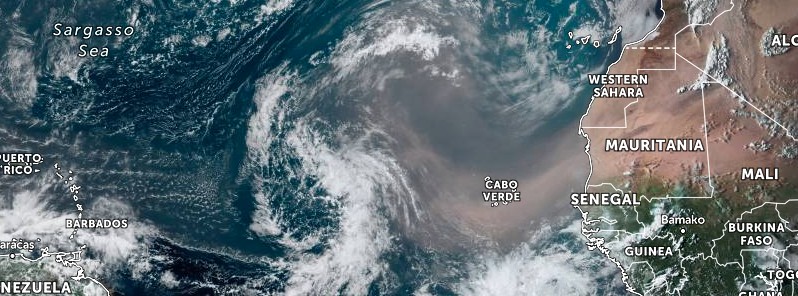
Image credit: TW
Another large Saharan dust cloud has lifted off western Africa late Sunday, August 22, 2021, and is now moving over the Atlantic Ocean toward the Caribbean and the United States.
The cloud seems of similar strength to the one produced last week.
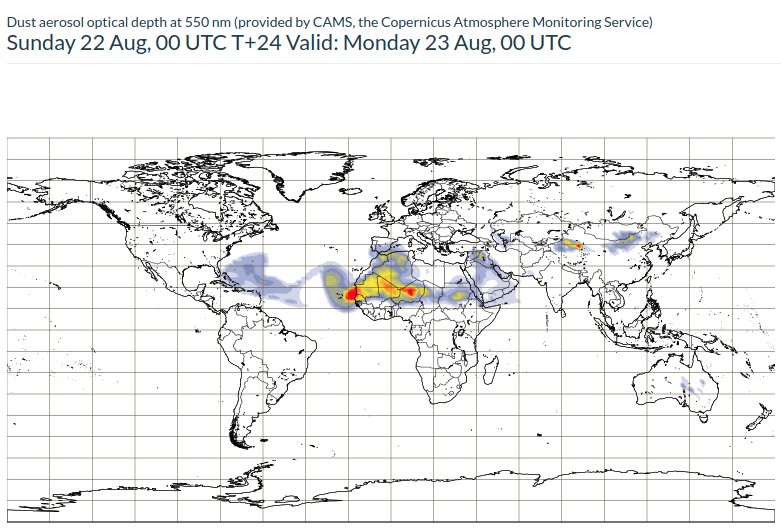
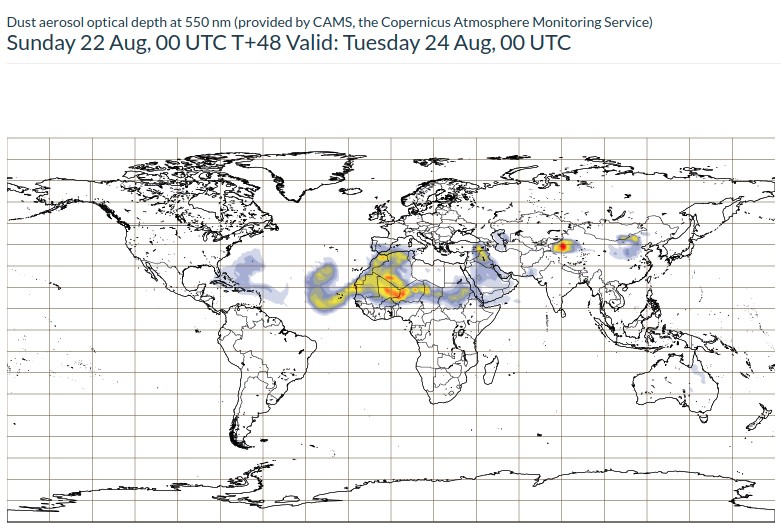
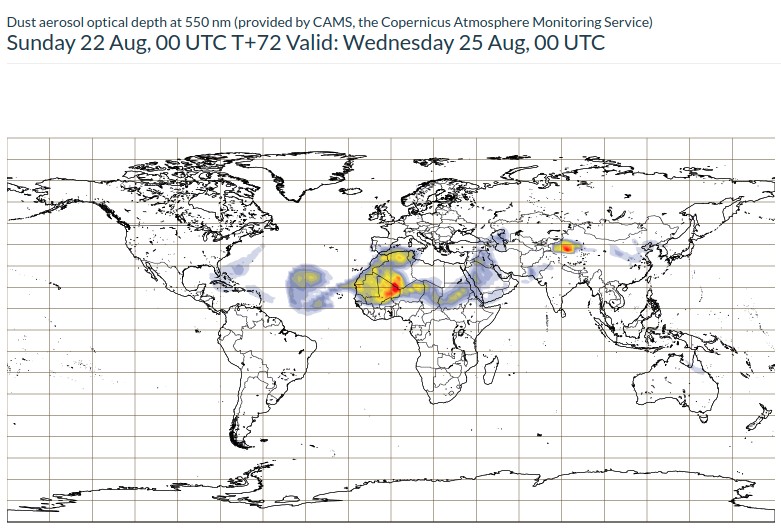
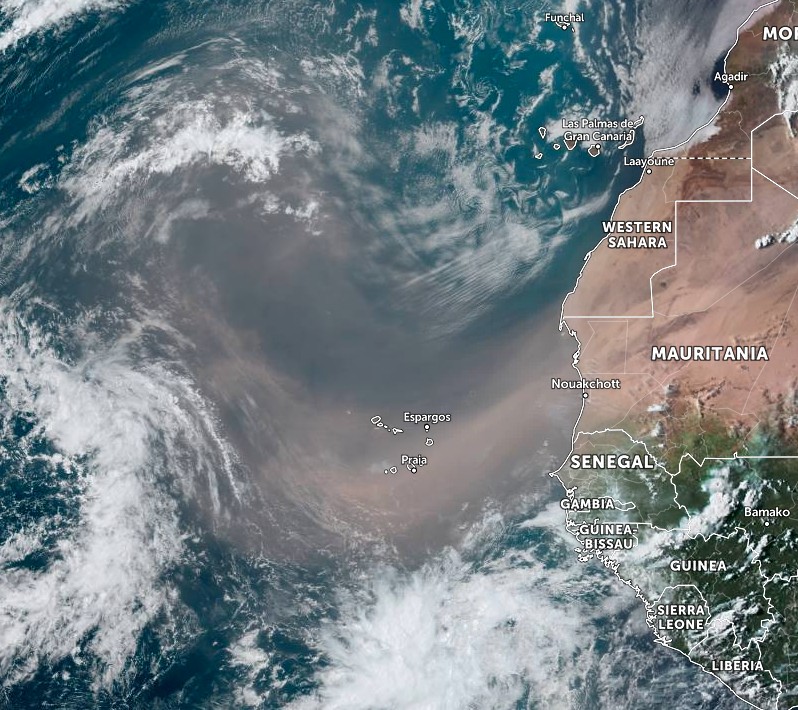
Image credit: NOAA/GOES-East, Zoom.Earth, TW. Acquired at 17:20 UTC on August 23, 2021
Saharan Air Layer (SAL) activity typically ramps up in mid-June and peaks from late June to mid-August, with new outbreaks occurring every three to five days.
"During this peak period, it is common for individual SAL outbreaks to reach farther to the west—as far west as Florida, Central America and even Texas—and cover extensive areas of the Atlantic (sometimes as large as the lower 48 United States)," said Dr. Jason Dunion, a University of Miami hurricane researcher working with NOAA's Atlantic Oceanographic and Meteorological Laboratory.1
The layer has unique properties of warmth, dry air and strong winds that can act to suppress hurricane formation and intensification.
.@NOAA's #GOESEast is continuing to see a lot of dust in the wind this morning, blowing over the Atlantic from the Sahara. This dry, dusty #SaharanAirLayer (SAL) can impact locations thousands of miles away, like Miami, in the example below.
More: https://t.co/tEmB0ehYcJ https://t.co/7SCr0GxaX9 pic.twitter.com/KplMFoPdnA
— NOAA Satellites (@NOAASatellites) August 23, 2021
Here is the African dust map for the the next week plus. Some has made it into Florida the past couple days and will into most the Gulf midweek. If you notice hazy skies and some color in the sunsets this is why. Our new western Caribbean wave will miss most. pic.twitter.com/WFikn0m0DT
— Mike's Weather Page (@tropicalupdate) August 24, 2021
References:
1 The Saharan Air Layer: What is it? Why does NOAA track it? – NOAA
Featured image credit: NOAA/GOES-East, Zoom.Earth, TW. Acquired at 17:20 UTC on August 23, 2021

I'm a dedicated researcher, journalist, and editor at The Watchers. With over 20 years of experience in the media industry, I specialize in hard science news, focusing on extreme weather, seismic and volcanic activity, space weather, and astronomy, including near-Earth objects and planetary defense strategies. You can reach me at teo /at/ watchers.news.

Commenting rules and guidelines
We value the thoughts and opinions of our readers and welcome healthy discussions on our website. In order to maintain a respectful and positive community, we ask that all commenters follow these rules.