
Explosive eruption at Sheveluch volcano ejects ash to 10.4 km (34 000 feet), Russia
Explosive activity at Sheveluch volcano on the Kamchatka Peninsula, Russia, produced a volcanic ash plume rising to approximately 10.4 km (34 000 feet) altitude at 11:20 UTC on March 16, 2026, drifting east across the North Pacific. Satellite imagery from Himawari-9 detected the ash cloud moving east at around 110 km/h (70 mph). The Aviation Color Code remains at Orange.
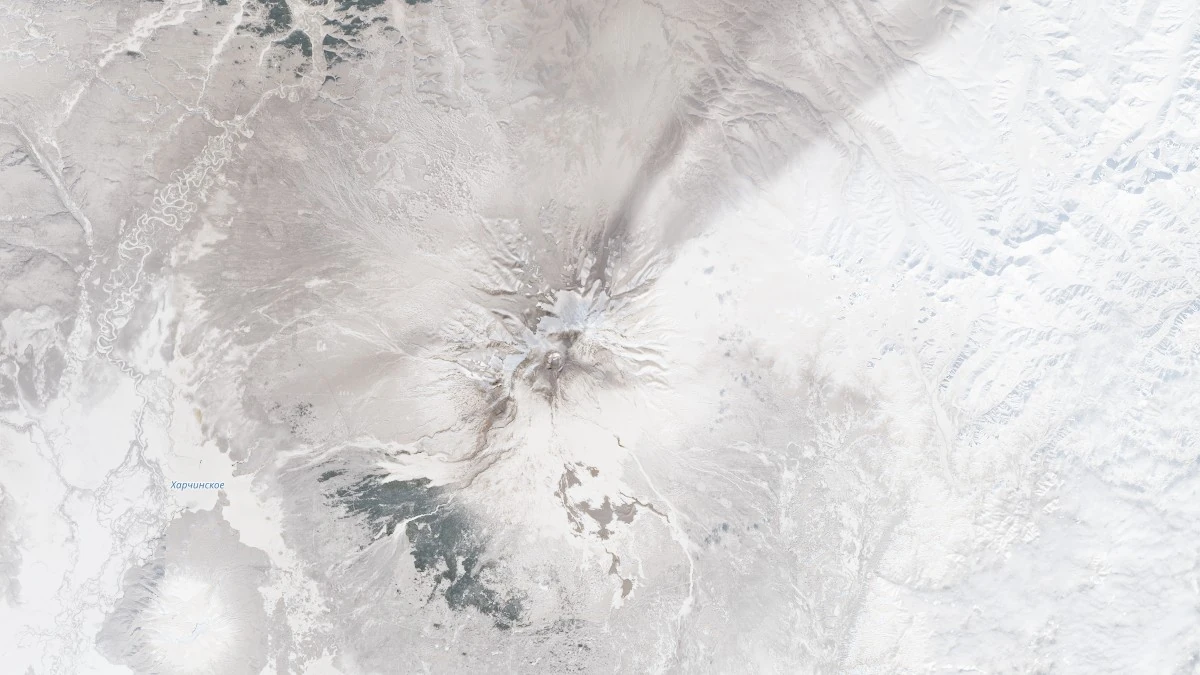
Satellite image showing ash and snow covered Sheveluch volcano on March 14, 2026. Credit: CopernicusEU/Sentinel-2, The Watchers
Explosive-extrusive eruption at Sheeluch volcano in Russia’s Kamchatka Peninsula continued on March 16, producing a sustained volcanic ash plume that reached approximately 10.4 km (34 000 feet) above sea level (a.s.l.) and drifted east across the North Pacific.
The eruption is accompanied by powerful gas-steam activity. In addition, a new block of lava continues to grow in the northern part of the lava dome, according to the Kamchatkan Volcanic Eruption Response Team (KVERT).
The Tokyo Volcanic Ash Advisory Center (VAAC Tokyo) reported that volcanic ash was continuously observed in satellite imagery, with the latest confirmed observation at 11:20 UTC on March 16. The ash cloud was detected using data from the Himawari-9 geostationary weather satellite.
According to the advisory, the ash plume extended across a broad area northeast of the volcano and was moving eastward at approximately 110 km/h (70 mph). Forecast dispersion models indicated the plume would continue moving across the North Pacific during the following 6–18 hours, potentially reaching airspace near the Aleutian Islands and western Alaska.
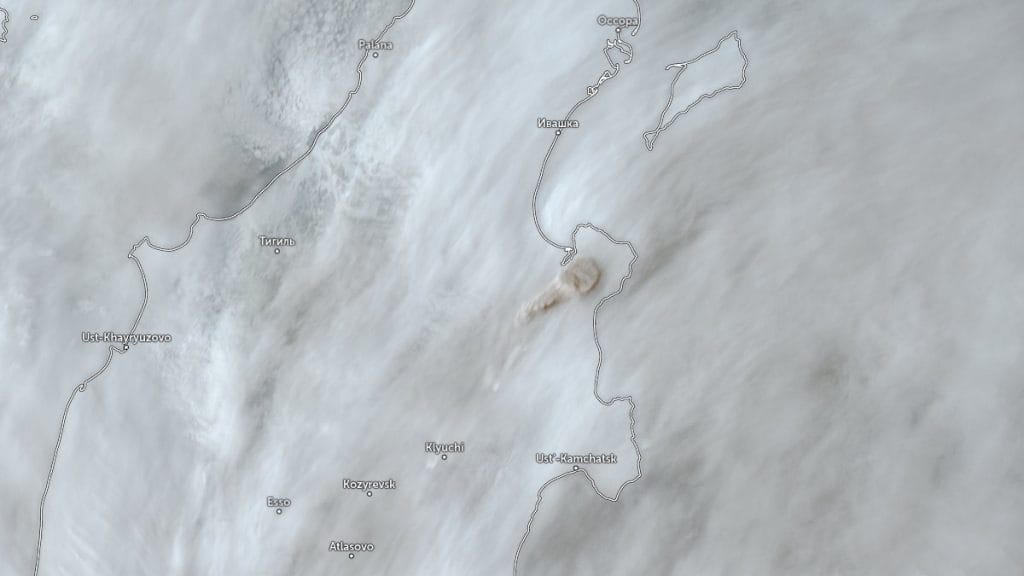
Forecast positions showed the ash cloud gradually expanding and shifting eastward while remaining between the surface and approximately 10.4 km (34 000 feet) altitude during the initial forecast period, before slowly descending to about 10 km (33 000 feet) during later forecast stages.
Parts of the ash cloud were partially obscured by meteorological cloud cover, which can complicate the precise detection and measurement of ash concentration in satellite imagery.
Volcanic ash at these altitudes poses a serious hazard to aircraft because fine ash particles can damage jet engines, abrade cockpit windows, and contaminate onboard air systems.
Earlier activity at Sheveluch also produced a significant ash emission on March 11, when an eruption reported KVERT generated an ash plume rising to approximately 8.2 km (27 000 feet) a.s.l. at 23:52 UTC. Satellite observations confirmed the ash cloud drifting northeast at approximately 165 km/h (105 mph).
Sheveluch, one of the largest and most active volcanoes in the Kamchatka volcanic arc, rises to 3 283 m (10 771 feet) above sea level. The volcano is characterized by a large lava-dome complex that frequently produces explosive eruptions as unstable portions of the dome collapse and interact with pressurized volcanic gases.
Eruptions at this volcano regularly generate ash plumes reaching 8–12 km (26 000–39 000 feet) altitude, occasionally disrupting international aviation routes that cross the North Pacific between Asia and North America.
Forecast models from VAAC Tokyo indicated that the ash cloud from the March 16 eruption could extend across the International Date Line during its eastward transport. Forecast coordinates show the plume moving from eastern longitudes in the western Pacific into western longitudes associated with the Alaska monitoring sector.
Sheveluch lies about 50 km (31 miles) northeast of the settlement of Klyuchi, the nearest populated area. Although the region surrounding the volcano is sparsely populated, explosive eruptions can produce ashfall and pyroclastic flows within several tens of kilometers of the volcano.
References:
1 Volcanic Activity Notice for Sheveluch volcano, Russia – KVERT – March 16, 2026

I’m a science journalist and researcher at The Watchers, contributing to the Epicenter edition, where I cover peer-reviewed scientific research and emerging discoveries across Earth and space sciences. With a background in astronomy and a passion for environmental science, I’ve worked in shark and coral conservation in Fiji, conducting reef and shark-behavior research, contributing to mangrove restoration, and earning PADI Open Water and Coral Reef Certifications. I bring a blend of scientific rigor and storytelling to illuminate the discoveries shaping our planet and beyond.

Commenting rules and guidelines
We value the thoughts and opinions of our readers and welcome healthy discussions on our website. In order to maintain a respectful and positive community, we ask that all commenters follow these rules.