
Strong and shallow M6.5 earthquake hits near the coast of Western Australia
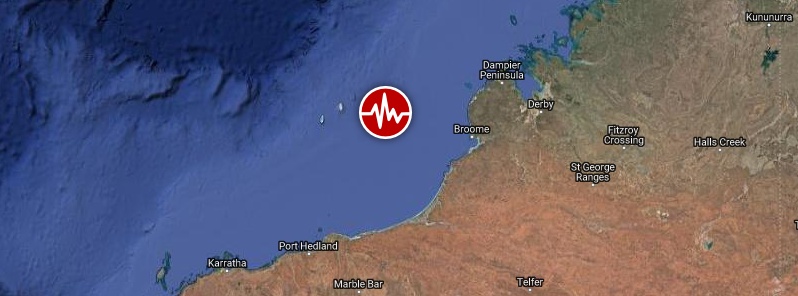
Image credit: Google, TW/SAM
A strong earthquake registered by Geoscience Australia as M6.5 hit near the coast of Western Australia at 05:39 UTC on July 14, 2019. The agency is reporting a depth of 0 km. USGS is reporting M6.6 at a depth of 10 km (6.2 miles).
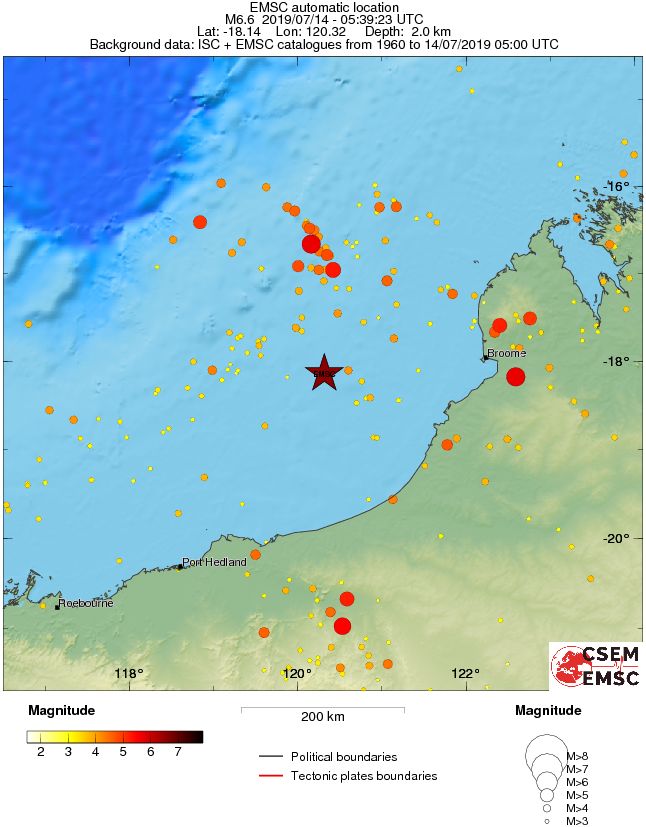
The epicenter was located 203 km (126 miles) W of Broome and 296 km (184 miles) NW of Port Hedland, Western Australia.
There are no people living within 100 km (62 miles).
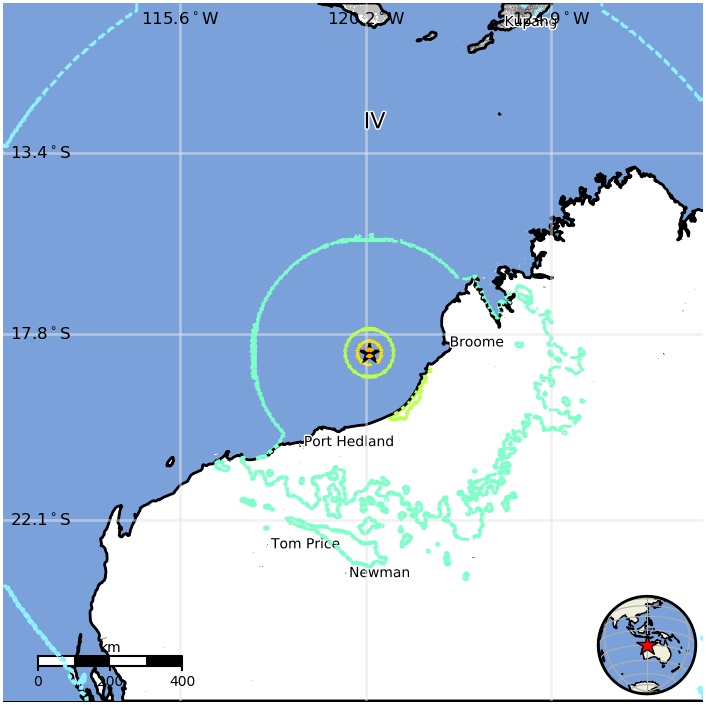
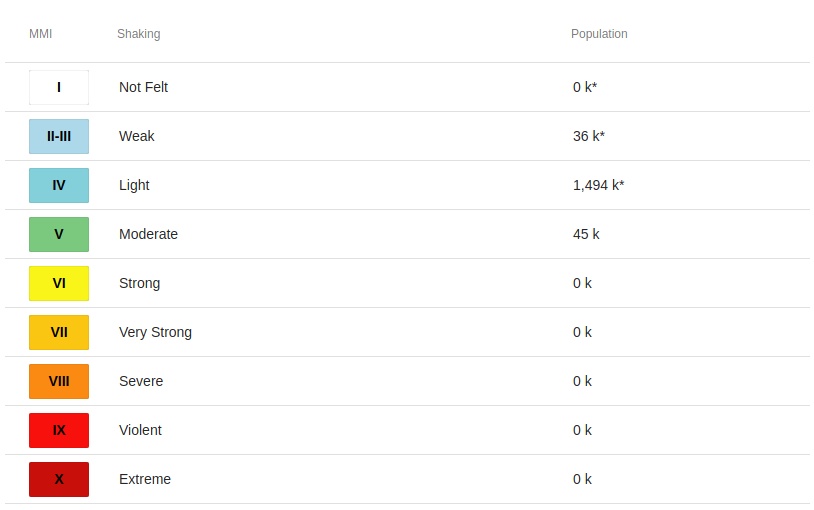
45 000 people are estimated to have felt moderate shaking and 1 494 000 light.
There is no tsunami threat from this earthquake.
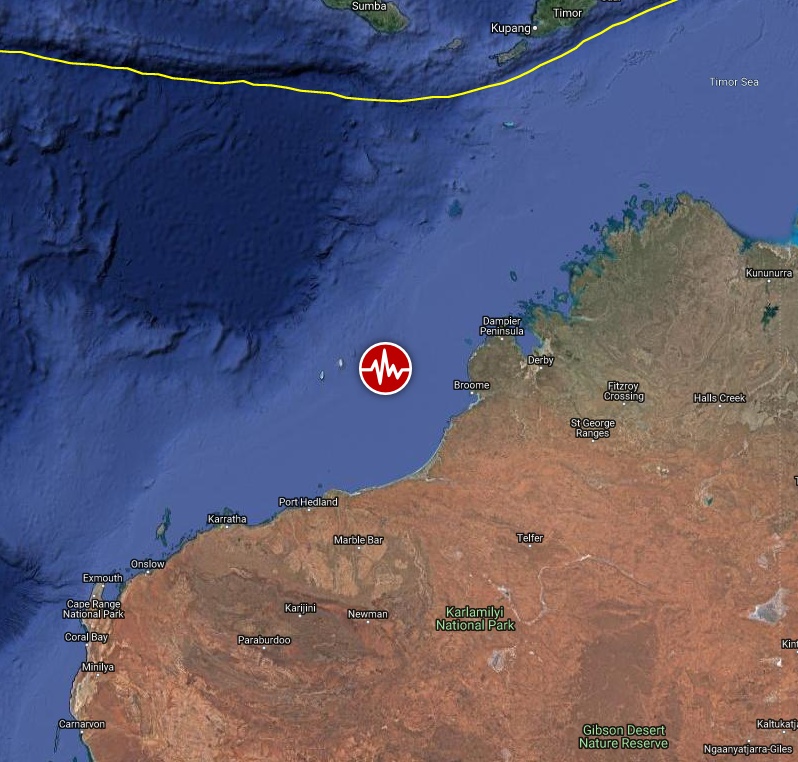
Image credit: Google, TW/SAM
The USGS issued a green alert for shaking-related fatalities and economic losses. There is a low likelihood of casualties and damage.
Overall, the population in this region resides in structures that are vulnerable to earthquake shaking, though resistant structures exist. The predominant vulnerable building types are unreinforced brick with concrete floor and precast concrete frame with wall construction.
Estimated population exposure to earthquake shaking
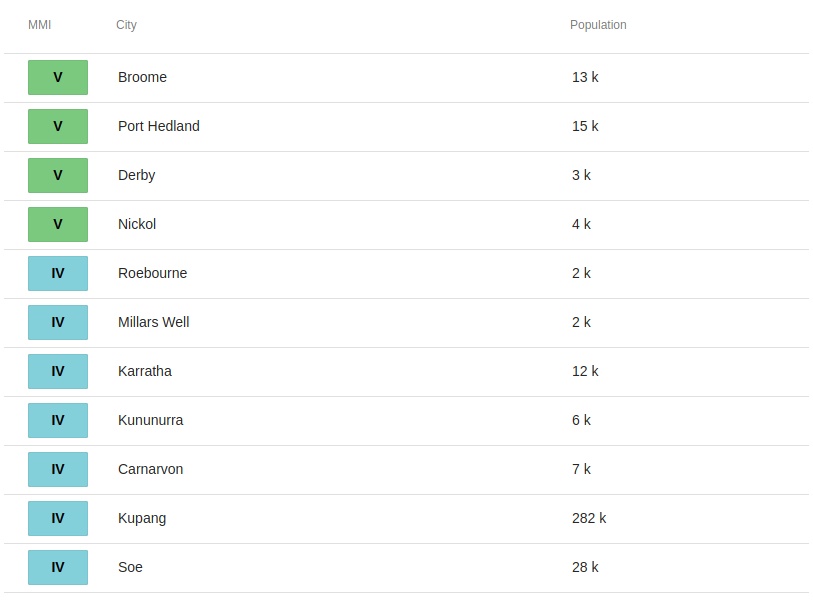
Selected cities exposed
Regional seismicity

Teo Blašković founded The Watchers in 2011 and edited it until 2026, covering seismic and volcanic activity, extreme weather, space weather and near-Earth objects. Articles on this page are his archive.
Published in the last 24 hours
- High Risk of excessive rainfall covers Florida’s Space Coast as St. Johns River near Cocoa reaches 5.67 m
- Asteroid 2026 WJ to pass Earth at 1.7 lunar distances at 04:20 UTC on November 22, with 2026 WD following at 4.4 lunar distances on November 23
- Cyclone Akvan weakens after landfall near Gopalpur; more than 300 000 evacuated in Odisha, India
- A broad low over southeastern Florida and the northwestern Bahamas has a 30 percent chance of subtropical or tropical development within 48 hours and a 50 percent chance within 7 days, the National Hurricane Center says
