
Two M6.0 earthquakes hit the western Indian-Antarctic Ridge
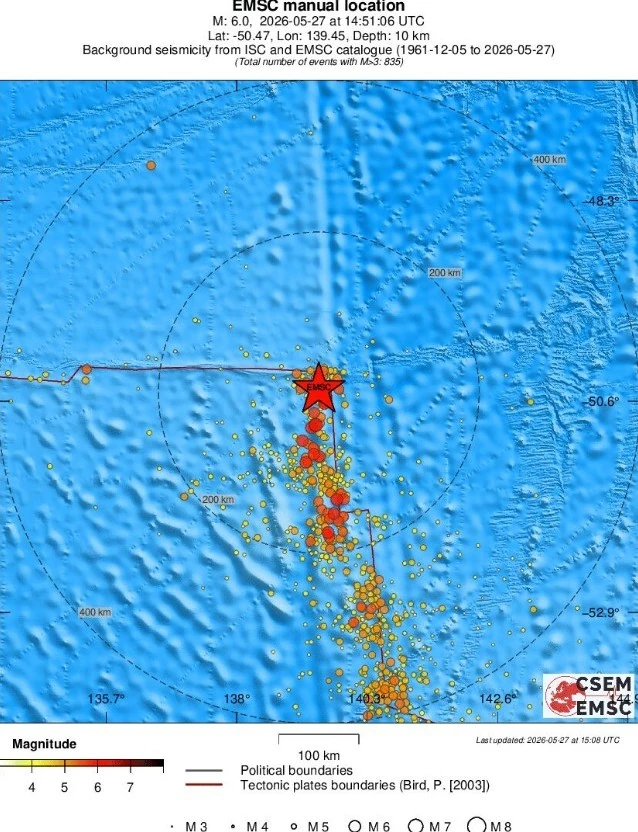
Two M6.0 earthquakes struck the western Indian-Antarctic Ridge within 10 minutes, at 14:51 UTC and 15:01 UTC on May 27, 2026.
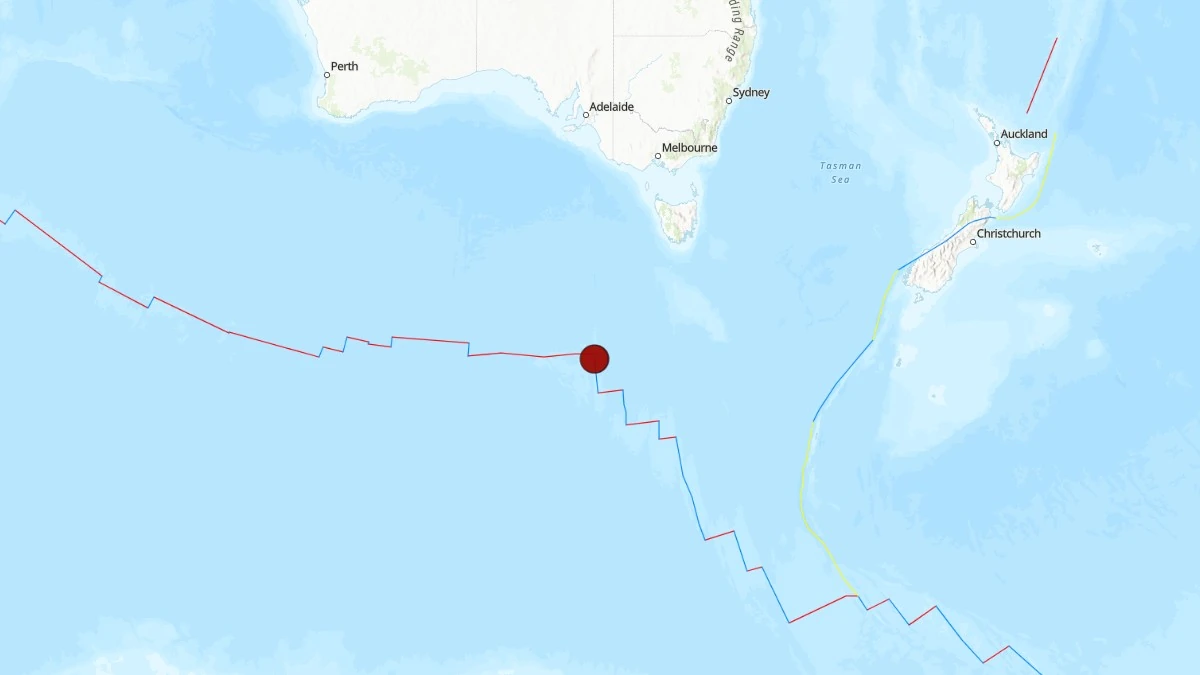
Epicenter of M6.0 earthquake on the western Indian-Antarctic Ridge on May 27, 2026. Credit: TW/SAM, ESRI
Both quakes were located in the same area, about 990 km (620 miles) SW of Geeveston, Tasmania, at a depth of 10 km (6.2 miles).
The USGS issued a Green alert for shaking-related fatalities and economic losses. There is a low likelihood of casualties and damage.
There are likely to be no affected structures in this region.
There is no tsunami threat.
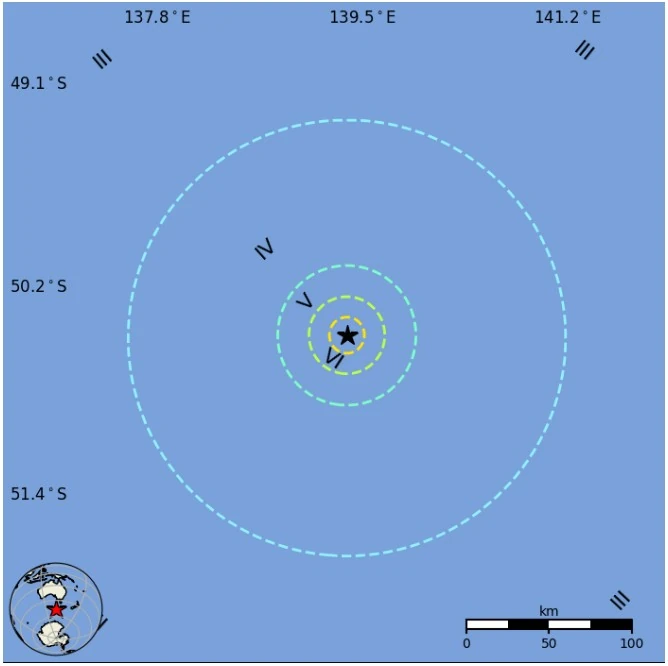
Estimated population exposure to earthquake shaking
Regional seismicity]
References:
1 M6.0 western Indian-Antarctic Ridge – USGS – May 27, 2026
2 M6.0 western Indian-Antarctic Ridge – USGS – May 27, 2026

Teo Blašković founded The Watchers in 2011 and edited it until 2026, covering seismic and volcanic activity, extreme weather, space weather and near-Earth objects. Articles on this page are his archive.
Published in the last 24 hours
- In September 1859, a solar storm lit up the night sky so brightly that gold miners in the Rocky Mountains woke up after midnight and started cooking breakfast, convinced the aurora glowing over their camp was the sunrise Epicenter
- A patch of warm Pacific water that could become the strongest El Niño in more than 70 years sits thousands of miles from any American town, yet it is already the main reason NOAA expects a wetter winter across the South and a milder one across the North
- A 19-year-old Nebraska teacher reportedly tied her pupils together with twine and led them to safety through a blizzard in January 1888 Epicenter
- NASA built the Opportunity rover to last 90 days on Mars, and Martian winds helped keep it alive for nearly 15 years by blowing dust off its solar panels, until a planet-wide dust storm in 2018 blocked sunlight and silenced the rover Epicenter
