
Heavy rainfall triggers rescues and flood disruptions in southeast Queensland, Australia
Heavy rainfall triggered emergency flood rescues and transport disruption across southeast Queensland on May 18, 2026, after intense rainfall affected the Gold Coast, Brisbane, and the Scenic Rim, where emergency responders handled more than 300 requests for assistance. Parts of the region experienced about a month’s worth of rain in just one day.
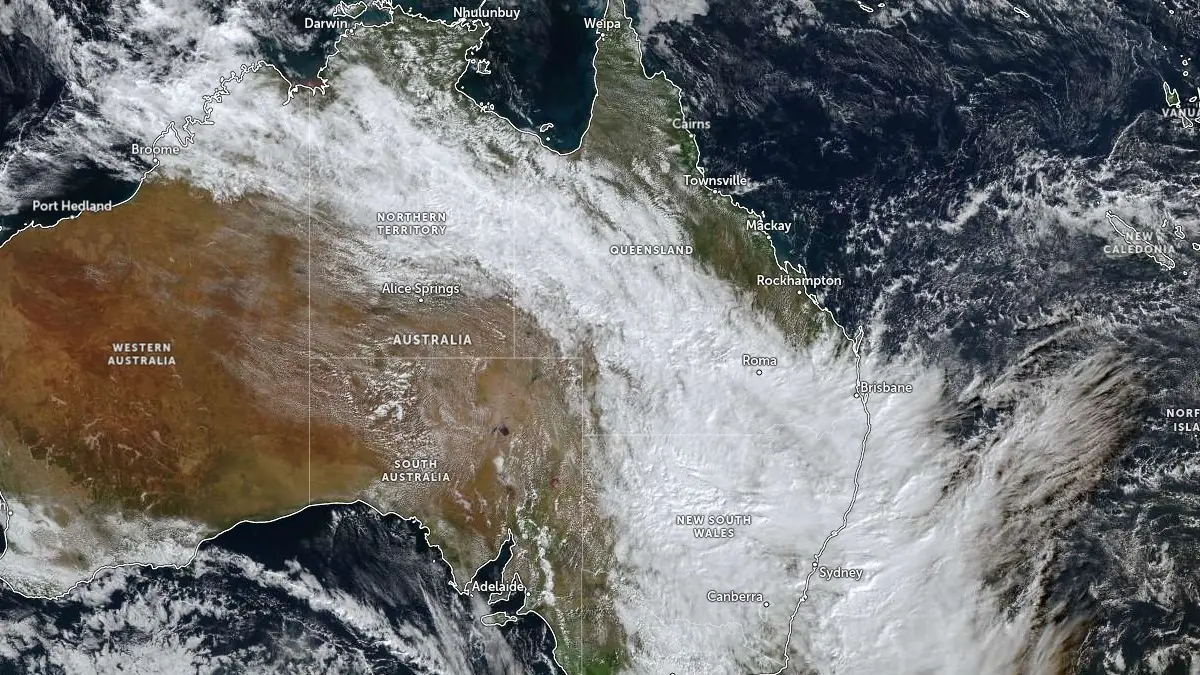
Image credit: JMA/Himawari-9, Zoom Earth, The Watchers. Acquired at 04:40 UTC on May 18, 2026
Heavy rainfall affected parts of southeast Queensland between May 18 and 19, inundating roads and disrupting transport across the Gold Coast, Brisbane, and nearby regions. Regional reporting described widespread flooding impacts after repeated rainfall affected already wet catchments.
Monday, May 18, entered history books as the wettest May day on the Gold Coast since 2003, while elevated rainfall totals were recorded across parts of southeast Queensland. Springbrook National Park recorded about 191 mm (7.5 inches) of rainfall, while the Gold Coast Seaway recorded about 119 mm (4.7 inches).
Emergency responders handled more than 300 requests for assistance after heavy rainfall affected roads, vehicles, and access routes across the region. At least 15 swiftwater rescues were reported, and 55 people across southeast Queensland were rescued, Queensland Fire Department reported.

Emergency services carried out a major rescue operation near Mount Barney in the Scenic Rim after heavy rainfall stranded nearly 50 students and staff, with swollen waterways and deteriorating access routes complicating rescue efforts and limiting access to the area.

Flood warnings remained in place for catchments including the Nerang and Coomera river systems.

Teo Blašković founded The Watchers in 2011 and edited it until 2026, covering seismic and volcanic activity, extreme weather, space weather and near-Earth objects. Articles on this page are his archive.
Published in the last 24 hours
- Hawaii's largest freshwater lake was 200 feet deep at 10 a.m. on June 2, 2018. By that afternoon, lava from Kilauea had boiled it away Epicenter
- Flying glass cut a teacher in Russia but none of her 44 pupils, because when a meteor flashed across the sky in 2013, she told them to get under their desks Epicenter
- A South Dakota man put the widest and heaviest hailstone on US record in his freezer, and a power cut melted part of it before NOAA measured it at 8 inches across and nearly 2 pounds in 2010 Epicenter
- Black kites and brown falcons in northern Australia have been seen snatching smoldering sticks from wildfires, flying them into unburned grass and dropping them, starting new fires that send lizards, rodents and insects running straight toward the waiting birds Epicenter
