
Super Typhoon “Wutip” becomes the strongest February typhoon in West Pacific Ocean
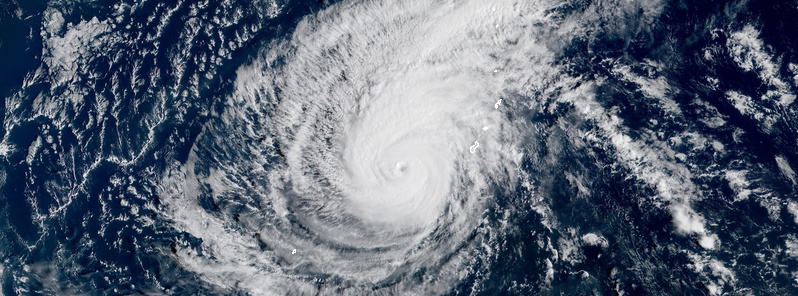
Featured image: Super Typhoon "Wutip" on February 23, 2019. Credit: JMA/Himawari-8, RAMMB/CIRA, TW
Typhoon "Wutip" underwent rapid intensification on February 23, 2019, peaking as Category 4 super typhoon with maximum sustained winds of 250 km/h (155 mph) and central pressure of 925 hPa.
This made Wutip the strongest February typhoon in the western Pacific Ocean, surpassing Super Typhoon "Higos" which hit 241 km/h (150 mph) on February 10, 2015, and the strongest February tropical cyclone anywhere north of the equator.
According to NOAA’s Historical Hurricane Tracks database, only seven January and February Category 4 or Category 5 typhoons have been recorded in the Northwest Pacific since records began in the late 1940s, WeatherUnderground's Dr. Jeff Masters notes.
Wutip tied with Super Typhoon "Rose" of January 1957 as the second strongest typhoon to form in these two months. The only stronger typhoon ever observed so early in the year was Super Typhoon "Ophelia" – which peaked as a Category 5 storm with 257 km/h (160 mph) winds on January 13, 1958.
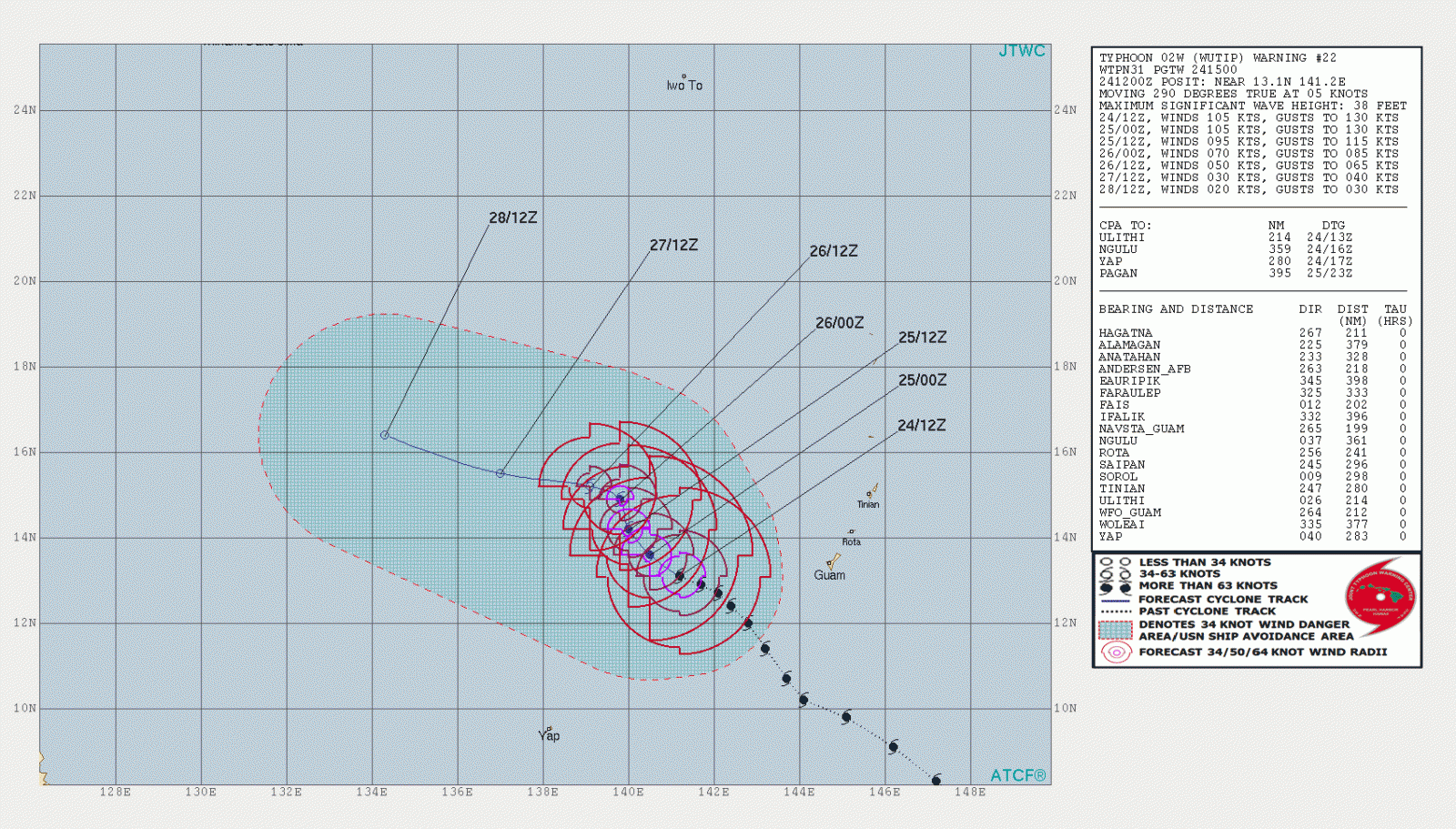
Wutip passed about 112 km (180 miles) southwest of Guam on February 23. It dumped 125 – 305 mm (5 – 12 inches) of rain by Saturday afternoon (local time) with another 75 – 127 mm (3 – 5 inches) expected.
At 15:00 UTC on February 24, the center of Typhoon "Wutip" was located about 400 km (250 miles) east of Guam. It was moving WNW at 10 km/h (6 mph) with maximum sustained winds near 193 km/h (120 mph).
Wutip is expected to weaken over the next few days, and will likely be downgraded to a tropical storm by Tuesday, February 26.

Teo Blašković founded The Watchers in 2011 and edited it until 2026, covering seismic and volcanic activity, extreme weather, space weather and near-Earth objects. Articles on this page are his archive.
Published in the last 24 hours
- Airline pilots reported red flashes shooting upward from thunderstorms for decades, until a camera being tested in Minnesota in 1989 caught one by accident above a distant storm Epicenter
- Luxor sits inside the 258 km wide path of the total solar eclipse of 2 August 2027, and totality will last up to 6 minutes 23 seconds near the city, with the Sun 82 degrees overhead at greatest eclipse. Epicenter
- On 13 April 2029 the 340 m asteroid Apophis will pass about 32,000 km above Earth's surface, inside the ring of geosynchronous satellites, and NASA says observers across the Eastern Hemisphere will see it without a telescope or binoculars. Epicenter
- Dust shed by Halley's Comet gives Earth the Eta Aquarids every May and the Orionids every October, and the comet itself, which passed 4.94 million km away on 10 April 837 at about magnitude -3.5, is due to reach perihelion on 28 July 2061. Epicenter
