
Significant cold outbreak hits Europe, two more waves expected
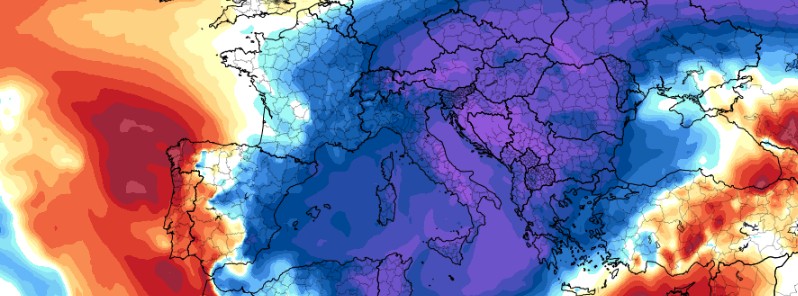
Featured image: GFS temperature anomaly model for April 21, 2017. Credit: TropicalTidbits
Forecast models have come true and Europe is now experiencing an unusually significant cold outbreak. Two more cold waves are expected before April ends, posing a significant threat to agriculture.
After very warm March and the first half of April in which temperatures across Europe rose well above normal, signaling spring has arrived in full effect, Europe is now experiencing a significant cold outbreak with huge amounts of snow already falling on the northern side of the Alps.
On Monday, April 17, near freezing temperatures, heavy snowfall, and traffic chaos were reported in central Europe. This is expected to continue through the rest of the week, with subfreezing temperatures and high frost danger by Thursday, April 20.
On Tuesday, April 18, snow is falling as far south as mountainous Croatia where temperatures dropped to near 0 °C (32 °F), prompting authorities to warn drivers to use extreme caution.
Strong winds are expected across the Alps, eastern Austria, and WNW Hungary tomorrow, April 19 as a result of tightening pressure gradient between deep low over Hungary and strengthening high pressure over Germany. Wind gusts could locally reach 100 – 120 km/h (62 – 74 mph), Severe Weather Europe warns. The next 3 days will be very cold and well below average for this period.
GFS model calls for two more cold waves before April ends. The first will affect central Europe and Balkan Peninsula again while the second is expected to primarily affect the United Kingdom, France, Portugal and Spain. Below average temperatures are expected in northern Africa, too.

Teo Blašković founded The Watchers in 2011 and edited it until 2026, covering seismic and volcanic activity, extreme weather, space weather and near-Earth objects. Articles on this page are his archive.
Published in the last 24 hours
- In September 1859, a solar storm lit up the night sky so brightly that gold miners in the Rocky Mountains woke up after midnight and started cooking breakfast, convinced the aurora glowing over their camp was the sunrise Epicenter
- A patch of warm Pacific water that could become the strongest El Niño in more than 70 years sits thousands of miles from any American town, yet it is already the main reason NOAA expects a wetter winter across the South and a milder one across the North
- A 19-year-old Nebraska teacher reportedly tied her pupils together with twine and led them to safety through a blizzard in January 1888 Epicenter
- NASA built the Opportunity rover to last 90 days on Mars, and Martian winds helped keep it alive for nearly 15 years by blowing dust off its solar panels, until a planet-wide dust storm in 2018 blocked sunlight and silenced the rover Epicenter

Commenting rules and guidelines
We value the thoughts and opinions of our readers and welcome healthy discussions on our website. In order to maintain a respectful and positive community, we ask that all commenters follow these rules.