
New supermoon, third of this year, falls on July 22, 2013
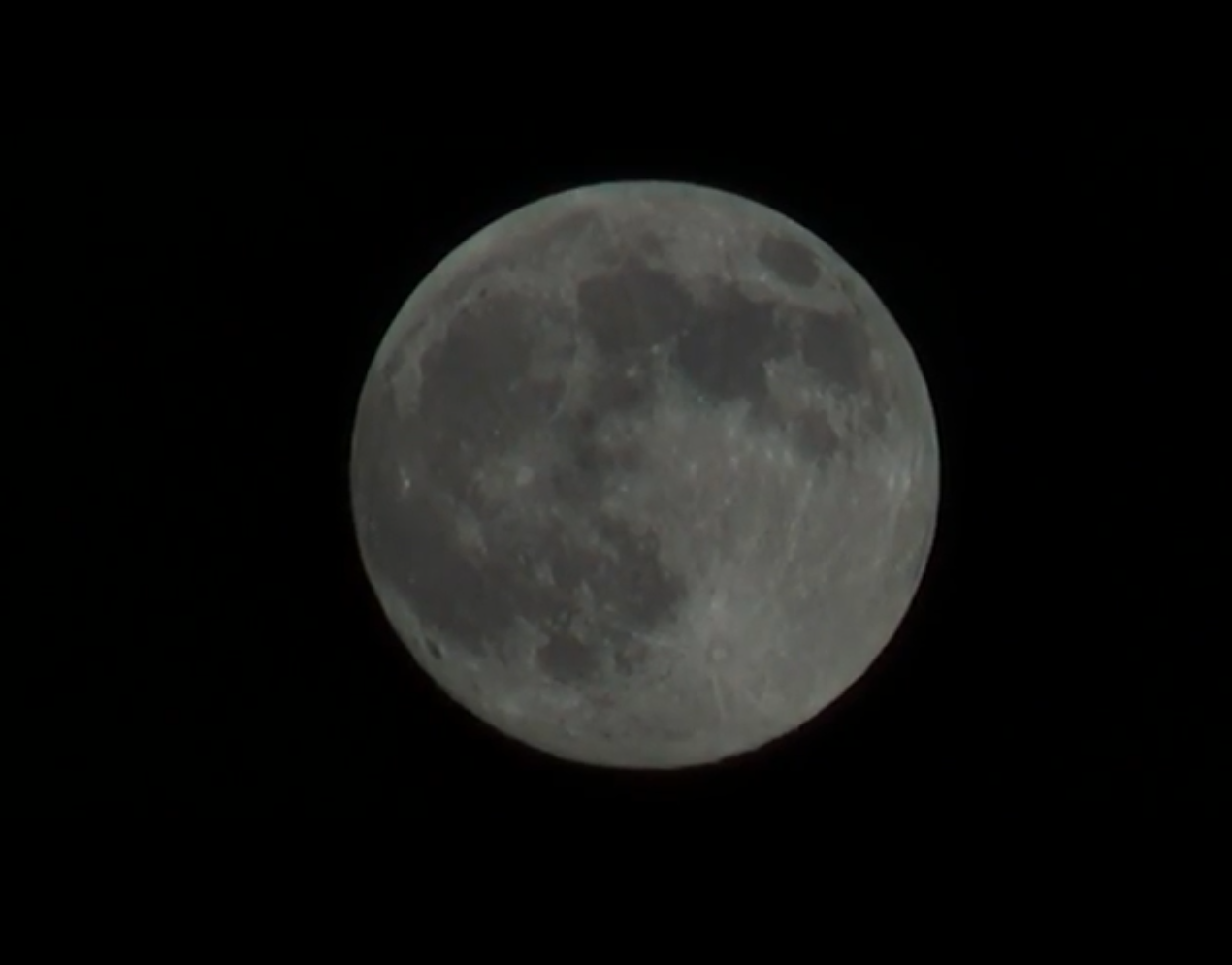
Image credit: TW
It has not been long since the spectacular supermoon on June 23, 2013. At that time the moon was at it`s closest to Earth for the year, appeared as the largest full moon for 2013, and it was also about 30 percent brighter than an average full moon.
But for everyone who missed that event there is a chance this July to observe another amazing supermoon.
Only one day after this month`s lunar perigee (moon`s closest point to Earth for the month) on July 22, 2013 at 18:16 UTC the full moon falls.

Apogee is the farthest point from the earth.Perigee is the closest point to the earth and it is in this stage that the moon appears larger. Looking at the moon in the sky without anything to compare it to, you wouldn't notice any size difference. But the difference in size can in fact be quite significant. (Credit: Newton High School)
Supermoon happens when the moon is slightly closer to Earth in its orbit than on average, and when it occurs at the same time as a full moon. That's why the moon may seem bigger although the difference in its distance from Earth is only a few percent at such times. Astronomers refer to that event as a perigee full moon.
The July 2013 supermoon is the third supermoon this year, and there are about 4-6 supermoons on average per year.
Here is a video of the June 2013 supermoon:

Feature image: Video screenshot (Credit: Tony Smith)

Published in the last 24 hours
- High Risk of excessive rainfall covers Florida’s Space Coast as St. Johns River near Cocoa reaches 5.67 m
- Asteroid 2026 WJ to pass Earth at 1.7 lunar distances at 04:20 UTC on November 22, with 2026 WD following at 4.4 lunar distances on November 23
- Cyclone Akvan crossed the north Andhra Pradesh and south Odisha coasts close to Gopalpur on November 20 with 70-80 km/h winds gusting to 90, and has weakened into a deep depression
- A broad low over southeastern Florida and the northwestern Bahamas has a 30 percent chance of subtropical or tropical development within 48 hours and a 50 percent chance within 7 days, the National Hurricane Center says
