
A summer of supermoons – July, August and September
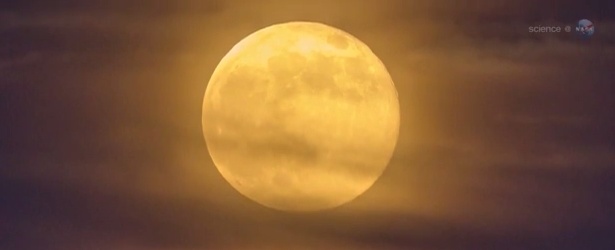
Image credit: TW
The summer of 2014 will be bathed in moonlight as three perigee "supermoons" occur in consecutive months: July, August, September. The first supermoon is on July 12 at 08:28 UTC, the second on August 10 at 17:44 UTC and the third on September 9 at 03:30 UTC.
The scientific term for the phenomenon is perigee moon. Full moons vary in size because of the oval shape of the Moon's orbit. The Moon follows an elliptical path around Earth with one side – perigee – about 50 000 km closer than the other – apogee.
Video courtesy of Science @ NASA

The Watchers team and our contributors bring the latest on extreme weather, earthquakes, volcanic eruptions, space weather, and all things science. We're all about making sense of the natural world and keeping you informed on what’s happening. Got a tip or a question? Hit us up using the form at newstips!
Published in the last 24 hours
- High Risk of excessive rainfall covers Florida’s Space Coast as St. Johns River near Cocoa reaches 5.67 m
- Four small asteroids will pass close to Earth from November 21 to 23
- Cyclone Akvan weakens after landfall near Gopalpur; more than 300 000 evacuated in Odisha, India
- A broad low over southeastern Florida and the northwestern Bahamas has a 30 percent chance of subtropical or tropical development within 48 hours and a 50 percent chance within 7 days, the National Hurricane Center says

What would be the best time to see this in the western Caribbean? We will be on a cruise and hopefully with clear skies we should have a great view.
Hopefully after dinner and wine. Just head out and enjoy 🙂
What time will I be able to see it on Washington? Sorry if it's a dumb question I don't know what UTC means! Thanks!
hi there, UTC = universal coordinated time… just type UTC to 'your time zone' in google… there are plenty of services for that conversion
have i missed it?
I am in china GMT+8.
Im close to shanghai, will i be able to see it tonight?
Where may I see tomorrow's super moon in Washington State? I'm based near Seattle, WA.
Thanks. 🙂
hey what time will the people from new york be able to see the supermoon? could please tell me saturday morning time and saturday evening time. thanks
What time is the Best time to view it in Germany?
Hi what time will I be able to see this in Ireland on 12 July 2014.
Thanks
you are UTC +1 hour, so that would be 09:28 your time. if sky is clear you can see it building up to supermoon during the night.