
Second M-class solar flare of the day – M1.0 erupted from AR 1654
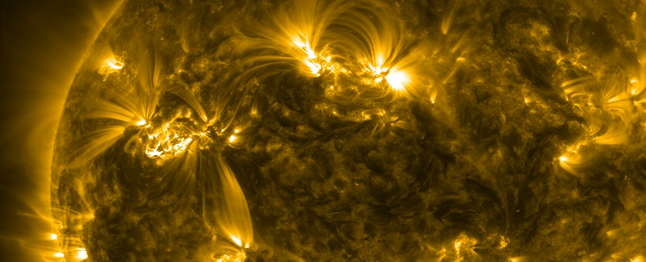
Image credit: AR 1654 during M1.0 solar flare event – January 11, 2013. Courtesy of NASA/SDO and the AIA, EVE, and HMI science teams.
Active Region 1654 erupted with second M-class solar flare of the day. On January 11, 2013 at 15:07 UTC a moderate solar flare measuring M1.0 was recorded. This latest event started at 14:51, peaked at 15:07 and ended at 15:24 UTC.
Earlier today we had a moderate but impulsive M-class solar flare measuring M1.2. The flare erupted from same region (AR 1654) at 09:11 UTC.
Region 1654 is now classified with beta-gamma-delta magnetic configuration and is becoming more geoeffective as it rotates into direct Earth view. This region is capable of producing strong solar flares and will pose a threat in the coming days.

Solar flare measuring M1.0 on January 11, 2013 at 15:07 UTC

Sunspots – January 11, 2012
Follow solar activity in near real-time on our SWS!

Teo Blašković founded The Watchers in 2011 and edited it until 2026, covering seismic and volcanic activity, extreme weather, space weather and near-Earth objects. Articles on this page are his archive.
Published in the last 24 hours
- A Virginia park ranger was struck by lightning seven times and lived, even though three of the strikes set his hair on fire Epicenter
- The hole in the ozone layer over Antarctica was about twice the size of the US this year, and scientists say it would have been bigger still if ozone-eating chemicals were at their 2000 levels Epicenter

[…] The Watchers – Second M-class solar flare of the day – M1.0 erupted … […]
Perhaps the beginning dance has commenced??