
Sunspot 1564 unleashed a long duration M1.4 solar flare
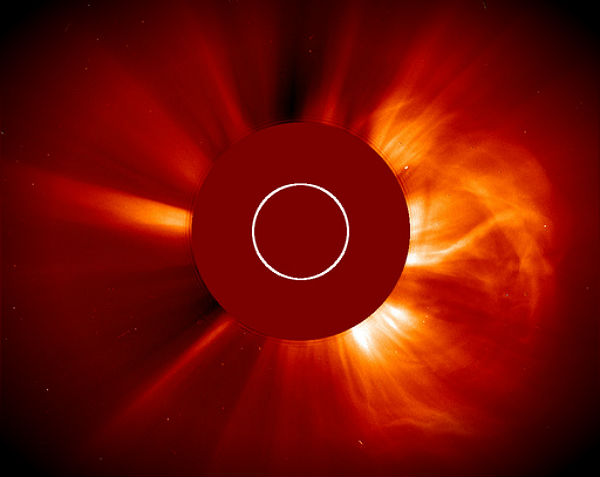
Image credit: TW
Moderate long-duration solar flare measuring M1.4 took place at 17:59 UTC on September 8. It was generated around Sunspot 1564. Another strong flare was recorded about the same time around nearby Region 1562. It is possible that the X-ray flux recorded the cumulative x-rays from two strong C (8) flares from Regions 1564 and 1562.

A minor (R1) radio blackoutoccurred on the sun-facing side of Earth. R1 means weak or minor degradation of HF radio communication on sunlit side with occasional loss of radio contact. and low-frequency navigation signals could be degraded for brief intervals.

Three new Sunspots are growing on the farside of the Sun and at least one of them looks to have produced a CME on Friday. The first potential region will begin to rotate into view by early next week. You can track the farside of the Sun using the SolarHam Farside Watch page.


New Region 1567 was numbered yesterday. The region is a simple Bxo-beta type spot group.

Published in the last 24 hours
- High Risk of excessive rainfall covers Florida’s Space Coast as St. Johns River near Cocoa reaches 5.67 m
- Asteroid 2026 WJ to pass Earth at 1.7 lunar distances at 04:20 UTC on November 22, with 2026 WD following at 4.4 lunar distances on November 23
- Cyclone Akvan crossed the north Andhra Pradesh and south Odisha coasts close to Gopalpur on November 20 with 70-80 km/h winds gusting to 90, and has weakened into a deep depression
- A broad low over southeastern Florida and the northwestern Bahamas has a 30 percent chance of subtropical or tropical development within 48 hours and a 50 percent chance within 7 days, the National Hurricane Center says

[…] Sunspot 1564 unleashed a long duration M1.4 solar flare Tags: bxo-beta, credit, Earth, moderate, region, saturday, Solar, sunspot, sunspots, video, watchers […]
[…] The Watchers – Sunspot 1564 unleashed a long duration M1.4 solar … Tags: bxo-beta, credit, Earth, farside-watch, saturday, stereo, video, watch […]
sun storms getting more and more as the year goes on