
The mystery of solar nanoflares
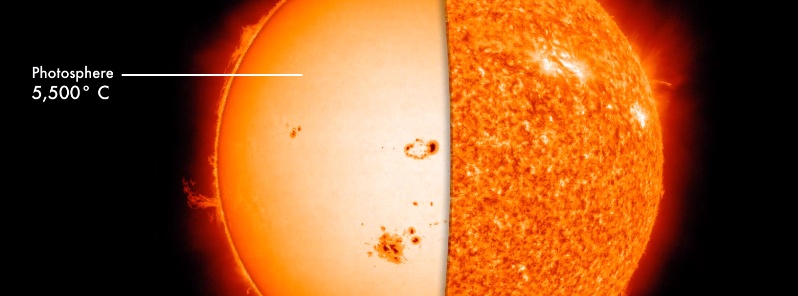
Image credit: TW
Nanoflares are eruptions on the Sun which are billion times less energetic than ordinary flares but still have the power that belies their name.
They appear as little brightenings of the solar surface at extreme ultraviolet and X-ray wavelengths and they might solve a long-standing mystery in solar physics: What causes the Sun's corona to be so hot?
Physicist David Smith of the UC Santa Crus says a typical 'nanoflare' has the same energy as 240 megatons of TNT, or something like 10 000 atomic fission bombs.
Unlike typical solar flares, which can be weeks or even months apart, nanoflares appear to be active throughout the solar cycle, which would explain why the corona remains hot during Solar Minimum.
And while each individual nanoflare falls short of the energy required to heat the Sun's atmosphere, collectively they might have no trouble doing to job.

Featured image and video courtesy of NASA/ScienceCast

The Watchers team and our contributors bring the latest on extreme weather, earthquakes, volcanic eruptions, space weather, and all things science. We're all about making sense of the natural world and keeping you informed on what’s happening. Got a tip or a question? Hit us up using the form at newstips!
Earlier reporting
Nothing on Watchers was published in the last 24 hours. These are older articles.
- On October 22, 2017, a single flash of lightning stretched 515 miles from eastern Texas to near Kansas City, a distance that takes eight hours to drive, and nobody realized how far it had gone until scientists went back through the satellite data years later Epicenter
- CPC posts a slight risk of heavy rain from the Gulf Coast to the Northeast urban corridor November 25-29, and a moderate risk of West Coast wind and Sierra snow on November 25
- Florida's east coast faces a moderate flash flood risk Wednesday through Friday, with 4 to 8 inches of rain forecast and the St. Johns River near Cocoa already in major flood at 17.13 feet
- Cyclone Akvan to make landfall between Nellore and Visakhapatnam around noon on November 20, IMD forecasts 120-130 km/h winds gusting to 145
