
Semeru eruption sends pyroclastic flow 3.5 km (2.2 miles) down Besuk Kobokan, Indonesia
An explosive eruption occurred at Semeru volcano in East Java, Indonesia, at 08:49 LT (01:49 UTC) on March 29, 2026, producing an ash plume rising 800 m (2 625 feet) above the summit and a pyroclastic density current traveling 3.5 km (2.2 miles) toward the Besuk Kobokan drainage.
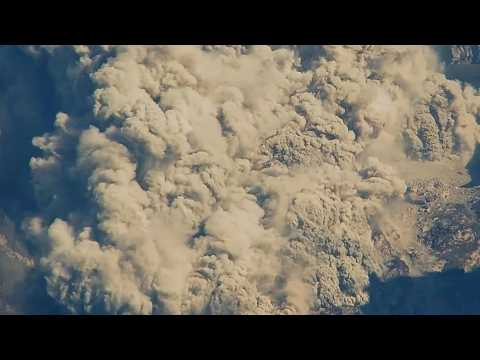
The eruption lasted approximately 4 minutes and 6 seconds and was recorded with a maximum seismic amplitude of 22 mm. Observations from the Semeru Volcano Observation Post indicate that this event was part of a sequence of eruptive activity, with multiple eruptions recorded earlier the same day.
The pyroclastic density current (PDC) represents the most significant hazard element of the eruption, as PCDs consist of hot gas, ash, and volcanic material moving rapidly downslope through established drainage channels. The reported runout distance of 3.5 km (2.2 miles) followed the Besuk Kobokan drainage — a known pathway for PDCs during Semeru’s eruptive phases.
The Darwin Volcanic Ash Advisory Centre reported ash clouds reaching approximately 4.6 km (15 000 feet) above sea level, drifting west-northwest to northwest.

Indonesia’s Center for Volcanology and Geological Hazard Mitigation (PVMBG) maintains Alert Level 3 on a four-level scale.
An exclusion zone of 5 km (3.1 miles) from the summit remains in effect, as well as extended restrictions up to 13 km (8 miles) along the southeast sector following the Besuk Kobokan drainage. Additional buffer zones are applied along river systems due to the risk of lahars and remobilized volcanic material.
Featured image: Eruption at Semeru volcano on March 29, 2026. Credit: afarTV (stillshot)

Teo Blašković founded The Watchers in 2011 and edited it until 2026, covering seismic and volcanic activity, extreme weather, space weather and near-Earth objects. Articles on this page are his archive.
Published in the last 24 hours
- Hawaii's largest freshwater lake was 200 feet deep at 10 a.m. on June 2, 2018. By that afternoon, lava from Kilauea had boiled it away Epicenter
- Flying glass cut a teacher in Russia but none of her 44 pupils, because when a meteor flashed across the sky in 2013, she told them to get under their desks Epicenter
- A South Dakota man put the widest and heaviest hailstone on US record in his freezer, and a power cut melted part of it before NOAA measured it at 8 inches across and nearly 2 pounds in 2010 Epicenter
- Black kites and brown falcons in northern Australia have been seen snatching smoldering sticks from wildfires, flying them into unburned grass and dropping them, starting new fires that send lizards, rodents and insects running straight toward the waiting birds Epicenter
