• All five canonical nucleobases used in DNA and RNA detected in Ryugu samples

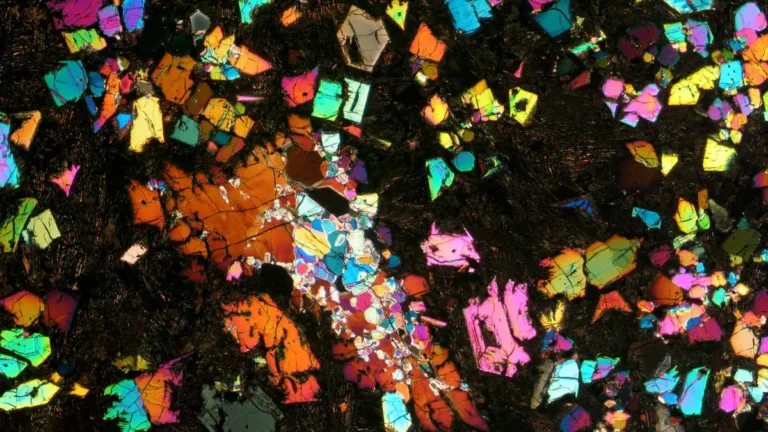
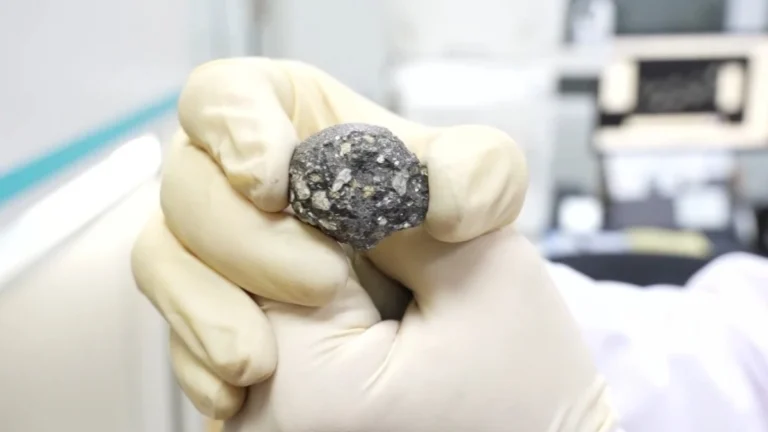
    All five canonical nucleobases used in DNA and RNA were identified in pristine samples returned from asteroid Ryugu by Japan’s Hayabusa2 mission, according to a study published in Nature Astronomy on March 16, 2026. The results support the view that key prebiotic compounds can form through non-biological processes in extraterrestrial environments and may have contributed to early Earth’s chemical inventory.

  • Extreme isotopic signatures in 3I/ATLAS point to origin in the early Milky Way

    Extreme deuterium enrichment measured in both water and methane in the interstellar object 3I/ATLAS suggests formation in a very cold environment (≲30 K) and possibly early in the history of the Milky Way, according to two preprint studies based on James Webb Space Telescope observations conducted on December 22 and 23, 2025. The isotopic compositions differ sharply from those measured in known Solar System comets and point to formation in an environment chemically distinct from that of the Solar System.

  • Eight bright fireballs reported over U.S. in March as spring fireball season returns

    Eight bright fireballs were reported over the U.S. between March 3 and 24, 2026, drawing renewed attention to a seasonal increase in fireball activity often seen around the March equinox. NASA has long said sporadic fireball rates can rise by about 10% to 30% during this period, a pattern recognized for more than four decades, even though its cause remains unresolved.

  • Rare 225 m (738 feet) crater discovered on Moon

    A 225 m (738 feet) impact crater that formed on the Moon in late spring 2024 has been identified in imagery from NASA’s Lunar Reconnaissance Orbiter, marking the largest crater found to have formed during the mission. According to crater production models, an impact large enough to create a crater of this size should occur only once every 139 years.

  • ESA researchers use neural network to identify hundreds of rare cosmic anomalies, including several dozen that defy classification

    A neural network tool developed by the European Space Agency (ESA) analyzed nearly 100 million cutouts from the Hubble Legacy Archive in just two and a half days, identifying about 1 400 anomalous objects – more than 800 never previously catalogued. Several dozen of these defied classification altogether, showing the potential and the limits of AI in astronomical discovery.

  • Radar data reveal subsurface lava tube beneath Nyx Mons on Venus

    Radar analysis of data collected by NASA’s Magellan spacecraft between 1990 and 1992 has identified an empty subsurface lava tube beneath the Nyx Mons region on Venus. The structure was detected using Synthetic Aperture Radar imaging techniques and reported on February 9, 2026, in a peer-reviewed study published in Nature Communications.

  • SOLAR-1 reaches Lagrange point 1, beginning NOAA’s new operational era in space-weather observation

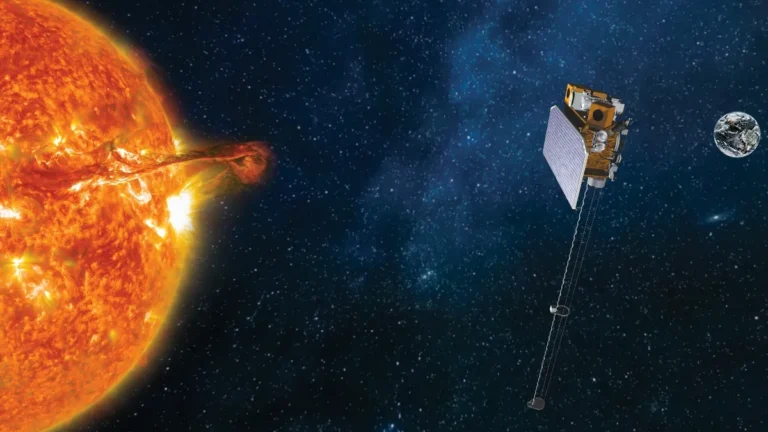
    A new operational space-weather satellite, named SOLAR-1, took position between Earth and the Sun on January 23, 2026, about 1.6 million km (1 million miles) from Earth. The observatory begins the transition of U.S. space-weather monitoring from research missions to continuous hazard surveillance, enabling earlier detection of solar storms that can affect satellites, communications, and power systems.

  • Interstellar object 3I/ATLAS becomes a fully active comet after perihelion

    NASA’s SPHEREx space telescope re-observed the interstellar object 3I/ATLAS in December 2025 and detected a dramatic increase in activity after perihelion, including strong water outgassing, multiple new gas species, and a transition from icy grains to refractory dust in its coma.

  • Solar Orbiter observations reveal avalanche-like reconnection powering a solar flare

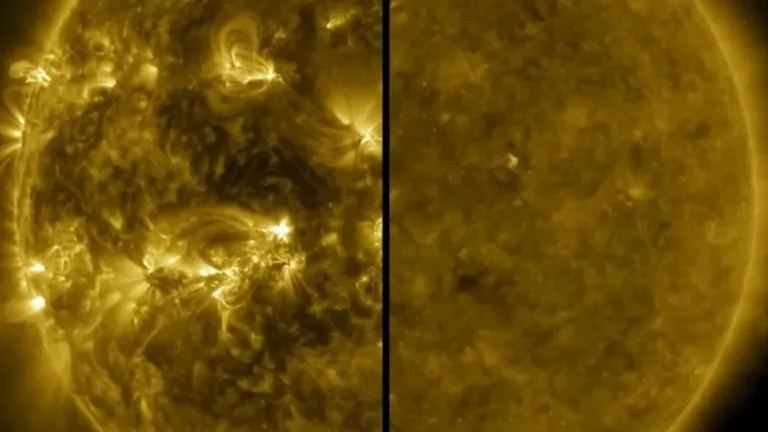
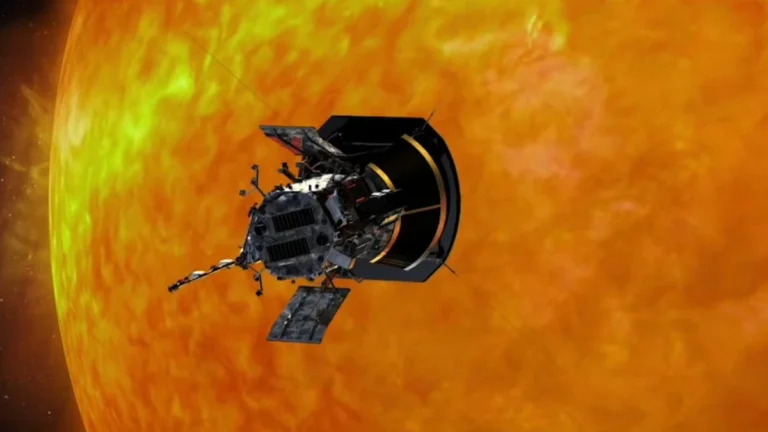
    Solar Orbiter has provided direct observational evidence that avalanche-like magnetic reconnection can power a solar flare. The mechanism was observed during a close approach to the Sun on September 30, 2024, as an M7.7-class flare evolved over roughly 40 minutes before reaching peak intensity. The results, published today in Astronomy & Astrophysics, confirm long-standing avalanche models previously supported mainly by statistical flare studies.

  • Polar storms at Jupiter and Saturn reveal hidden differences deep inside the planets

    Scientists at the Massachusetts Institute of Technology report that the radically different polar vortex patterns on Jupiter and Saturn are controlled by how energy flows through their atmospheres and how strongly their deep interiors are stratified, according to research published on January 20, 2026, in Proceedings of the National Academy of Sciences.