
Biggest solar storms can occur years after solar maximum
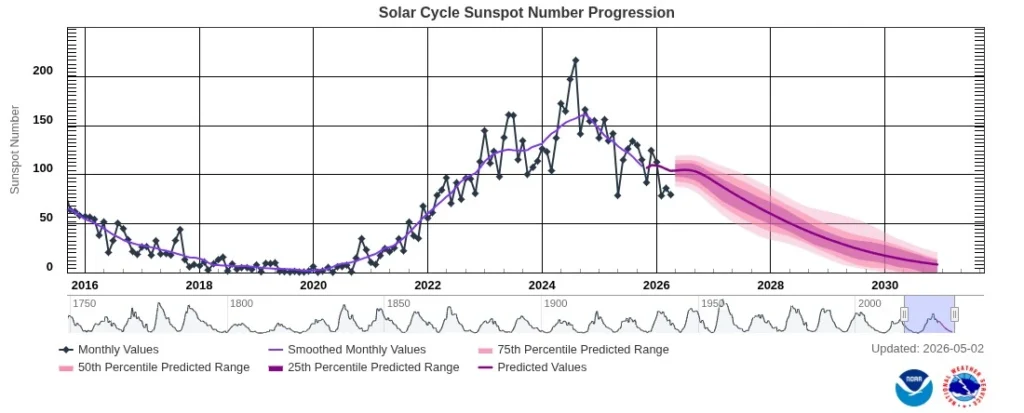
Solar Cycle 25 remains in an active phase after reaching its peak sunspot number in late 2024, but major solar storms remain possible as the cycle declines, NOAA Space Weather Prediction Center (SWPC) research scientist Mark Miesch said in a video update posted on May 1, 2026. Solar activity is forecast to gradually decrease in the coming years, but the declining phase can still produce strong flares, CMEs, and geomagnetic storms.
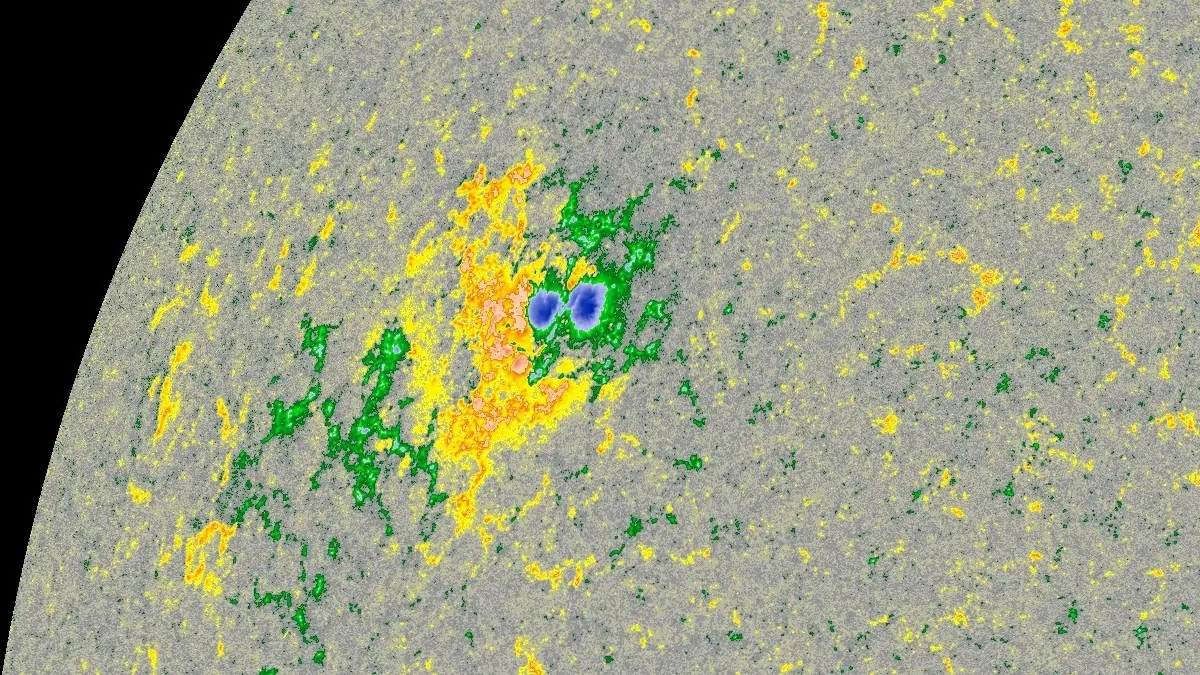
Active Region 4436 on May 11, 2026. Credit: NASA/SDO HMI
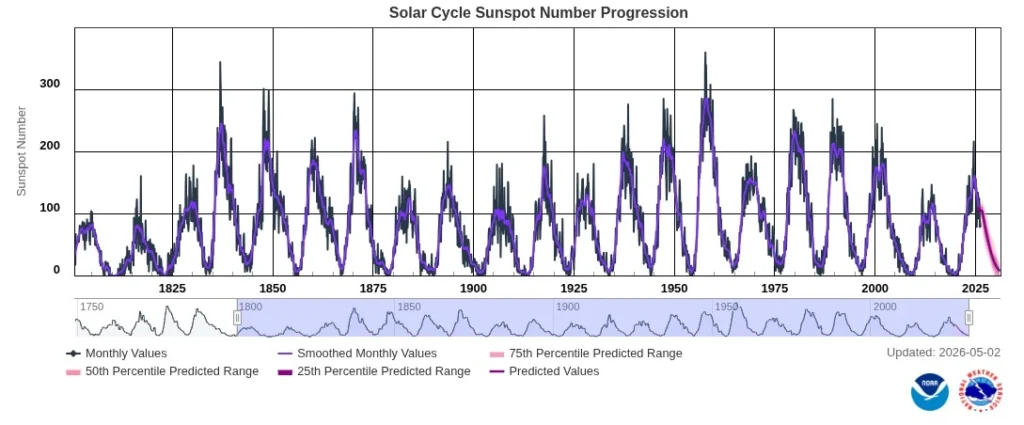
Miesch said SWPC tracks the Sun’s magnetic activity through indicators such as sunspots and the number of solar storms. That activity rises and falls on an approximately 11-year cycle, with the highest activity period known as solar maximum. “That’s hurricane season for space weather,” Miesch said.
According to Miesch, Solar Cycle 25 reached peak sunspot number in late 2024, but SWPC continues to monitor elevated solar activity in 2026. He said the current level is among the highest observed in about 20 years, after the previous solar cycle peaked in 2014 at a relatively low level.
The passage of peak sunspot number does not mean the main space weather risk has ended, as some of the largest solar storms in history occurred during the declining phase of the solar cycle.
“Some of the biggest solar storms in history have happened a year or two or three after the maximum sunspot number,” Miesch said. “We’re not out of the woods yet.”
“We’re still watching the Sun.”
References:
1 Solar Cycle Progression – NOAA/SWPC – Accessed May 11, 2026

I'm a dedicated researcher, journalist, and editor at The Watchers. With over 20 years of experience in the media industry, I specialize in hard science news, focusing on extreme weather, seismic and volcanic activity, space weather, and astronomy, including near-Earth objects and planetary defense strategies. You can reach me at teo /at/ watchers.news.

Commenting rules and guidelines
We value the thoughts and opinions of our readers and welcome healthy discussions on our website. In order to maintain a respectful and positive community, we ask that all commenters follow these rules.