Newly discovered planet-forming disk challenges planet formation models
Astronomers using JWST found a planet-forming disk unusually rich in carbon dioxide but poor in water, challenging models of how planetary systems develop.

The exploration of celestial bodies and cosmic phenomena beyond Earth. This field seeks to uncover the mysteries of the universe, including the nature of stars, planets, galaxies, and the laws governing space and time.

Astronomers using JWST found a planet-forming disk unusually rich in carbon dioxide but poor in water, challenging models of how planetary systems develop.

Ions in solar flares reach temperatures exceeding 60 million °C (108 million °F), potentially solving a long-standing mystery over unexpectedly broad spectral lines first observed in the 1970s, according to new research published on September 3, 2025.

NASA’s InSight mission detected seismic waves consistent with a solid inner core in Mars, according to a study published in Nature on September 3, 2025. Researchers constrained its radius to 613 ± 67 km (380 ± 41 miles).

A new study shows that major geomagnetic and auroral disturbances can, in rare cases, originate from solar eruptions near the limb, with evidence pointing to the January 1938 Fátima storm as one such event.

Repeated moonquakes along the Lee-Lincoln fault, not meteor impacts, caused boulder falls and landslides in the Taurus-Littrow valley, the Apollo 17 landing site, a study published recently in Science Advances has found. The findings raise concerns for the safety of future long-term lunar outposts.
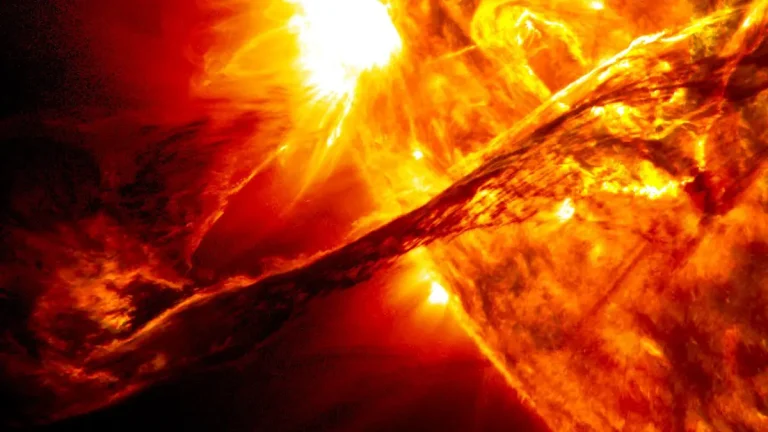
On September 1, 1859, British astronomer Richard Carrington observed a sudden flash of light erupting from a group of sunspots. Less than 24 hours later, Earth was struck by the most powerful geomagnetic storm in recorded history. Telegraph systems failed, auroras spread across the globe, and the event became known as the Carrington Event.
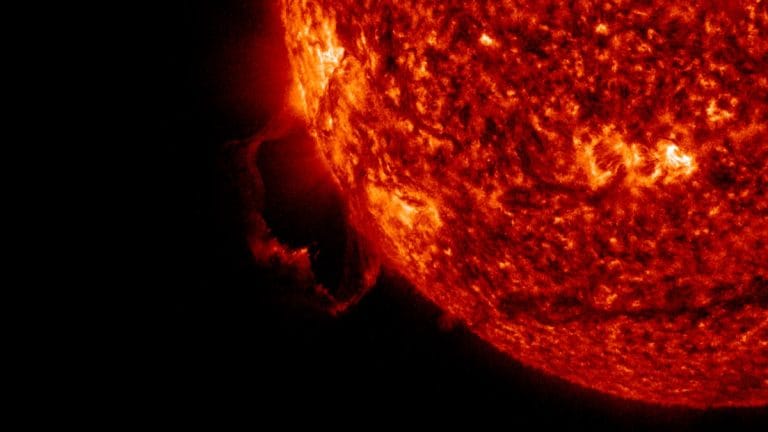
The first-of-its-kind Surya Heliophysics Foundation Model, developed by NASA and IBM, uses 9 years of solar observations to forecast flare activity and solar storms with high accuracy.
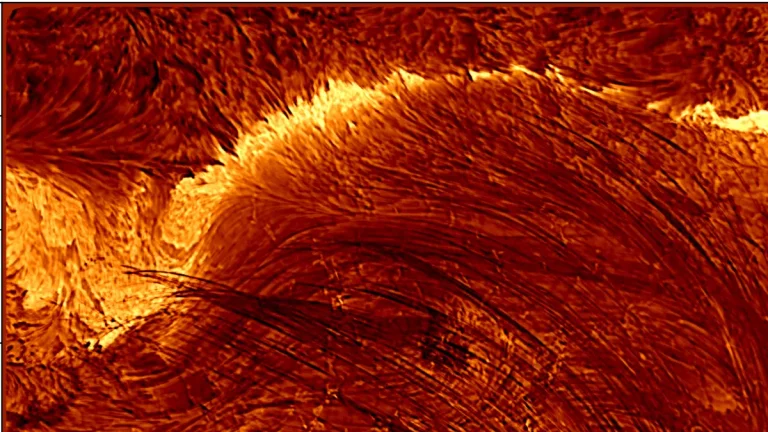
Researchers using the Daniel K. Inouye Solar Telescope have measured the Sun’s thinnest coronal loops, recorded during an X1.3-class solar flare on August 8, 2024.
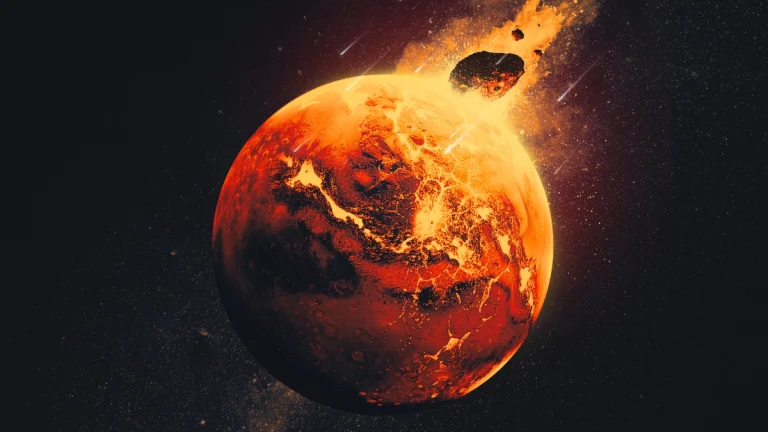
NASA’s InSight mission data revealed kilometer-scale lumps of rocky debris scattered throughout Mars’ mantle, findings published in Science on August 28, 2025 show. The fragments, likely remnants of massive asteroid impacts 4.5 billion years ago, indicate sluggish interior mixing compared to Earth.
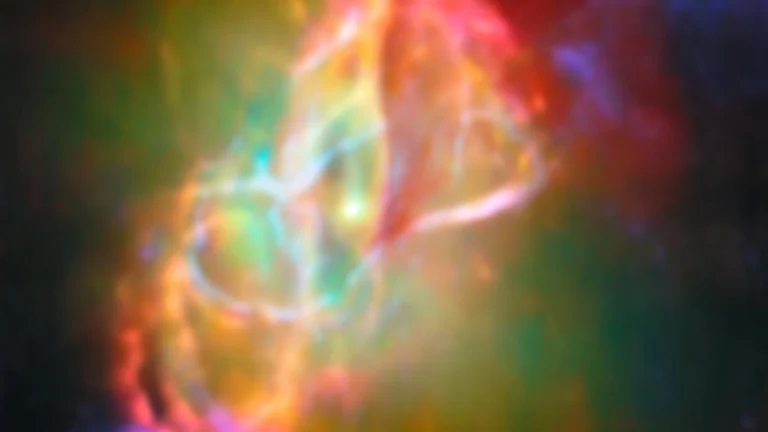
A study published in the Monthly Notices of the Royal Astronomical Society on August 27, 2025, revealed crystalline silicates and polycyclic aromatic hydrocarbons in the Butterfly Nebula (NGC 6302), located 3 400 light-years (1 040 parsecs) away in Scorpius, providing new insights into the formation of planetary material.
