Sharpest view yet of a solar flare reveals hidden details
Researchers using the Daniel K. Inouye Solar Telescope have measured the Sun’s thinnest coronal loops, recorded during an X1.3-class solar flare on August 8, 2024.

The exploration of celestial bodies and cosmic phenomena beyond Earth. This field seeks to uncover the mysteries of the universe, including the nature of stars, planets, galaxies, and the laws governing space and time.
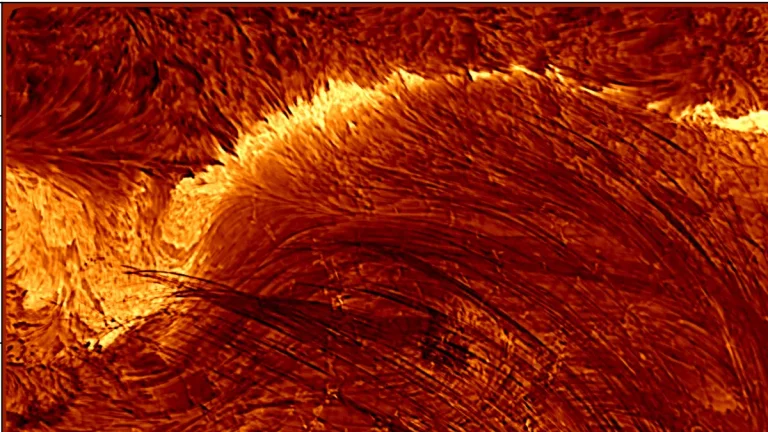
Researchers using the Daniel K. Inouye Solar Telescope have measured the Sun’s thinnest coronal loops, recorded during an X1.3-class solar flare on August 8, 2024.
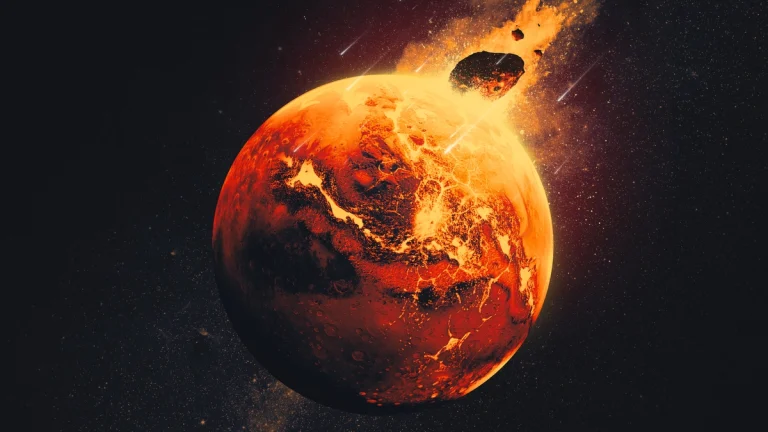
NASA’s InSight mission data revealed kilometer-scale lumps of rocky debris scattered throughout Mars’ mantle, findings published in Science on August 28, 2025 show. The fragments, likely remnants of massive asteroid impacts 4.5 billion years ago, indicate sluggish interior mixing compared to Earth.
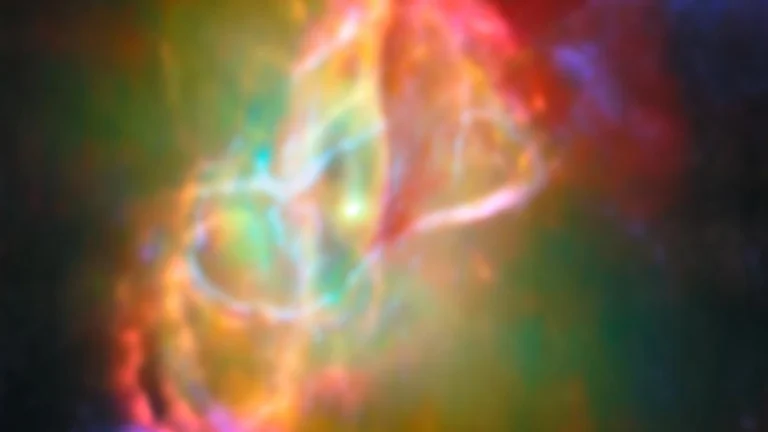
A study published in the Monthly Notices of the Royal Astronomical Society on August 27, 2025, revealed crystalline silicates and polycyclic aromatic hydrocarbons in the Butterfly Nebula (NGC 6302), located 3 400 light-years (1 040 parsecs) away in Scorpius, providing new insights into the formation of planetary material.
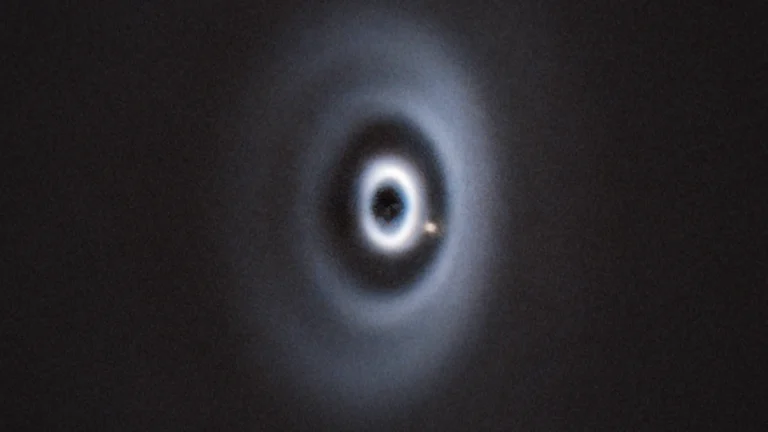
Astronomers have discovered the first confirmed planet forming inside a multi-ringed disk, WISPIT 2b. It is a young 5 million-year old gas giant, orbiting the star TYC 5709-354-1 (WISPIT 2) at a distance of roughly 8 billion km (5 billion miles).
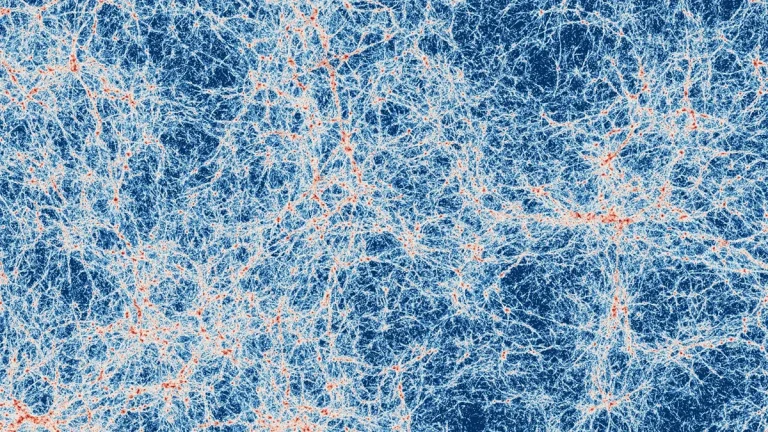
An international team of researchers has captured the most detailed image ever of a cosmic filament—an enormous strand of gas connecting two actively forming galaxies—dating back to when the universe was just 2 billion years old.
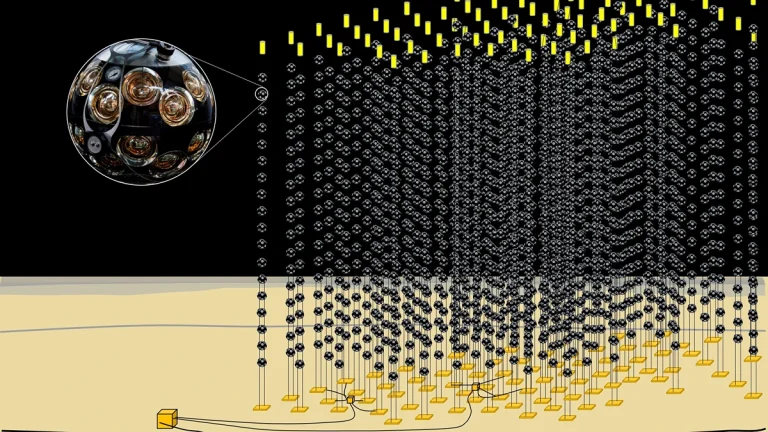
The most energetic neutrino ever observed was detected by the KM3NeT neutrino observatory in the Mediterranean Sea, estimated at 220 PeV (220 x 1015 electron volts or 220 million billion electron volts). The event, designated KM3-230213A, challenges existing cosmic ray models and may indicate a new type of high-energy astrophysical source.
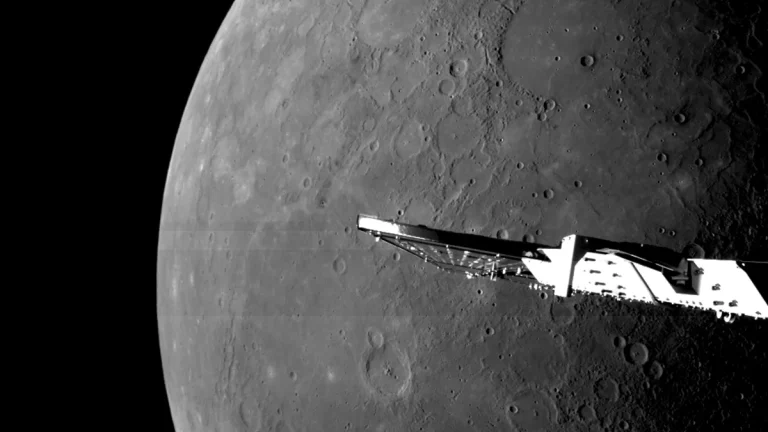
ESA/JAXA BepiColombo mission’s 6th and final Mercury flyby took place at 05:59 UTC on January 8, 2025, passing just 295 km (183 miles) above the planet’s surface.
While space is silent, instruments aboard the spacecraft recorded data that mission teams converted into audible frequencies, allowing listeners to “hear” the flyby in a newly released recording.
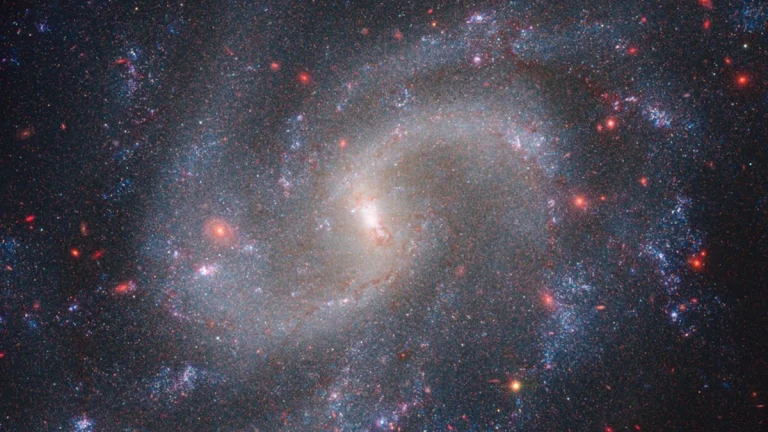
A new study has confirmed that the universe is expanding faster than previously thought, deepening the Hubble constant discrepancy.
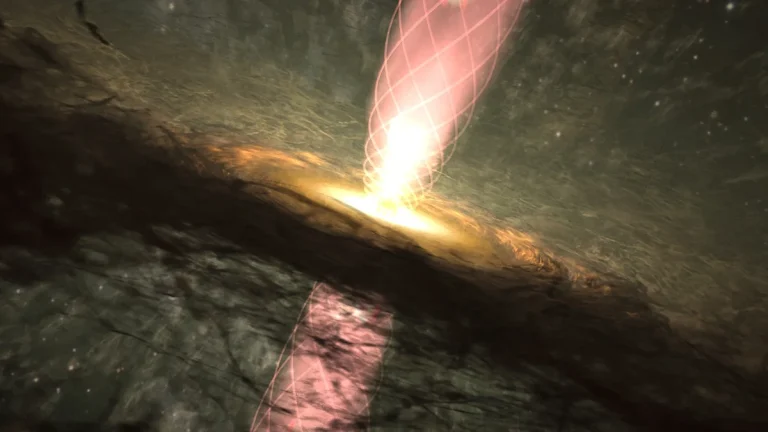
Scientists reported the first-ever evidence of a helical magnetic field within HH 80-81 protostellar jet on January 7, 2025, using data from the Karl G. Jansky Very Large Array (VLA). It is the first time a Rotation Measure (RM) analysis has been performed on a protostellar jet.
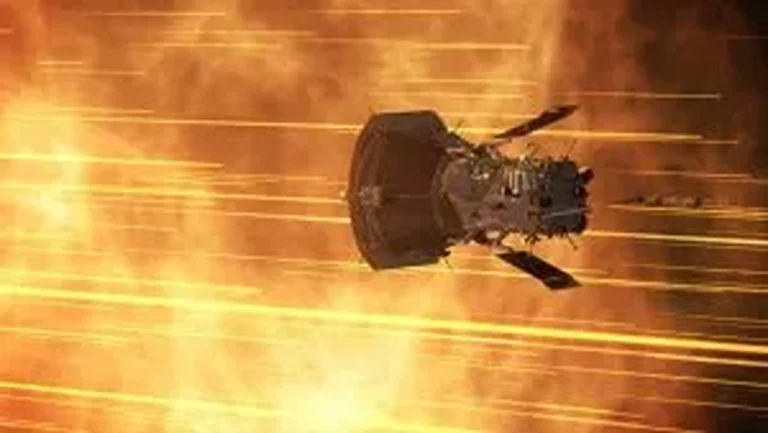
NASA’s Parker Solar Probe confirmed its systems and instruments are fully operational after completing its closest-ever approach to the Sun on December 24, 2024.
