• Moonquakes, not meteor strikes, caused landslides at Apollo 17 site

    Repeated moonquakes along the Lee-Lincoln fault, not meteor impacts, caused boulder falls and landslides in the Taurus-Littrow valley, the Apollo 17 landing site, a study published recently in Science Advances has found. The findings raise concerns for the safety of future long-term lunar outposts.

  • The Carrington Event of 1859 – Strongest geomagnetic storm in recorded history

    On September 1, 1859, British astronomer Richard Carrington observed a sudden flash of light erupting from a group of sunspots. Less than 24 hours later, Earth was struck by the most powerful geomagnetic storm in recorded history. Telegraph systems failed, auroras spread across the globe, and the event became known as the Carrington Event.

  • Ancient asteroid debris detected deep within Mars’ mantle

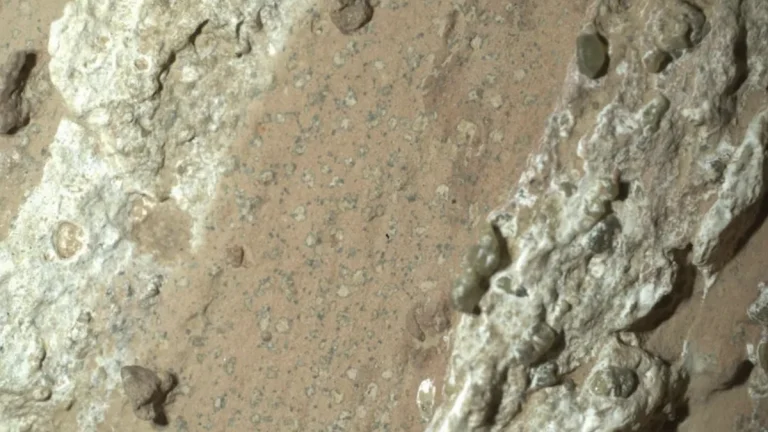
    NASA’s InSight mission data revealed kilometer-scale lumps of rocky debris scattered throughout Mars’ mantle, findings published in Science on August 28, 2025 show. The fragments, likely remnants of massive asteroid impacts 4.5 billion years ago, indicate sluggish interior mixing compared to Earth.

  • Butterfly Nebula observations uncover clues to Earth’s creation

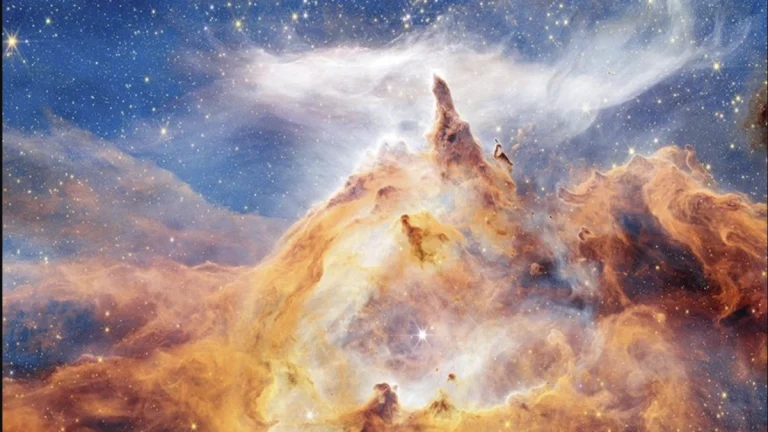
    A study published in the Monthly Notices of the Royal Astronomical Society on August 27, 2025, revealed crystalline silicates and polycyclic aromatic hydrocarbons in the Butterfly Nebula (NGC 6302), located 3 400 light-years (1 040 parsecs) away in Scorpius, providing new insights into the formation of planetary material.

  • Detection of most energetic neutrino ever indicates new type of high-energy astrophysical source

    The most energetic neutrino ever observed was detected by the KM3NeT neutrino observatory in the Mediterranean Sea, estimated at 220 PeV (220 x 1015 electron volts or 220 million billion electron volts). The event, designated KM3-230213A, challenges existing cosmic ray models and may indicate a new type of high-energy astrophysical source.

  • Hear the sound of BepiColombo flying past Mercury

    ESA/JAXA BepiColombo mission’s 6th and final Mercury flyby took place at 05:59 UTC on January 8, 2025, passing just 295 km (183 miles) above the planet’s surface.

    While space is silent, instruments aboard the spacecraft recorded data that mission teams converted into audible frequencies, allowing listeners to “hear” the flyby in a newly released recording.