I am an Assistant Editor and Severe Weather & Science Journalist at The Watchers, specializing in real-time severe weather coverage, geophysical event reporting, and research-driven scientific analysis. You can reach me at rishav(at)watchers(.)news.

  • Heavy mountain snow and strong winds forecast across Sierra Nevada, California

    Heavy snow and strong winds are forecast to impact the Sierra Nevada, California, from April 21 to April 22, 2026, as a Pacific storm system moves inland, bringing significant snowfall to elevations above 2 100 m (7 000 feet). Authorities warn that travel through major mountain passes could become very difficult to impossible due to snow-covered roads and reduced visibility.

  • Heavy ice, sleet, and snow forecast across Upper Midwest and Great Lakes, multiple warnings and advisories issued

    A late-season winter storm is forecast to impact the Upper Midwest and Great Lakes region from late April 1 through April 3, 2026, bringing widespread freezing rain, sleet, and snow across multiple states. Ice Storm Warnings, Winter Storm Warnings, Winter Weather Advisories, and Winter Storm Watches are in effect, with ice accumulations up to 10 mm (0.4 inches) and snowfall exceeding 45 cm (18 inches) in some areas, creating hazardous travel conditions and potential power outages.

  • Strong M6.0 earthquake hits northern Peru

    A strong earthquake registered by the USGS as M6.0 hit northern Peru at 11:20 UTC on April 1, 2026. The agency is reporting a depth of 108.8 km (67.6 miles). EMSC is reporting M6.0 at a depth of 115 km (71.5 miles).

  • Late-season winter storm forecast to bring ice, snow, and severe weather to Upper Midwest and Great Lakes

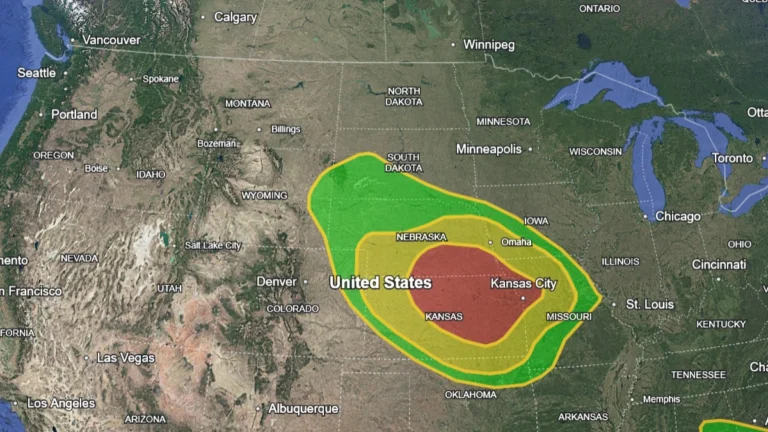
    A late-season winter storm combined with severe convective activity will affect the Upper Midwest and Great Lakes from April 1–3, 2026, producing heavy snow, sleet, freezing rain, and thunderstorms. The system is expected to generate hazardous ice accumulation and support severe storms capable of damaging winds, hail, and tornadoes.

  • Earth’s 40 000-year axial tilt cycle influenced subtropical marine productivity during early Antarctic ice sheet expansion

    A 40 000-year cycle in Earth’s axial tilt influenced subtropical marine productivity about 34 million years ago, during the early expansion of the Antarctic ice sheet, according to a study published in PNAS. The authors link this signal to obliquity-driven Antarctic ice-sheet variability that affected ocean circulation and nutrient delivery far from the polar region.