I’m a science journalist and researcher at The Watchers, contributing to the Epicenter edition, where I cover peer-reviewed scientific research and emerging discoveries across Earth and space sciences. With a background in astronomy and a passion for environmental science, I’ve worked in shark and coral conservation in Fiji, conducting reef and shark-behavior research, contributing to mangrove restoration, and earning PADI Open Water and Coral Reef Certifications. I bring a blend of scientific rigor and storytelling to illuminate the discoveries shaping our planet and beyond.

  • SPC issues Enhanced Risk for severe storms with large hail and tornado potential across Texas-Oklahoma-Kansas

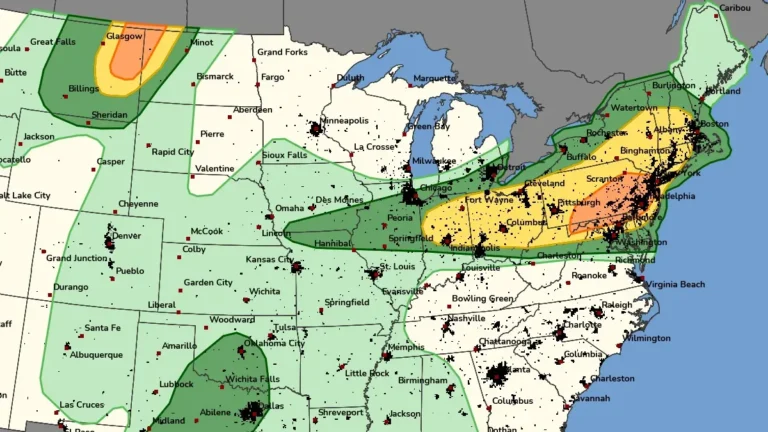
    Severe thunderstorms capable of producing very large hail, damaging winds, and a few tornadoes are forecast to develop across the Texas Panhandle, western Oklahoma, and southern Kansas late on March 5, 2026. The National Weather Service (NWS) Storm Prediction Center (SPC) has issued an Enhanced Risk for the region as atmospheric conditions become favorable for supercell development along a dryline during the late afternoon and evening.

  • Heavy snowfall damages orchards and raises concerns for Japan’s 2026 apple harvest

    Heavy snowfall affecting Japan since late January 2026 has left at least 46 people dead and more than 550 injured while causing widespread agricultural damage across the Tohoku region and Niigata Prefecture. Snowfall reached 148 cm (58 inches) in Hirosaki, Aomori Prefecture, in January, breaking branches in apple orchards, collapsing vinyl greenhouses, and burying farm roads that remain inaccessible in some areas. Authorities say the full extent of agricultural losses may not be known until snow cover recedes.

  • Large marine heatwave persists off the U.S. West Coast since summer 2025

    A large marine heatwave has persisted along the U.S. West Coast since summer 2025, raising sea surface temperatures about 1.7–2.2°C (3–4°F) above average across parts of the Northeast Pacific. In a report published March 3, 2026, the National Oceanic and Atmospheric Administration (NOAA) Fisheries said this is only the third time in the observational record for the California Current ecosystem that such a large portion of coastal waters has remained anomalously warm for so long into winter without El Niño conditions.

  • Potomac River advisory lifted in Washington, D.C. as repairs begin on collapsed interceptor

    The District Department of Health lifted a recreational advisory for the Potomac River in Washington, D.C., on March 2, 2026, after three weeks of monitoring showed bacterial levels had returned to typical ranges following the January 19 collapse of the Potomac Interceptor sewer line. Repair operations advanced the following day as crews prepared the damaged pipe for structural reinforcement while environmental restoration continues in the affected section of the C&O Canal National Historical Park.

  • El Niño chances rise as La Niña fades, WMO says neutral phase to persist until mid-2026

    The World Meteorological Organization (WMO) reported on March 3, 2026, that the recent weak La Niña is fading, with ENSO-neutral conditions expected to prevail until at least July 2026. Forecast models show about a 40% chance of El Niño emerging by mid-year, although confidence remains limited because of the boreal-spring predictability barrier.

  • Heavy snowfall across northern China triggers emergency responses

    Northern China experienced widespread snowfall on March 1, 2026, with snow cover exceeding 250 000 km² (96 525 mi²) and a maximum snow depth of 23 cm (9 inches). The event prompted emergency responses across several provinces, including Hebei, Shanxi, and Gansu, according to official reports.

  • Increased seismic activity recorded at Bulusan volcano, Philippines

    A total of 49 volcanic earthquakes were recorded at Bulusan Volcano in Sorsogon Province, Philippines, between 03:00 LT on February 26 and 11:00 LT on March 2, 2026, prompting authorities to issue an advisory on increased seismic activity. Sixteen of the events were classified as volcano-tectonic earthquakes occurring at depths of 3–6 km (1.9–3.7 miles) beneath the northern and southeastern flanks of the volcano. Alert Level 0 remains in effect, but officials warn of a possible sudden phreatic eruption.

  • Canada records lowest temperature in decades and record snowfall in winter 2025–26

    Canada recorded its lowest temperature in decades during winter 2025–26, with −55.7°C (−68°F) measured at Braeburn, Yukon, on December 23. Seasonal snowfall reached 446 cm (176 inches) in Gander West, Newfoundland and Labrador, among the highest totals reported nationwide this winter, while Toronto registered its snowiest single day on record on January 25, when 46 cm (18 inches) fell at Toronto Pearson International Airport. The season, spanning December 1, 2025, through February 28, 2026, saw a 76.7°C (138°F) national temperature range, repeated Arctic air outbreaks, and major winter storms that disrupted transportation across central and eastern Canada.