I’m a science journalist and researcher at The Watchers, contributing to the Epicenter edition, where I cover peer-reviewed scientific research and emerging discoveries across Earth and space sciences. With a background in astronomy and a passion for environmental science, I’ve worked in shark and coral conservation in Fiji, conducting reef and shark-behavior research, contributing to mangrove restoration, and earning PADI Open Water and Coral Reef Certifications. I bring a blend of scientific rigor and storytelling to illuminate the discoveries shaping our planet and beyond.

  • Desert rainfall anomaly triggers major flooding across central Australia

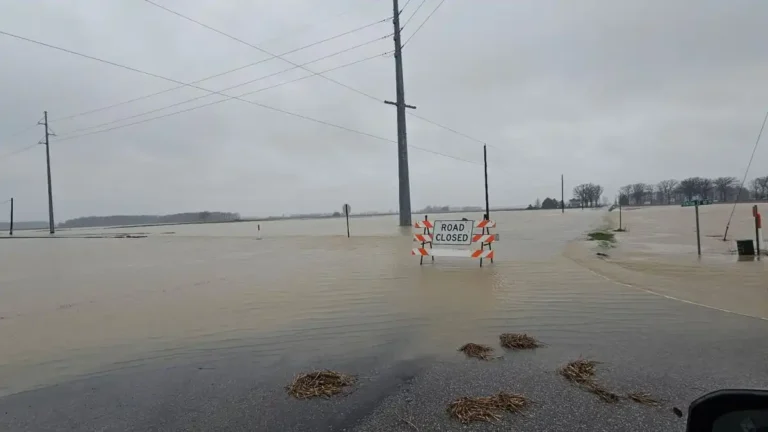
    A near-stationary tropical low has triggered one of the most significant inland rainfall events in recent decades, inundating vast areas of central Australia and prompting disaster declarations across the Northern Territory. More than 600 mm (24 inches) of rain has been recorded at some remote stations, with additional heavy rainfall forecast to expand south into South Australia and Victoria through early next week, increasing the risk of further flooding. Meteorologists described it as a remarkable and highly unusual meteorological event.

  • Kanlaon eruption sends ballistics 1.5 km high, triggers PDCs, forest fires and ashfall across 121 barangays

    A significant explosive eruption occurred at Kanlaon Volcano, Philippines, at 19:04 local time (LT) on February 26, 2026, sending a dense ash plume 2.5 km (1.6 miles) above the crater and producing pyroclastic density currents (PDCs) that descended its upper slopes. The eruption lasted two minutes and was followed by 77 minutes of continuous ash emission dispersed over southern Negros Island.

  • Post-season NHC report finds Melissa tied for strongest Atlantic hurricane by maximum sustained wind

    NOAA’s final Tropical Cyclone Report confirms that Hurricane Melissa reached Category 5 intensity with peak 1-minute sustained winds of 306 km/h (190 mph), tying for the highest maximum sustained wind speed on record in the Atlantic basin, and a minimum central pressure of 892 hPa. The hurricane made landfall near New Hope, Jamaica, at 17:25 UTC (13:25 LT) on October 28, 2025, resulting in 45 fatalities in Jamaica and 95 across the region, with economic losses in Jamaica estimated at USD 8.8 billion.

  • Record-breaking February temperatures spread across France

    Temperatures in France reached levels typical of May on February 25–26, 2026, breaking multiple February records, according to Météo-France. The highest readings occurred in the southwest, where Pomps (Pyrénées-Atlantiques) reached 28.4°C (83.1°F) and Orthez (Pyrénées-Atlantiques) 28.3°C (82.9°F), about 14°C (25°F) above normal. Several other stations also registered new monthly records.

  • Grass fire injures five, forces evacuations and Interstate 25 closure in Thornton, Colorado

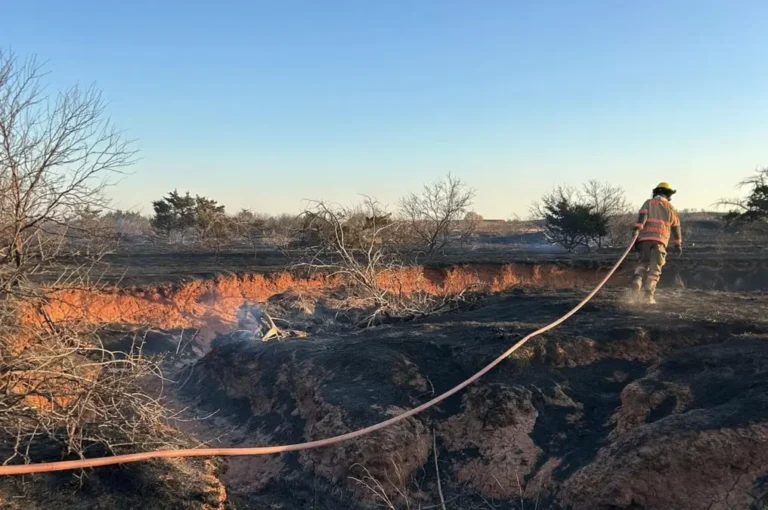
    A grass fire ignited near 84th Avenue and Huron Street in Thornton, Colorado, at 11:30 LT on February 25, 2026, injuring five people, prompting the evacuation of Pinnacle Charter High School and nearby neighborhoods, and forcing a temporary closure of Interstate 25. The fire burned approximately 4 ha (10 acres) before it was contained at around 14:30 LT.

  • Late-February 2026 Nor’easter sets all-time snowfall records and leaves 650 000 without power across Northeast U.S.

    A rapidly intensifying Nor’easter brought record-breaking snowfall, hurricane-force winds, and major disruptions across the northeastern United States on February 23, 2026. Providence, Rhode Island, recorded 96.3 cm (37.9 inches) of snow, the highest single-storm total on record, while power outages peaked above 650 000 customers and more than 11 000 flights were canceled nationwide. Officials confirmed at least four storm-related fatalities in Maryland and Pennsylvania.

  • Ambae volcano Alert Level raised to 3, Vanuatu

    The Vanuatu Meteorology and Geo-Hazards Department (VMGD) raised the Volcanic Alert Level for Ambae volcano to Level 3 on February 23, 2026, following increased eruptive activity that began on February 20. Ash emissions have reached up to 4 900 m (16 000 feet) above sea level on February 24, and the hazard zone has expanded to a 3 km (1.9 miles) radius around the active vent in Lake Voui.

  • Arequipa flooding emergency deepens with 17 fatalities confirmed after rescue helicopter crash, Peru

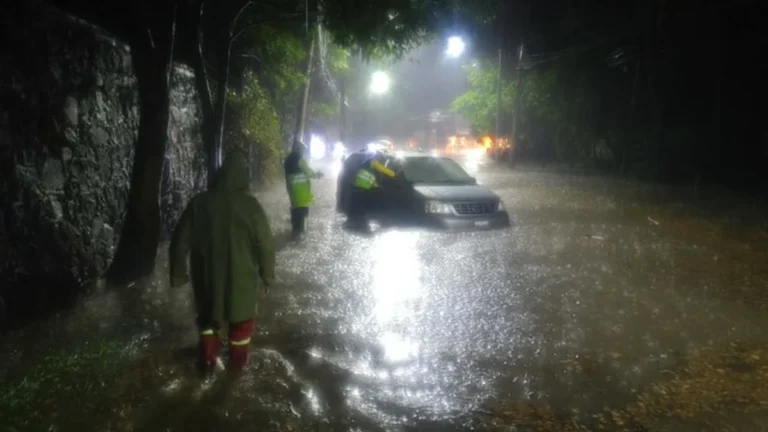
    Intense rainfall that began on February 19, 2026, continued to affect Peru’s Arequipa Province through February 23, causing severe floods and landslides. Authorities reported at least 17 fatalities, including one caused by flooding, one by lightning, and 15 when a Peruvian Air Force (FAP) helicopter transporting evacuees crashed during relief operations in Caravelí Province. Hundreds of homes, roads, and bridges were damaged, and essential services remained disrupted as emergency and debris-removal efforts continued.

  • Heavy rains cause deadly landslides in Davao Region, Philippines

    At least seven people were killed in two rain-induced landslides in the Davao Region of southern Mindanao on February 19–20, 2026, after days of continuous rainfall generated by a persistent shear line and easterly winds. The fatal events occurred in Monkayo, Davao de Oro, and Mati City, Davao Oriental.