
Flooding impacts northern Indiana, southern Michigan and northwest Ohio after heavy rainfall
Flooding developed across northern Indiana, southern Michigan, and northwest Ohio between March 31 and April 5, 2026, following multiple rounds of heavy rainfall totaling over 100 mm (4 inches) in many locations. Rivers including the St. Joseph, Maumee, and Tippecanoe rose rapidly to moderate flood stage, with some locations experiencing sharp rises within hours. Flooding impacted parks, infrastructure, and transportation, with additional storm damage reported in parts of Ohio.
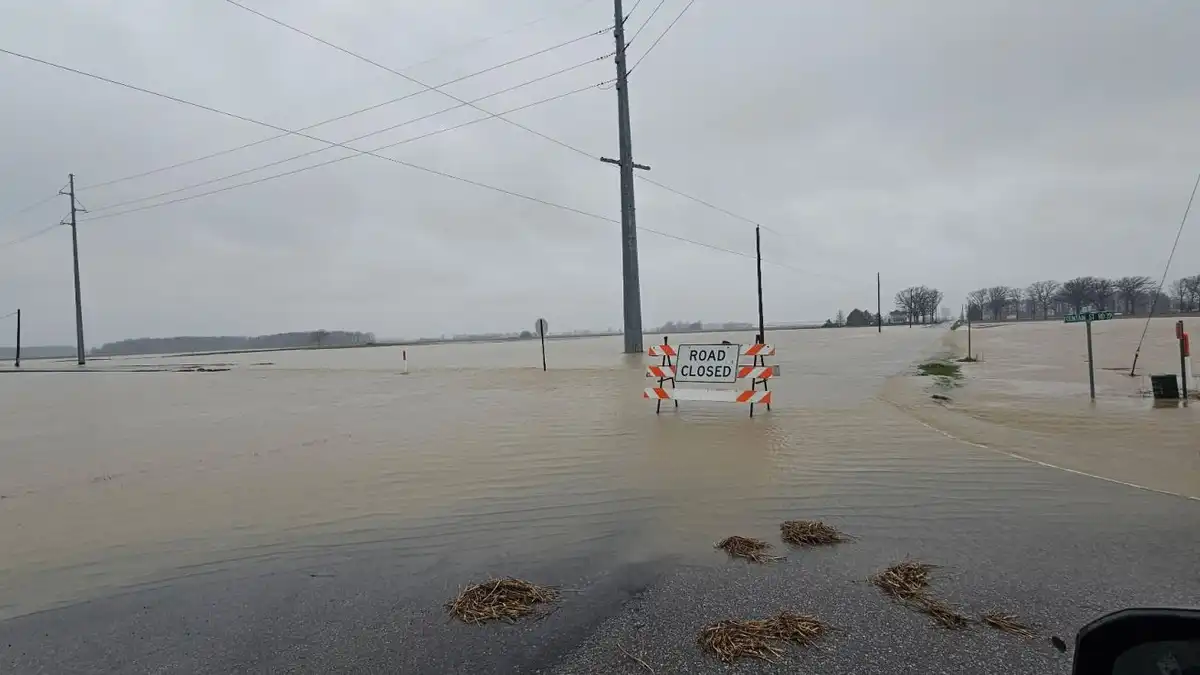
Flooding in Defiance County, OH, slowed storm damage survey efforts on April 1, 2026. Credit: NWS
Flooding developed across northern Indiana, southern Michigan, and northwest Ohio following a multi-day rainfall event beginning on March 31, with rivers responding rapidly due to saturated soils and accumulated runoff.
Prior to the event, the region experienced unseasonably dry conditions, including one of the driest winters on record in Fort Wayne, resulting in low stream flows that allowed for rapid stage increases once rainfall began.
Rainfall totals over a five-day period reached more than 125 mm (5 inches) across large portions of northern Indiana, with localized maxima exceeding 140 mm (5.5 inches) in counties such as Steuben, Noble, Kosciusko, and Whitley.
Additional widespread totals between 75–130 mm (3–5 inches) were recorded across northwest Ohio, while southern Michigan saw totals crest just over 85 mm (3.35 inches).
River responses were rapid and significant. The St. Joseph River near Newville rose from approximately 2.4 m (8 feet) to 3.7 m (12 feet) within about six hours on March 31, eventually reaching moderate flood stage with a forecast crest just above 4.6 m (15 feet), comparable to the 4.7 m (15.5 feet) crest recorded on May 21, 2020.
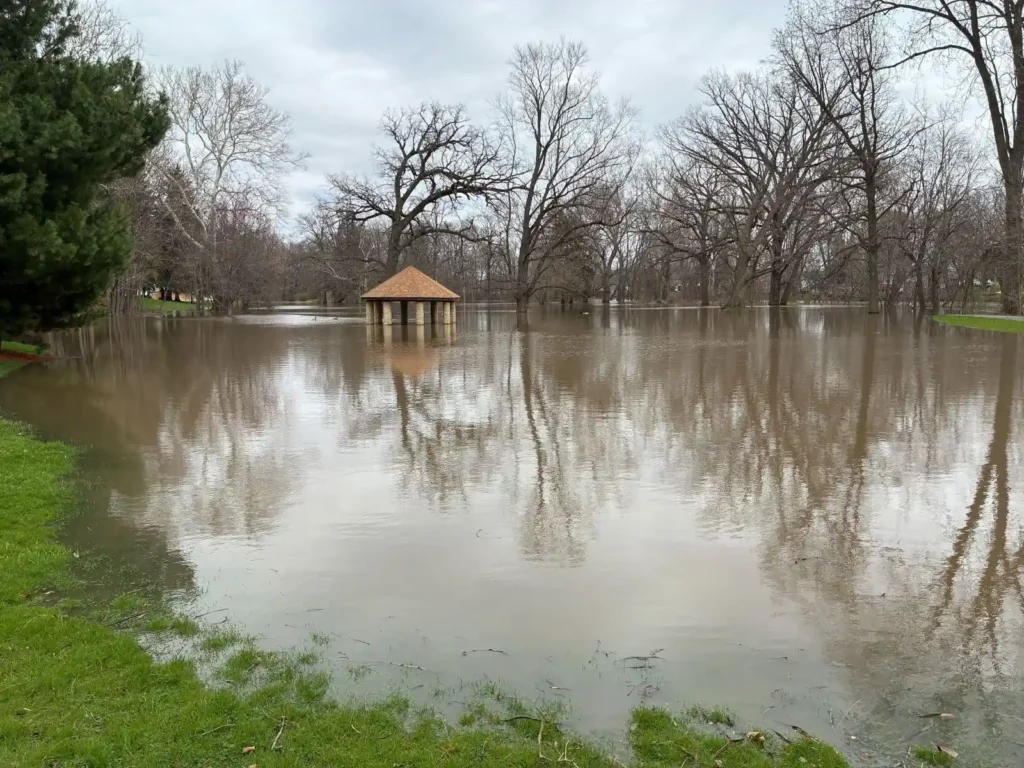
The Tippecanoe River near Ora rose steadily from approximately 2.4 m (8 feet) on March 31 to moderate flood stage by April 4, with a forecast crest near 4.1 m (13.5 feet), similar to the 4 m (13.3 feet) crest observed on May 3, 2019.
The Maumee River at Coliseum Boulevard in Fort Wayne experienced one of the most rapid increases, rising from approximately 2.1 m (7 feet) to 5.2 m (17 feet) between March 31 and April 1.
The river remained elevated in subsequent days, with a crest approaching 5.8 m (19 feet), comparable to the 5.88 m (19.3 feet) level recorded on January 13, 2020.
In Plymouth, Indiana, flooding along the Yellow River inundated Gill Park on April 4. In La Porte County, Indiana, the Kankakee River approached the bridge deck of W 600 N and reached minor flood stage near 3 m (10 feet).
In Berrien County, Michigan, flooding affected parks in Stevensville and caused a washout along a CSX rail line near Coloma.
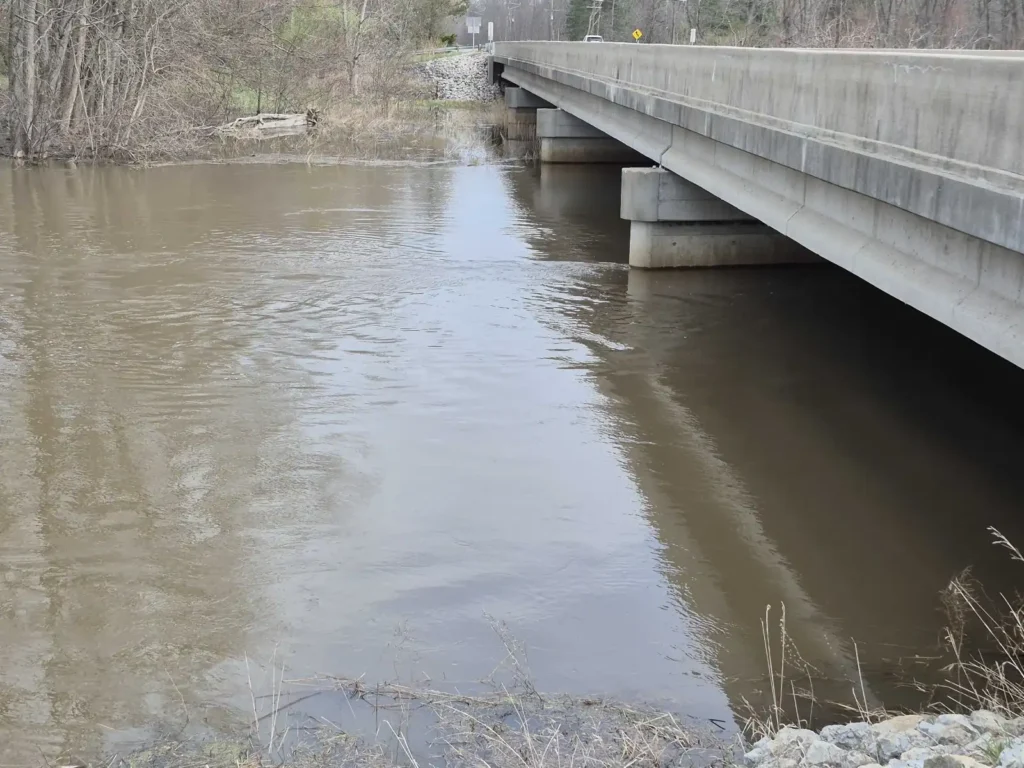
In Defiance County, Ohio, flooding occurred near the Auglaize and Maumee rivers, affecting parks and low-lying areas. Concurrently, thunderstorms on April 4 produced wind damage across the city of Defiance, including downed trees, damaged roofs, and disrupted power lines.
Structural impacts included severe roof damage to local landmarks such as St. Marys Church, a construction trailer that overturned onto a vehicle, and a destroyed barn along Jericho Road. Further south, marginal hail measuring 6 mm (0.25 inches) was also reported near Van Wert.
The hydrological response was influenced by antecedent dry conditions, which initially allowed for infiltration but transitioned to rapid runoff as rainfall persisted. Successive rainfall events compounded river rises, prolonging elevated water levels and maintaining flood conditions across the region through April 5.
References:
1 Early April 2026 Flooding and Severe Thunderstorms – NWS – Accessed April 6, 2026
2 Local Storm Report – Weather.gov – April 5, 2026

I’m a science journalist and researcher at The Watchers, contributing to the Epicenter edition, where I cover peer-reviewed scientific research and emerging discoveries across Earth and space sciences. With a background in astronomy and a passion for environmental science, I’ve worked in shark and coral conservation in Fiji, conducting reef and shark-behavior research, contributing to mangrove restoration, and earning PADI Open Water and Coral Reef Certifications. I bring a blend of scientific rigor and storytelling to illuminate the discoveries shaping our planet and beyond.

Commenting rules and guidelines
We value the thoughts and opinions of our readers and welcome healthy discussions on our website. In order to maintain a respectful and positive community, we ask that all commenters follow these rules.