One dead after heavy rainfall floods Puebla metropolitan area, Mexico
One person died and flooding reached depths of up to 70 cm (2.3 feet) across parts of the Puebla metropolitan area on June 28, 2026, following heavy rainfall.


I’m a science journalist and researcher at The Watchers, contributing to the Epicenter edition, where I cover peer-reviewed scientific research and emerging discoveries across Earth and space sciences. With a background in astronomy and a passion for environmental science, I’ve worked in shark and coral conservation in Fiji, conducting reef and shark-behavior research, contributing to mangrove restoration, and earning PADI Open Water and Coral Reef Certifications. I bring a blend of scientific rigor and storytelling to illuminate the discoveries shaping our planet and beyond.
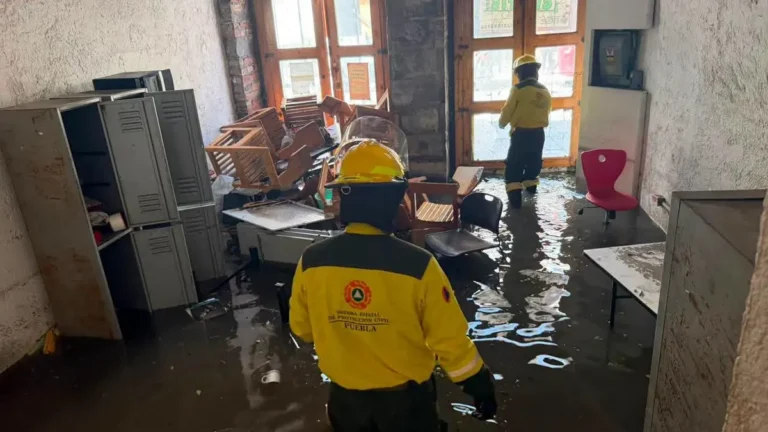
One person died and flooding reached depths of up to 70 cm (2.3 feet) across parts of the Puebla metropolitan area on June 28, 2026, following heavy rainfall.
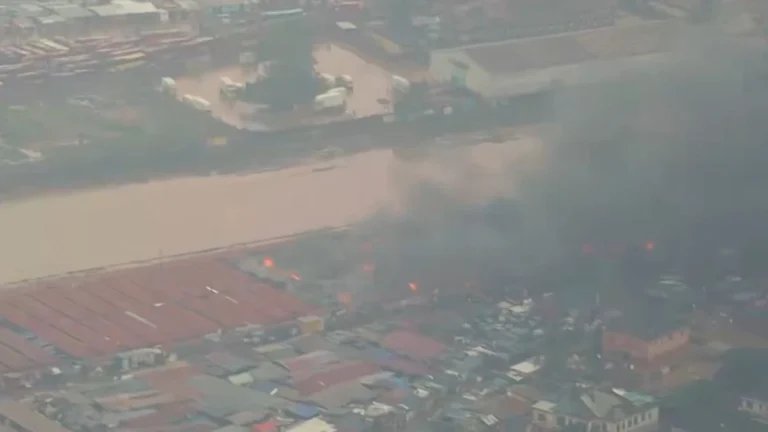
At least 12 people died and nearly 500 others were rescued after heavy rainfall flooded parts of Ghana’s Greater Accra Region on Monday, June 29, 2026. The Ghana National Fire Service (GNFS) said rescue and recovery operations continued on Tuesday, June 30, while one elderly person remained missing.

Poland’s western border town of Słubice reached 40.5°C (104.9°F) on June 28, 2026, breaking the station’s previous record of 39.5°C (103.1°F) from 1994 and surpassing the country’s historic temperature benchmark of 40.2°C (104.4°F) measured at Prószków in 1921, just one day after the town set a new national June record.

Mars may have been far more geologically sophisticated than scientists once believed. A study published in Nature Astronomy on June 26, 2026 concludes that the Red Planet once sustained enormous interconnected magma plumbing systems capable of recycling and evolving molten rock throughout its crust, despite never developing Earth’s plate tectonics. The findings challenge one of the long-standing assumptions in planetary science and suggest that rocky planets may be able to build complex crust, and potentially environments favourable for life, without following Earth’s geological blueprint.

Germany provisionally recorded its highest air temperature on record on June 26, 2026 as an exceptional late-June heatwave continued to rewrite temperature records across Europe, prompting widespread red heat warnings, disrupting public life and raising concerns over growing impacts on health, infrastructure and ecosystems.

Scientists have used the loudest gravitational-wave signal ever recorded to extract the first observational evidence of signatures from a newly formed black hole’s event horizon, opening a new way to probe one of the most extreme environments in the universe where general relativity and quantum physics are expected to meet. The findings, published in Nature on June 24, 2026, are based on GW250114, the strongest binary black hole merger detected to date.

Three people were killed after a Bird Dog aircraft supporting wildfire suppression operations crashed west of Fort Simpson, Northwest Territories, officials with NWT Fire confirmed on June 25, 2026.
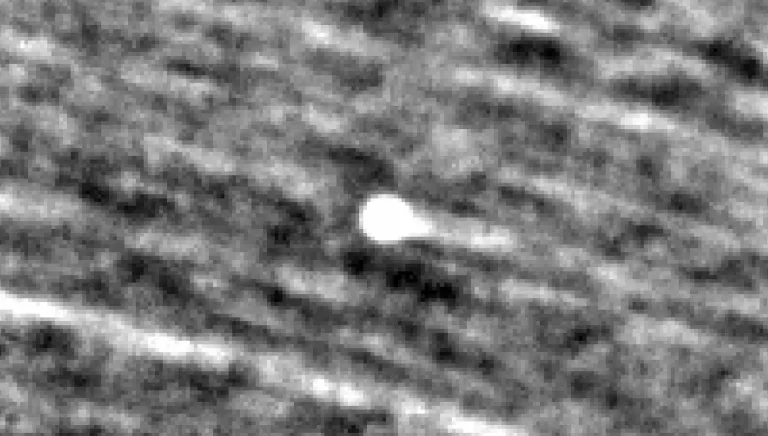
The third confirmed interstellar object detected in the Solar System possesses an isotopic composition unlike any known Solar System comet, according to a study published in Nature on June 22, 2026. Observations with the James Webb Space Telescope revealed extreme enrichments in heavy hydrogen and unusual carbon isotope ratios, leading researchers to conclude that 3I/ATLAS likely formed in a cold, metal-poor environment during an early phase of Milky Way evolution, potentially 10 to 12 billion years ago.

Tiny traces of radioactive plutonium locked inside a slow-growing crust on the floor of the Pacific Ocean have helped scientists solve a cosmic mystery dating back more than 100 million years. In a study published on June 15, 2026, in Nature Astronomy, an international team reports that the last nearby event capable of forging many of the Universe’s heaviest elements occurred long before the supernovae whose signatures have already been found on Earth.
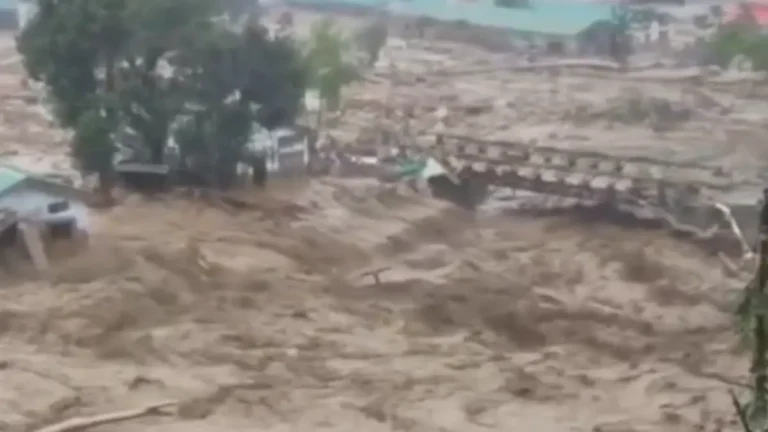
Flash floods and landslides triggered by heavy rainfall in Arunachal Pradesh’s Keyi Panyor district swept away 18 semi-permanent structures and left five people missing on June 24, 2026, while multiple landslides cut off road access to the affected area and hampered rescue operations.
