
Debris strike on Shenzhou-20 leads to rare evacuation-capability gap on Tiangong station
China launched the uncrewed Shenzhou-22 spacecraft at 04:11 UTC on November 25, 2025, to restore a safe return option for the three-member Tiangong space station crew, after debris damage earlier in the month rendered their original Shenzhou-20 return module unusable. The previous crew returned using the Shenzhou-21 arrival vehicle, leaving the current crew without an evacuation craft until Shenzhou-22’s launch. The astronauts remain in stable condition as docking procedures proceed.
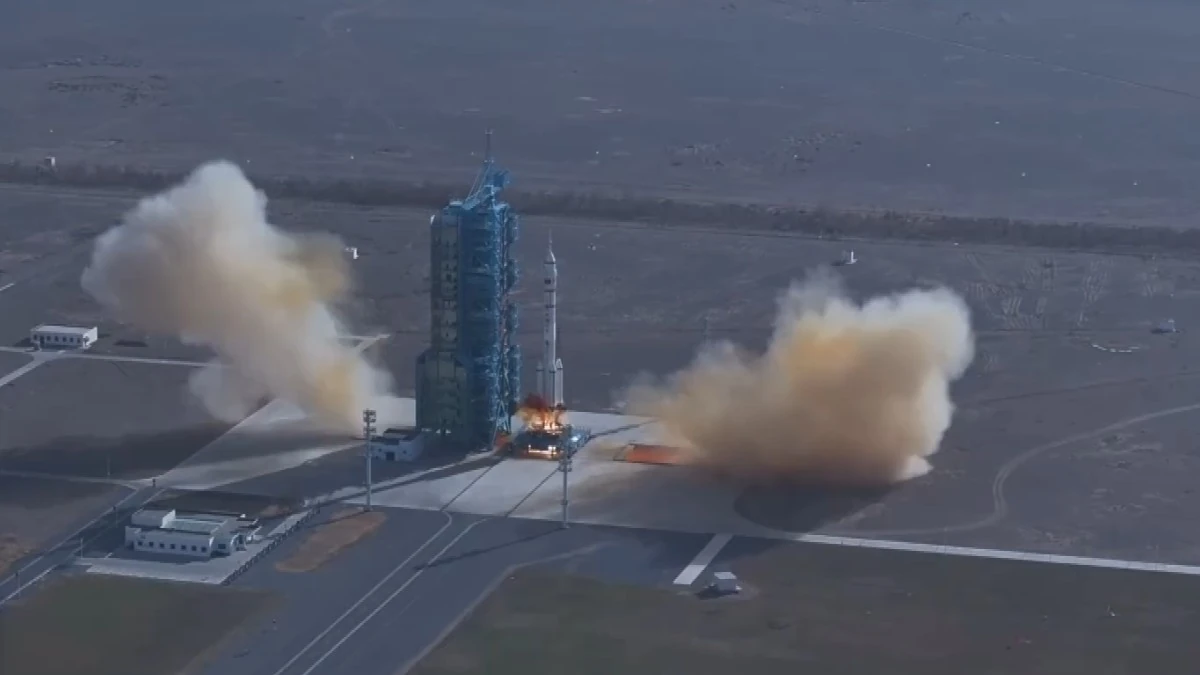
China launches Shenzhou-22 spacecraft to Tiangong space station on November 25, 2025. Credit: CGTN (stillshot)
A debris impact that damaged the Shenzhou-20 return module earlier in November forced China to modify its crew rotation plan on the Tiangong space station and dispatch an emergency replacement spacecraft.
The damage, described as cracks in a viewport of the re-entry module, was identified during routine inspection on November 4 and judged unsafe for crewed atmospheric return. As a result, the Shenzhou-20 crew returned to Earth using the newly arrived Shenzhou-21 spacecraft, leaving the Shenzhou-21 crew on Tiangong without a dedicated return vehicle.
The China Manned Space Agency (CMSA) subsequently advanced the launch of Shenzhou-22, sending it uncrewed from the Jiuquan Satellite Launch Center to serve as a replacement return craft.
The mission launched from Jiuquan at 04:11 UTC on November 25, aboard a Long March-2F rocket, carrying over 600 kg (1 300 lbs) of supplies, including food, equipment, medicines, and fresh produce.
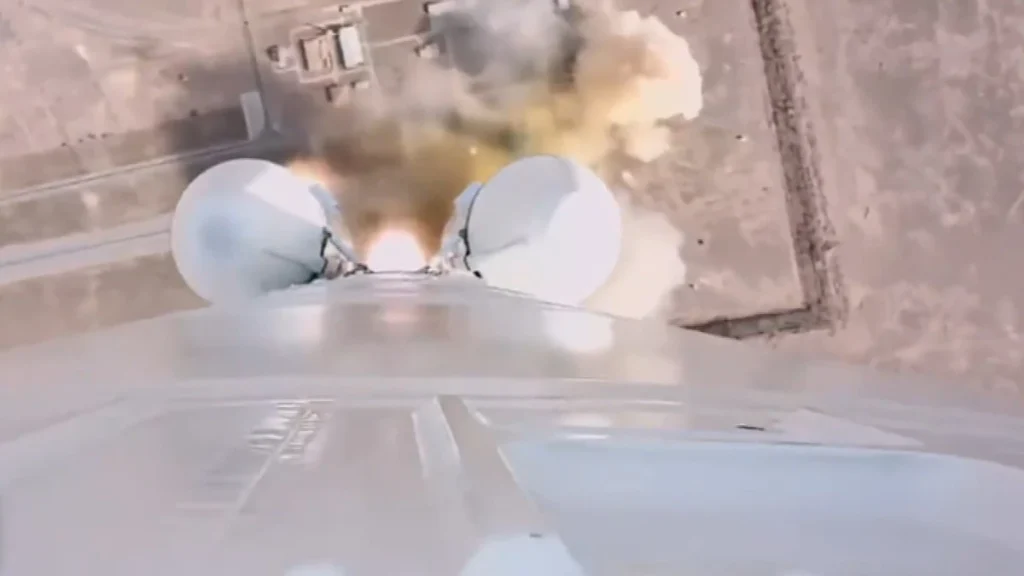
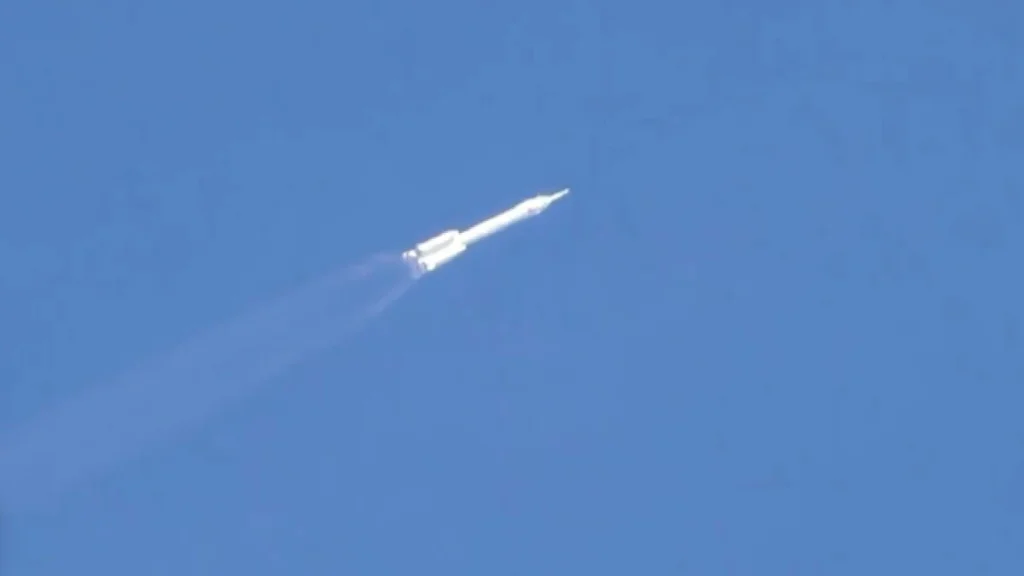
The spacecraft autonomously docked with Tiangong’s Tianhe module at 07:50 UTC today, restoring the station’s safe return option. Officials said the Tiangong crew remains in good condition and continues scheduled operations while the new vehicle approaches docking.
Live transmission of the launch with commentary:
Live: China sends Shenzhou-22 spacecraft to its space station from the Jiuquan Satellite Launch Center in northwest China. Join CGTN for the latest. #SpaceChina https://t.co/gVGNYeNzSD
— CGTN (@CGTNOfficial) November 25, 2025
The incident created a temporary gap in evacuation capability, a critical component of crewed-station safety architecture. Tiangong typically hosts a single Shenzhou return module during each rotation.
When Shenzhou-20 was declared unfit, and Shenzhou-21 was used for the previous crew’s return, the station entered a period without an operational return craft until Shenzhou-22 could be launched.
Orbital debris is a known hazard in low-Earth orbit, where even millimetre-scale particles traveling at orbital velocities can damage external spacecraft components such as windows and exposed housings. Although CMSA has not released a full structural assessment of Shenzhou-20, the decision to disqualify it from crewed re-entry suggests uncertainty about the component’s behavior during the thermal and mechanical stresses of atmospheric descent.
Authorities have not detailed any adjustments to inspection or shielding protocols following the event. Operational timelines have been revised, with the next regular crewed flight, Shenzhou-23, expected no earlier than April 2026 as program schedules are realigned.

Teo Blašković founded The Watchers in 2011 and edited it until 2026, covering seismic and volcanic activity, extreme weather, space weather and near-Earth objects. Articles on this page are his archive.
Published in the last 24 hours
- El Niño reaches 2.0°C on NOAA’s index, a tenth of a degree behind 1997–98 at the same point, as forecasters expect it to challenge the all-time record this winter
- The fastest wind gust ever measured on Earth, 253 mph, hit an oil island off Australia during Cyclone Olivia in 1996, and nobody noticed for more than a decade, until experts reading old data quietly took the record from New Hampshire's Mount Washington Epicenter
- In 1954, a grapefruit-sized meteorite crashed through a roof in Sylacauga, Alabama, and struck Ann Hodges as she napped on her couch Epicenter
- A meteorite blew a crater beside a village near Lake Titicaca in 2007, and dozens of villagers who went to see it got headaches and nausea, though tests found nothing the rock had added to the water Epicenter
