
Long-term impacts of deep-sea mining remain visible 44 years after test in the Pacific
A deep-sea mining test carried out in 1979 in the Clarion Clipperton Zone continues to show clear ecological damage, according to a study recently published in Nature. While physical marks on the seafloor persist, some small and mobile organisms have begun to return. Recovery, however, remains slow and incomplete.
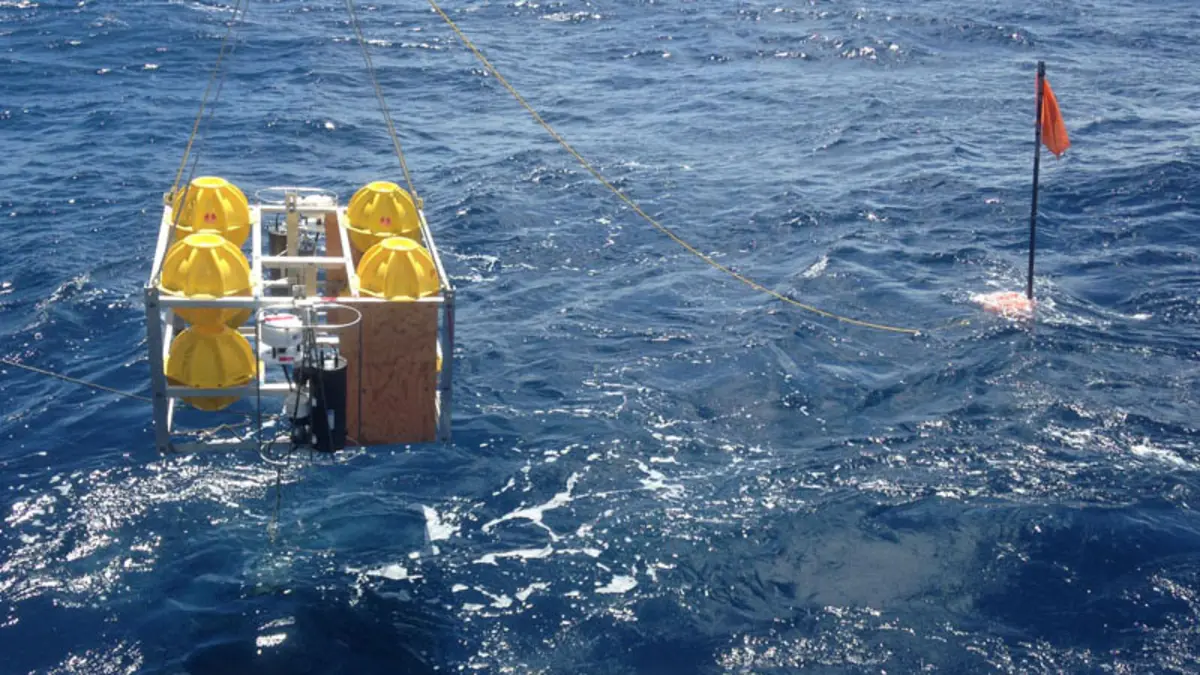
Image shows lander with plankton pumps, weight stack, strobe, and radio transmitter. Image credit: Erica Goetze, DeepCCZ expedition
Scientists from the UK’s National Oceanography Centre and the Natural History Museum have documented long-term ecological damage at a 1979 deep-sea mining test site in the Clarion Clipperton Zone. During a 2023 expedition aboard the RRS James Cook, they used the remotely operated vehicle Isis to revisit the site. Mining scars, including an 8 m (26 feet) wide cleared strip and deep furrows, remain sharply defined, indicating minimal physical recovery after more than four decades.
This study provides one of the longest empirical time series for a deep-sea mining impact site, offering rare insight into ecosystem recovery over multi-decadal timescales.
The study found that many animal populations remain significantly reduced within the mining tracks. Large sessile fauna such as sponges and corals, which are permanently attached to the seafloor, remain scarce, showing little recovery after 44 years.
Their absence shows the long-term ecological impact of physical disturbance in deep-sea environments. Quantitative analysis confirmed significantly reduced abundances of sessile megafauna in mined areas, particularly sponges and other suspension feeders, compared to undisturbed control sites.

Early signs of biological recovery were observed among smaller, mobile organisms. Xenophyophores—large, single-celled foraminifera abundant in the CCZ—were found recolonizing the disturbed tracks.
This represents the first recorded recolonization in a mined area, although the process is slow, species-dependent, and remains far from complete. Recovery was highly variable across faunal groups, with mobile deposit feeders showing some re-establishment, while suspension feeders and larger benthic species remained largely absent.
Sediment plumes, previously thought to cause major ecological harm, showed limited long-term physical impacts. The study showed no significant reduction in animal numbers in plume-affected areas compared to control sites. This suggests plumes may have less lasting effects than anticipated.
Geochemical analysis revealed altered sediment composition in mined areas, including reductions in organic carbon and elevated trace metal concentrations, which may further constrain faunal recolonization.
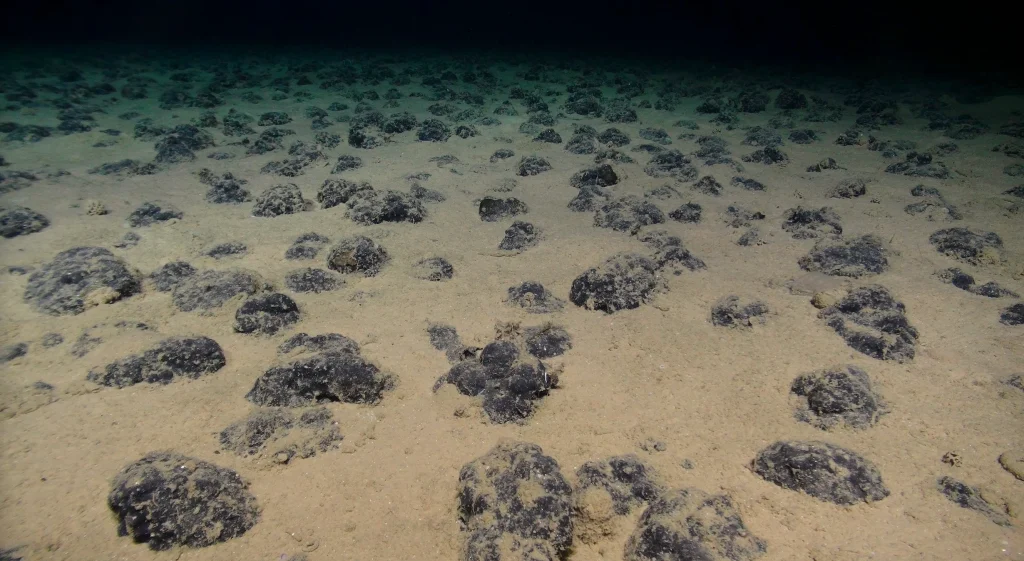
The Clarion Clipperton Zone spans over 6 million km2 (2.3 million mi2) of the central Pacific Ocean and is considered a biodiversity hotspot, hosting numerous deep-sea species, many of which remain undescribed. The region also contains extensive fields of polymetallic nodules—rocky concretions rich in nickel, cobalt, and manganese—considered critical for renewable energy technologies.
The research was conducted under the Seabed Mining and Resilience To EXperimental Impact (SMARTEX) project, led by the UK’s National Oceanography Centre and funded by the Natural Environment Research Council (NERC). The project aims to assess the ecological consequences of deep-sea mining and inform future environmental management strategies in regions like the Clarion Clipperton Zone.
References:
1 New study reveals long-term impacts of deep-sea mining and first signs of biological recovery – National Oceanography Centre – March 26, 2025
2 Long-term impact and biological recovery in a deep-sea mining track – Daniel O. B. Jones, Maria Belen Arias et al. – Nature – March 26, 2025 – https://doi.org/10.1038/s41586-025-08921-3

I’m a science journalist and researcher at The Watchers, contributing to the Epicenter edition, where I cover peer-reviewed scientific research and emerging discoveries across Earth and space sciences. With a background in astronomy and a passion for environmental science, I’ve worked in shark and coral conservation in Fiji, conducting reef and shark-behavior research, contributing to mangrove restoration, and earning PADI Open Water and Coral Reef Certifications. I bring a blend of scientific rigor and storytelling to illuminate the discoveries shaping our planet and beyond.

Commenting rules and guidelines
We value the thoughts and opinions of our readers and welcome healthy discussions on our website. In order to maintain a respectful and positive community, we ask that all commenters follow these rules.