
Earthquake swarm and ground uplift at Campi Flegrei, Italy
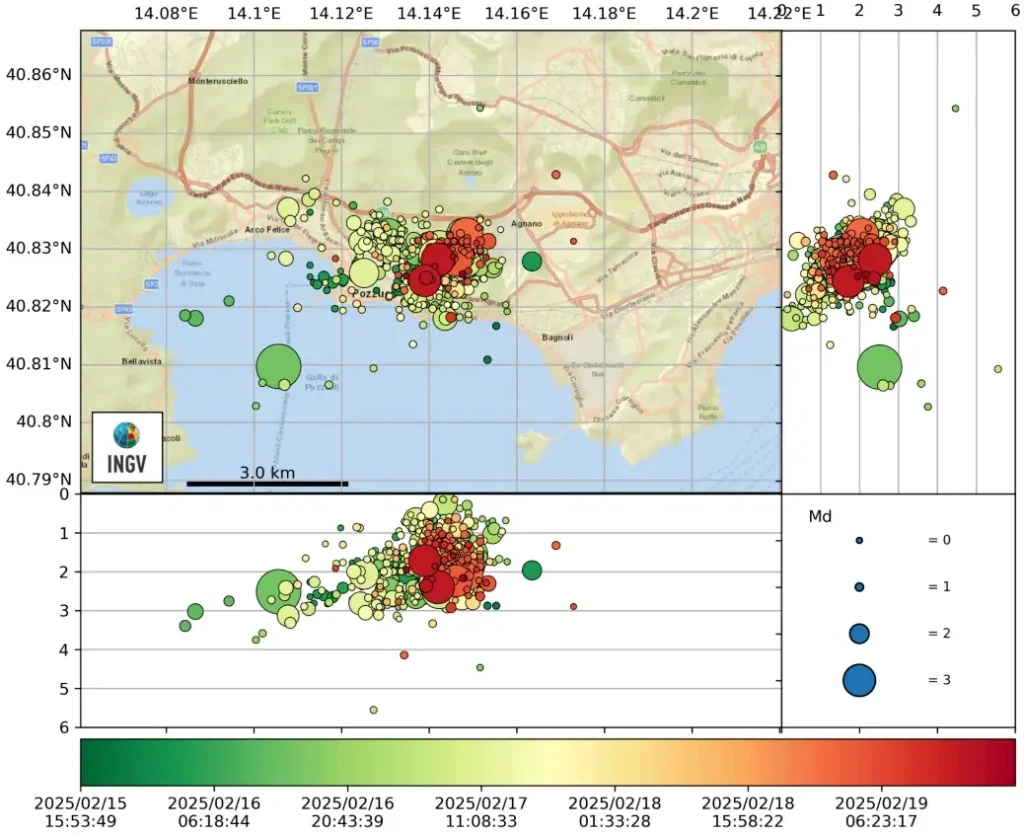
Over 600 earthquakes were recorded at Campi Flegrei, Italy, between February 17 and 23, 2025, with the largest measuring M3.2. Around 1 cm (0.4 inches) of ground uplift was observed in the area of maximum deformation, coinciding with the onset of an earthquake swarm on February 15.

Campi Flegrei - Sulfur and fumaroles at the Solfatara crater in 2003. Image credit: Donar Reiskoffer
Seismic monitoring stations near the Campi Flegrei caldera registered a preliminary total of 692 earthquakes in a swarm that started at 15:53 UTC on February 15 and ended at 23:53 UTC on February 19. Two more swarms of much lower intensity (less than 30 events) were registered over the next 3 days.
According to the latest weekly bulletin from the National Institute of Geophysics and Volcanology (INGV), the strongest earthquake of this period reached M3.2, with most activity centered in the Solfatara-Pisciarelli sector.
Notably, between February 15 and 16, a localized uplift of about 1 cm (0.4 inches) was observed, coinciding with the onset of a seismic swarm. However, no significant uplift changes have been detected since February 16.

Since August 2024, the average uplift rate at the RITE GNSS station—located in the zone of greatest deformation—has been about 10 ± 3 mm (0.4 ± 0.12 inches) per month. INGV data indicate the total uplift at RITE has reached roughly 21 cm (8.3 inches) since January 2024.

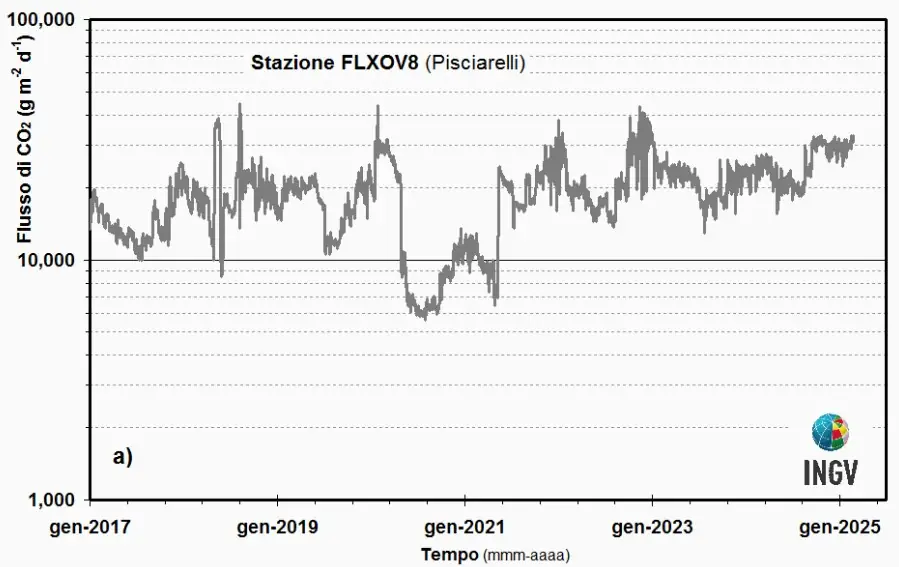
Geochemical parameters did not show substantial variations during the reporting period of February 17 to 23. The temperature sensor near the Pisciarelli fumarole measured a weekly average of about 97°C (206 °F), aligning with previously observed trends in hydrothermal heating and gas emissions.

Based on the current volcanic activity, there are no elements suggesting significant short-term developments, INGV said.
References:
1 Campi Flegri Bollettino Settimanale – INGV/Osservatorio Vesuviano – February 17 – 23, 2025

Teo Blašković founded The Watchers in 2011 and edited it until 2026, covering seismic and volcanic activity, extreme weather, space weather and near-Earth objects. Articles on this page are his archive.
Published in the last 24 hours
- A Virginia park ranger was struck by lightning seven times and lived, even though three of the strikes set his hair on fire Epicenter
- The hole in the ozone layer over Antarctica was about twice the size of the US this year, and scientists say it would have been bigger still if ozone-eating chemicals were at their 2000 levels Epicenter
