
Strong M6.6 earthquake hits New Ireland, Papua New Guinea
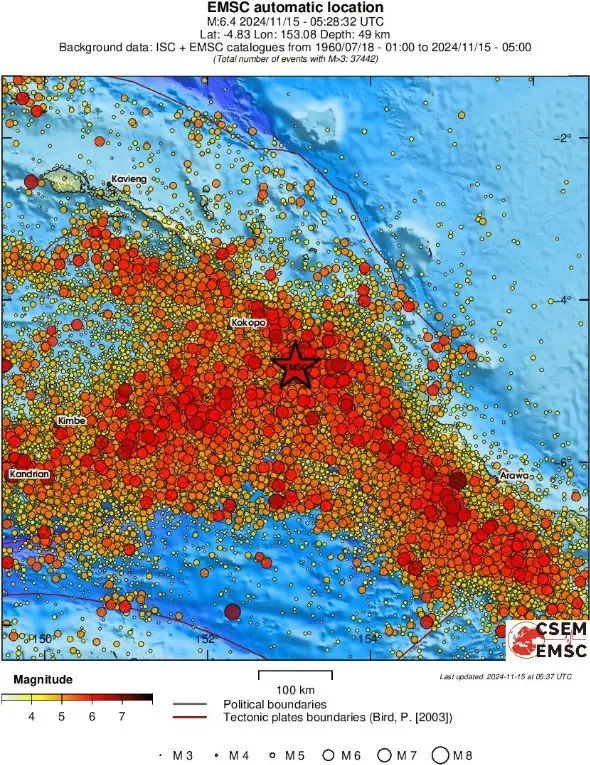
A strong earthquake registered by the USGS as M6.6 hit New Ireland region of Papua New Guinea at 05:28 UTC on November 15, 2024. The agency is reporting a depth of 52 km (32 miles). EMSC is reporting the same magnitude and depth.

Image credit: TW/SAM
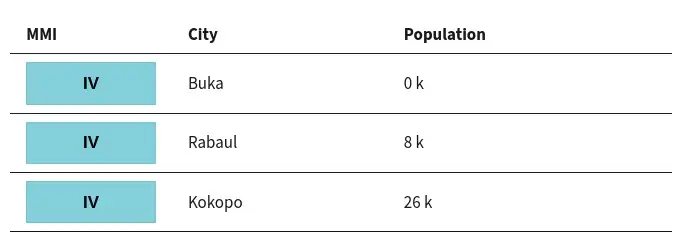
The epicenter was located 123 km (77 miles) ESE of Kokopo, East New Britain (population 26 273), 301 km (187 miles) NW of Arawa (population 40 266), Bougainville, Papua New Guinea.
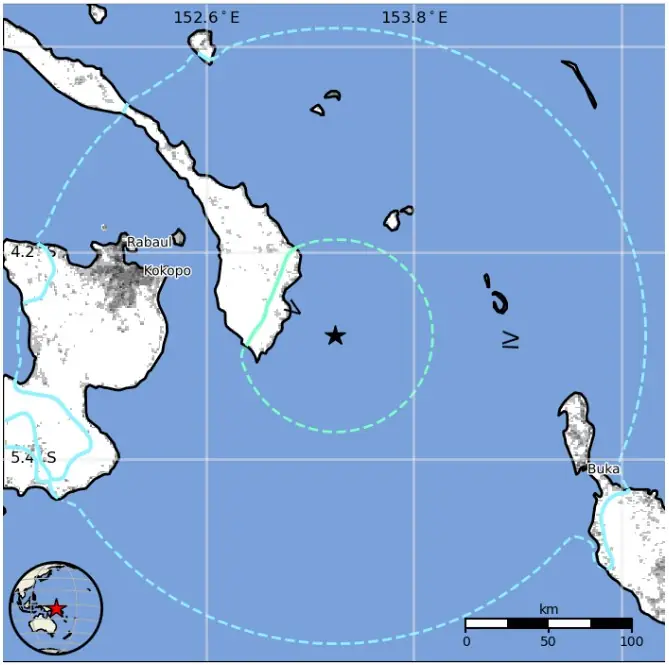
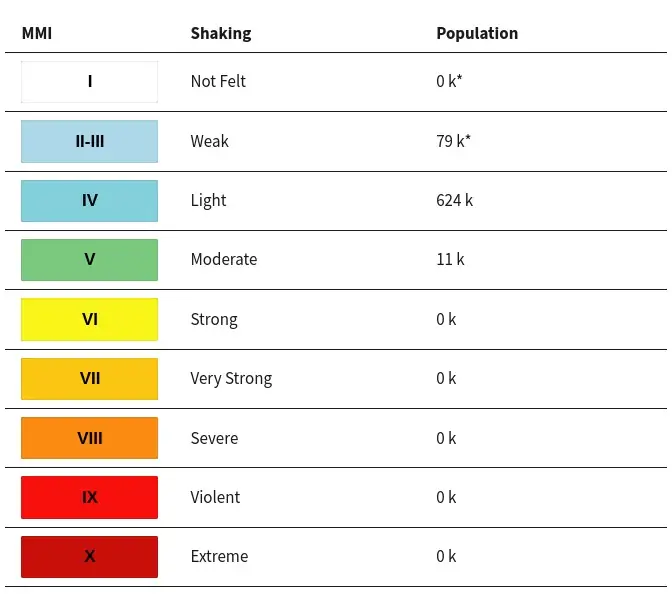
11 000 people were estimated to have felt moderate shaking, 624 000 light and 79 000 light.
Based on all available data, there is no tsunami threat from this earthquake, NWS PTWC said.
The USGS issued a Green alert for shaking-related fatalities and economic losses. There is a low likelihood of casualties and damage.
Overall, the population in this region resides in structures that are a mix of vulnerable and earthquake resistant construction. The predominant vulnerable building types are informal (metal, timber, GI etc.) and unreinforced brick masonry construction.
Recent earthquakes in this area have caused secondary hazards such as landslides that might have contributed to losses.
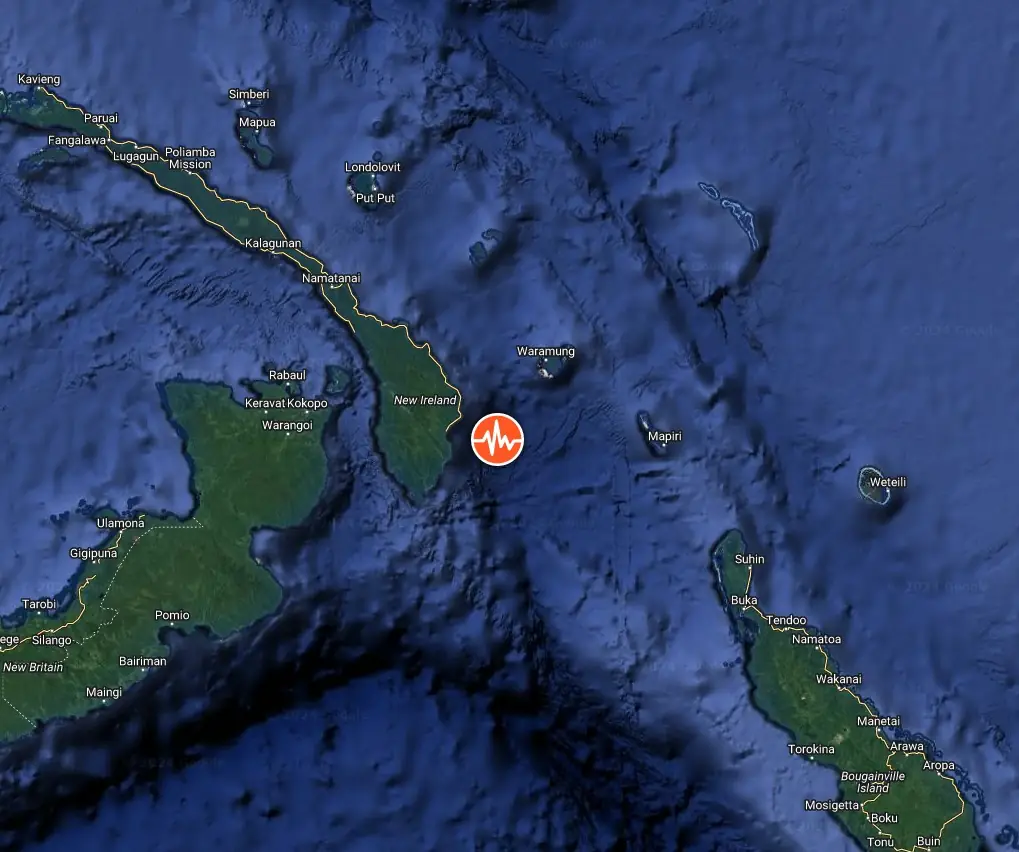
Estimated population exposure to earthquake shaking
Selected cities exposed
Regional seismicity
References:
1 M6.6 earthquake Papua New Guinea – USGS – November 15, 2024
2 M6.6 earthquake Papua New Guinea – EMSC – November 15, 2024
3 M6.6 earthquake Papua New Guinea – NWS/PTWC – November 15, 2024

Teo Blašković founded The Watchers in 2011 and edited it until 2026, covering seismic and volcanic activity, extreme weather, space weather and near-Earth objects. Articles on this page are his archive.
More reporting
- Pacific climate variability shapes Arctic sea ice but cannot reliably time its ice-free transition
- NASA turns California lidar surveys into high-resolution maps of wildfire fuel structure
- Fiber-optic sensing reveals hidden rupture stages inside a small California earthquake
- When atmospheric phenomena overlap, extreme rainfall intensifies under greenhouse warming
