
Filament eruption produces Earth-directed CME; S1 – Minor solar radiation storm in progres
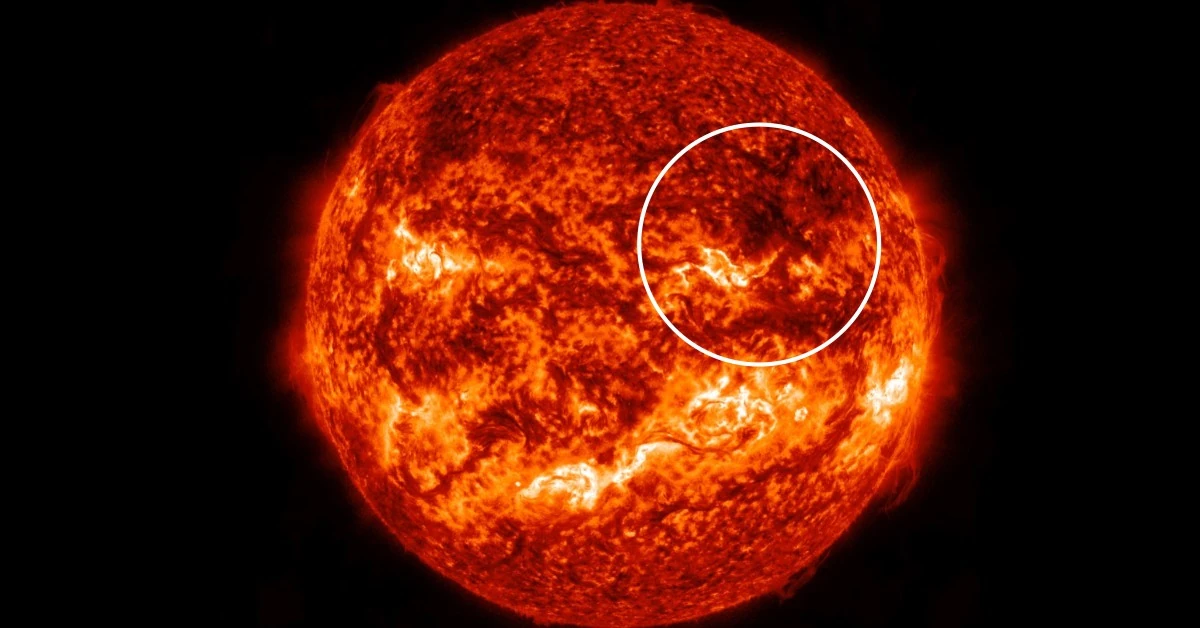
Image credit: NASA SDO/AIA 304, Helioviewer, The Watchers
Early on Sunday, September 8, 2024 (UTC), a magnetic filament erupted from the Sun’s northwest quadrant (N16W22), releasing an Earth-directed coronal mass ejection (CME). The CME is expected to impact Earth on September 10, potentially triggering a G2 – Moderate geomagnetic storm. Concurrently, heightened activity near the Sun’s west limb has caused a sharp increase in proton levels, resulting in an S1 – Minor solar radiation storm at 08:50 UTC today.
The CME was first observed in ESA/NASA LASCO C2 coronagraph imagery at approximately 01:36 UTC. Analysis and modeling of the CME suggests arrival to Earth by mid to late Tuesday, September 10.
G2 – Moderate geomagnetic storming is likely on September 10. Elevated activity is likely to persist into September 11, keeping G1 – Minor geomagnetic storm conditions likely throughout the first half of the day.
A G2 – Moderate geomagnetic storm can have several significant effects, particularly in high-latitude regions.
Power systems in these areas may experience voltage alarms, and prolonged storms can lead to transformer damage. Spacecraft operations might require ground control to take corrective actions regarding orientation, and changes in atmospheric drag can impact orbit predictions.
High-frequency (HF) radio propagation may also be disrupted at higher latitudes, potentially leading to communication issues. Additionally, auroras, typically visible in regions around 55° geomagnetic latitude, have been observed as far south as New York and Idaho during such storms.

Meanwhile, following recent activity near the Sun’s west limb, proton levels began increasing at 06:00 UTC on September 9, reaching the S1 – Minor solar radiation storm threshold by 08:50 UTC.

An S1 – Minor solar radiation storm has limited effects and poses no risks to biological systems or satellite operations. The only notable impact is a minor disruption to high-frequency (HF) radio communications in polar regions. These storms are relatively common, occurring about 50 times per solar cycle, but their effects are minimal.
An S2 – Moderate solar radiation storm can pose certain risks, particularly for biological systems and satellite operations.

References:
1 Forecast Discussion – NOAA/SWPC – Issued at 00:30 UTC on September 9, 2024

I'm a dedicated researcher, journalist, and editor at The Watchers. With over 20 years of experience in the media industry, I specialize in hard science news, focusing on extreme weather, seismic and volcanic activity, space weather, and astronomy, including near-Earth objects and planetary defense strategies. You can reach me at teo /at/ watchers.news.

Commenting rules and guidelines
We value the thoughts and opinions of our readers and welcome healthy discussions on our website. In order to maintain a respectful and positive community, we ask that all commenters follow these rules.