
Antarctic ozone hole is making its annual comeback
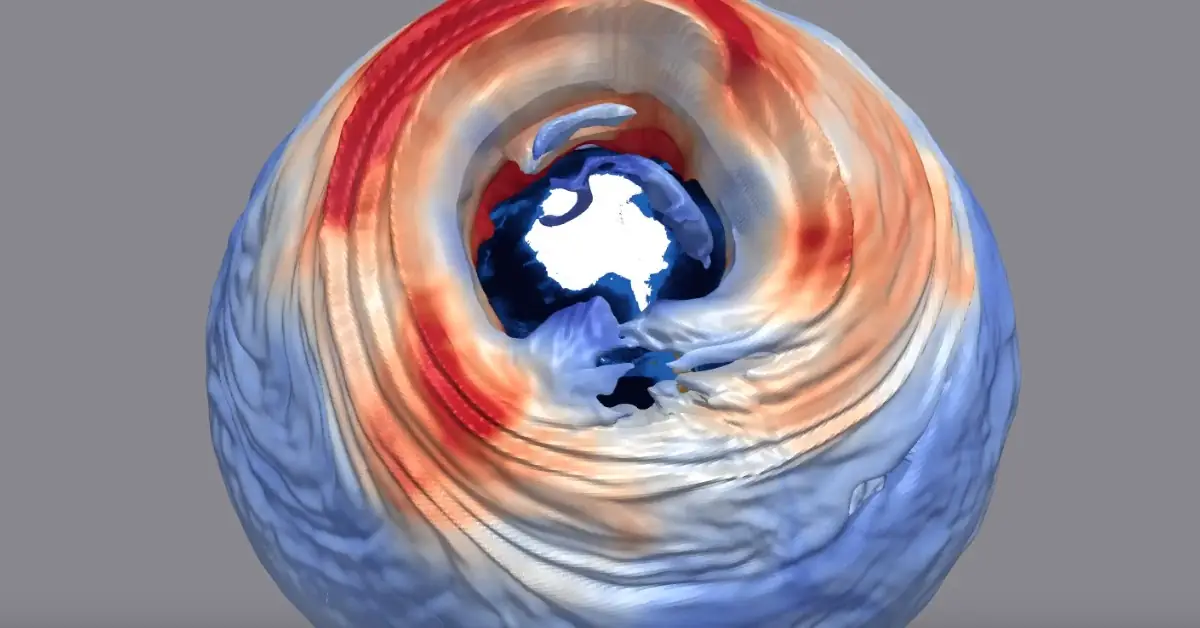
Image credit: CAMS
The Antarctic ozone hole is growing anew. This annual phenomenon, set to peak in September and October, causes dangerous UV rays to penetrate the Earth’s atmosphere deeper.
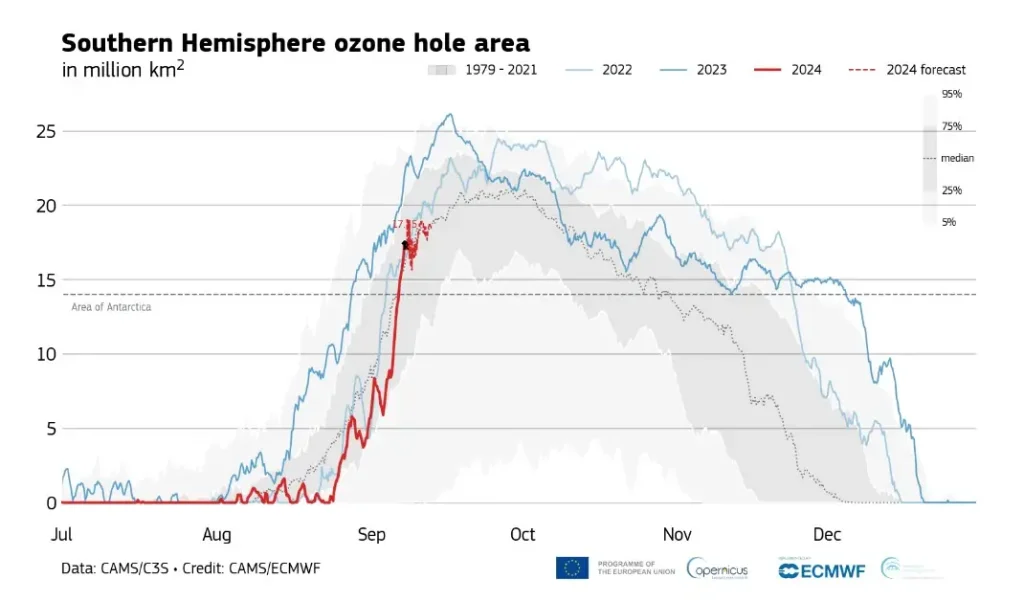
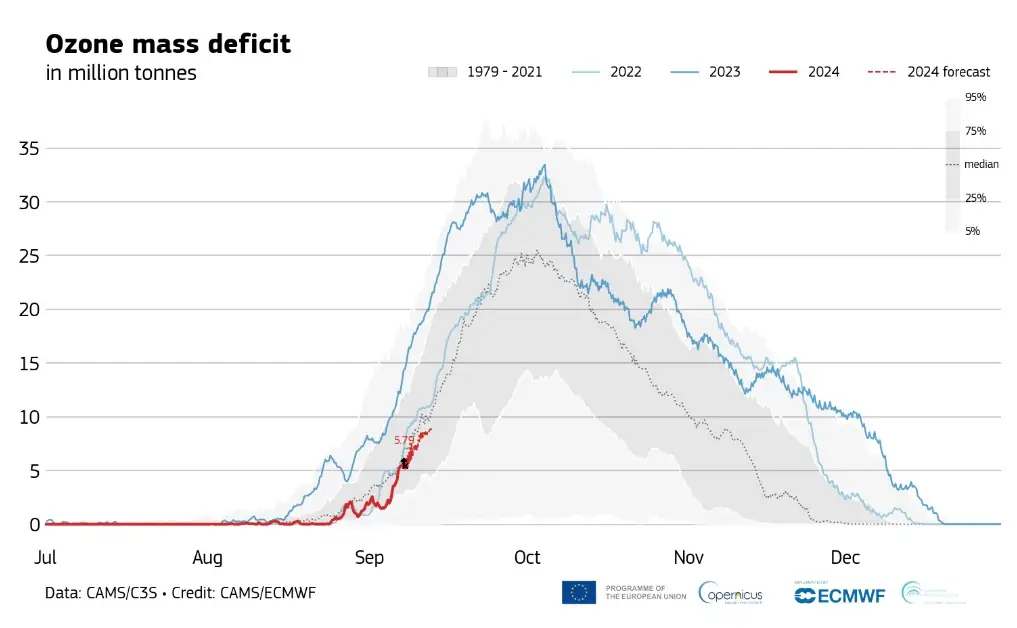
As the Southern Hemisphere enters spring, the ozone hole over Antarctica has started to form, leading to a significant depletion of ozone in the stratosphere. Monitoring has revealed that the ozone hole is expanding, with a peak size expected by mid-October.
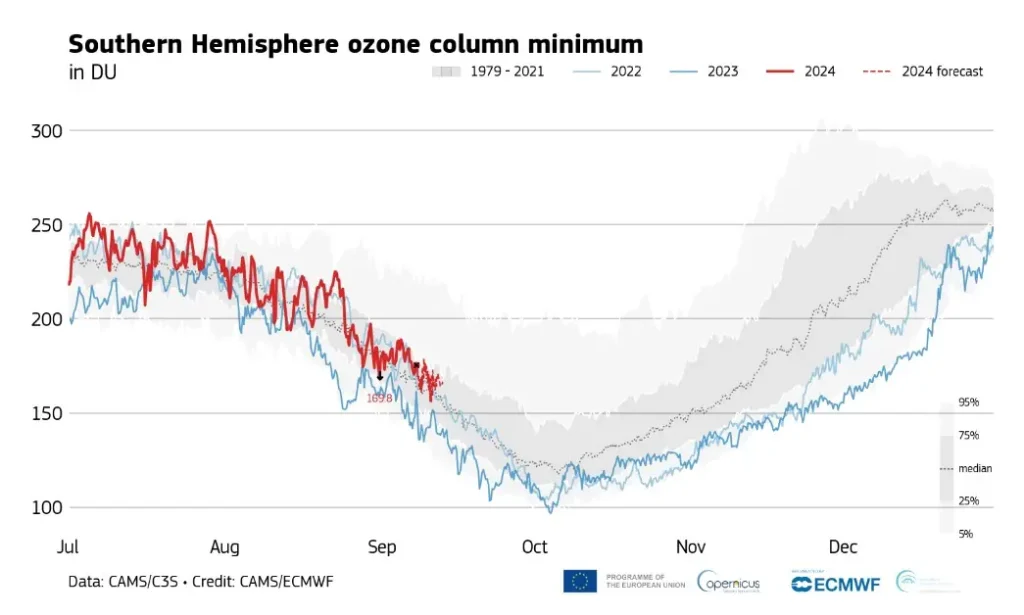
This reduction in ozone allows more harmful UV radiation to reach the Earth’s surface.
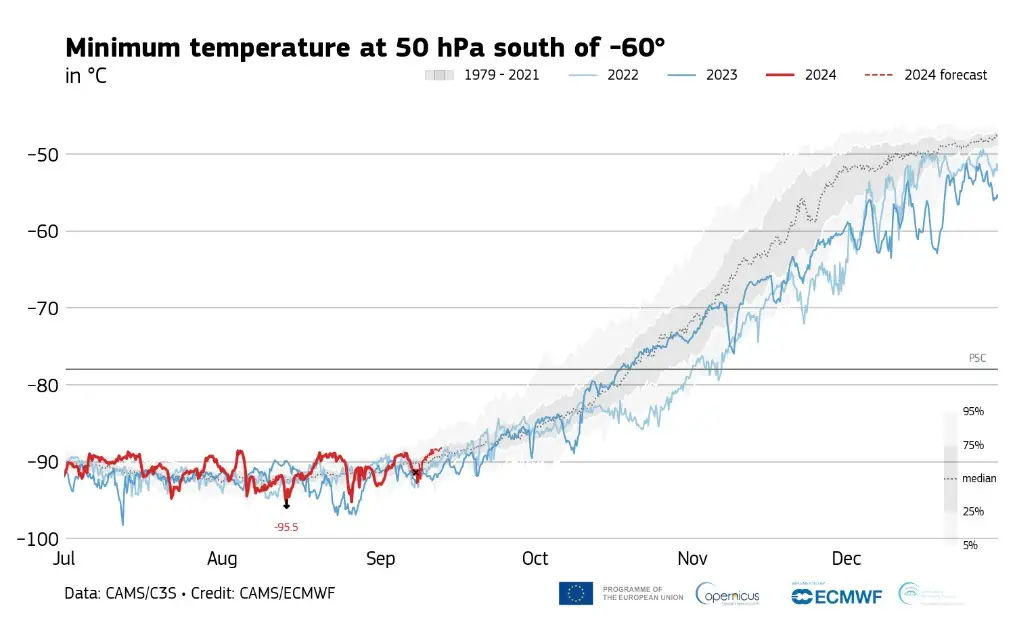
The decline in stratospheric temperatures over Antarctica facilitates the formation of polar stratospheric clouds, which play a critical role in ozone depletion.
These clouds enable chemical reactions between reactive chlorine and bromine, compounds that degrade ozone molecules. As sunlight returns to the Antarctic after the long winter, it triggers these chemical processes, worsening the depletion of ozone.
The ozone hole typically starts forming in August and continues to grow until it reaches its maximum size in September or October. Scientists monitor the hole from August to December, as ozone levels generally begin to recover by the end of the year.
References:
¹ Monitoring of the ozone layer – CAMS – Accessed September 9, 2024

Harsha Borah is an experienced content writer with a proven track record in the industry. Harsha has worked with LitSpark Solutions and Whateveryourdose, honing skills in creating engaging content across various platforms. A gold medalist in a state-level writing competition organized by Assam Tourism, Harsha’s travelogue on Tezpur was widely appreciated. Harsha’s article, "The Dark Tale of the Only Judge in India to Be Hanged," ranks second on Google and has garnered over 11 000 views and 8 900 reads on Medium. Outside of writing, Harsha enjoys reading books and solving jigsaw puzzles.
Earlier reporting
Nothing on Watchers was published in the last 24 hours. These are older articles.
- On October 22, 2017, a single flash of lightning stretched 515 miles from eastern Texas to near Kansas City, a distance that takes eight hours to drive, and nobody realized how far it had gone until scientists went back through the satellite data years later Epicenter
- CPC posts a slight risk of heavy rain from the Gulf Coast to the Northeast urban corridor November 25-29, and a moderate risk of West Coast wind and Sierra snow on November 25
- Florida's east coast faces a moderate flash flood risk Wednesday through Friday, with 4 to 8 inches of rain forecast and the St. Johns River near Cocoa already in major flood at 17.13 feet
- Cyclone Akvan to make landfall between Nellore and Visakhapatnam around noon on November 20, IMD forecasts 120-130 km/h winds gusting to 145
