
Study reveals precursors to the 2021 Fukushima earthquake through multi-parameter analysis
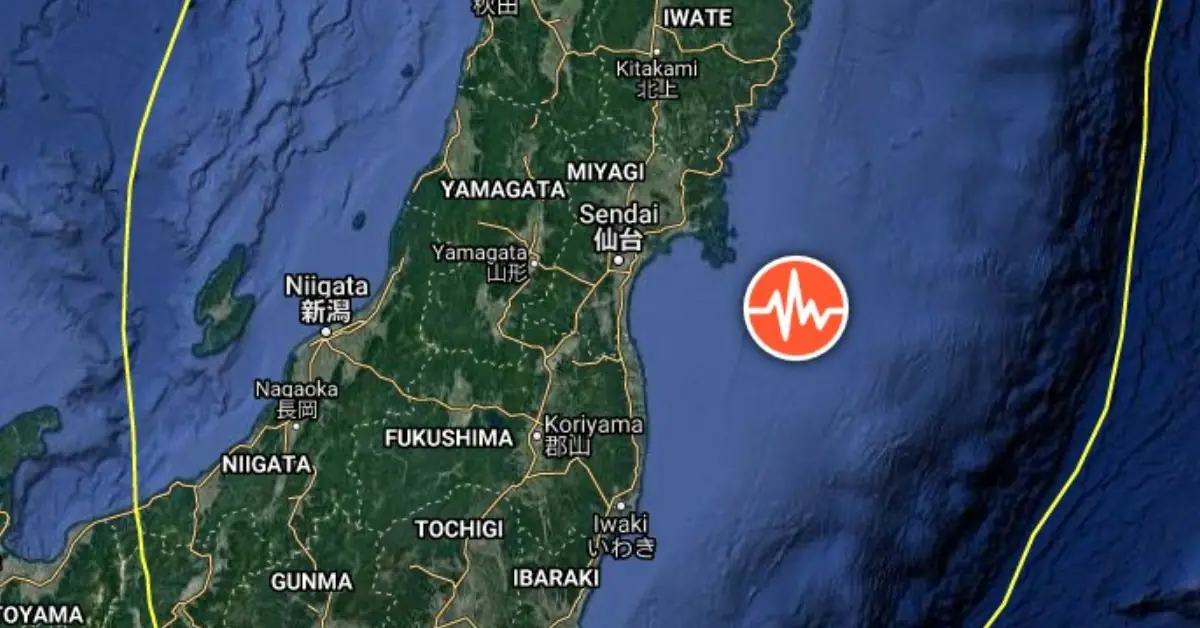
Image credit: TW/SAM, Google
A new study was conducted to understand the precursors to the 2021 Fukushima Prefecture Offshore Earthquake (Mj = 7.3), which occurred on February 13, 2021, off the coast of Fukushima, Japan, as an aftershock of the 2011 Tōhoku earthquake and tsunami. The investigation, led by Masashi Hayakawa and Yasuhide Hobara, focused on the Lithosphere-Atmosphere-Ionosphere Coupling (LAIC) channels and multi-parameter anomalies that occurred before the earthquake.
- The researchers identified precursory indications, such as ionospheric disturbances and atmospheric abnormalities, many days before the event.
- This study stressed the importance of constant monitoring and integrating diverse observational approaches to improve earthquake early warning systems, particularly in seismically active areas such as Fukushima.
Masashi Hayakawa and Yasuhide Hobara are the researchers who led the study of precursors to the Fukushima Offshore Earthquake (Mj = 7.3) that occurred at 14:07 UTC on February 13, 2021. Masashi Hayakawa is associated with the Hayakawa Institute of Seismo Electromagnetics, Co., Ltd. (Hi-SEM) and the Advanced Wireless & Communications Research Center (AWCC) at the University of Electro-Communications (UEC) in Tokyo, Japan. Yasuhide Hobara works at the Department of Computer and Network Engineering as well as the Center for Space Science and Radio Engineering at UEC. These researchers examined multi-parameter antecedents and Lithosphere-Atmosphere-Ionosphere Coupling (LAIC) pathways linked with the earthquake.
“The preparation phase of earthquakes (EQs) has been investigated by making full use of multi-parameter and multi-layer observations of EQ precursors, in order to better understand the lithosphere–atmosphere–ionosphere coupling (LAIC) process. For this purpose, we chose a specific target EQ, the huge EQ of Fukushima-ken-oki EQ on February 13, 2021 (magnitude Mj = 7.3),” the researchers stated.
On February 13, 2021, a massive earthquake measuring M7.3 (Mj = 7.3) struck off the coast of Fukushima, Japan. The earthquake happened nearly a decade after the devastating 2011 Tōhoku earthquake and tsunami, prompting fears about the risk of aftershocks and another major seismic event in the region. Before the quake, scientists noticed several precursory occurrences that could have foreshadowed the impending seismic activity.
These precursors included anomalies in different Earth parameters such as atmospheric temperature, surface latent heat flux (SLHF), outgoing longwave radiation (OLR), and ionosphere disturbances discovered via satellite studies.
The earthquake’s epicenter occurred offshore, along the coast of Fukushima Prefecture in Japan, which has been closely monitored due to its seismic history and vulnerability to tsunamis. The area is part of the Pacific Ring of Fire, a region recognized for its high seismic activity. It has been the subject of various studies to understand earthquake precursors better and enhance early warning systems.
Anomalies in several Earth parameters were discovered in the days preceding the earthquake, with some signs, such as ionospheric disturbances, recognized as early as six days before the disaster.
The abnormalities seen before the Fukushima earthquake are considered part of the LAIC mechanism, implying that changes in the Earth’s surface, atmosphere, and ionosphere are interconnected and can act as precursors to seismic occurrences.
For example, the escape of radon gas from the Earth’s crust owing to tectonic stress can cause variations in air temperature and humidity, influencing ionospheric conditions. These interrelated processes may provide early warning signs of an imminent earthquake; however, the exact mechanisms are still being investigated.
The detection of these precursors was made feasible by using satellite data, ground-based sensors, and other monitoring techniques. Satellites, such as those in the Swarm constellation, helped detect ionospheric disturbances, while ground-based GPS and climatological data shed light on surface and atmospheric anomalies.
The coordination of these observations enabled scientists to identify two potential LAIC channels: a “fast” channel, in which anomalies in the Earth’s surface and ionosphere coincided, and a “slow” channel, in which effects on the Earth’s surface propagated upwards to the ionosphere with a few days’ delay.
These findings stressed the need for continuous monitoring and the integration of diverse observational techniques in predicting seismic events, ultimately leading to the creation of more effective early warning systems. The study of Fukushima Offshore Earthquake precursors is an essential step toward improving the understanding of earthquake mechanisms and catastrophe preparedness in seismically active areas.
“Together with further studies of the mechanisms or channels of LAIC, it is highly necessary to work on an early earthquake warning system based on various geophysical parameters related to the different layers. Satellite data are a very promising and useful tool that can be used to study various types of possible pre-earthquake anomalies due to their wide global coverage and timeliness; further, the possible application of AI (artificial intelligence) to those satellite data (preferably together with extensive ground-based observational data) is of essential interest to the realization of such a short-term earthquake warning system, because of the recent developments in machine learning and fuzzy inference systems, and so on,” the researchers concluded.
References:
¹ Integrated Analysis of Multi-Parameter Precursors to the Fukushima Offshore Earthquake (Mj = 7.3) on February 13 2021 and Lithosphere–Atmosphere–Ionosphere Coupling Channels – Hayakawa, M.; Hobara, Y – Atmosphere 2024, 15, 1015 – August 21, 2024 – https://doi.org/10.3390/atmos15081015 – OPEN ACCESS

Harsha Borah is an experienced content writer with a proven track record in the industry. Harsha has worked with LitSpark Solutions and Whateveryourdose, honing skills in creating engaging content across various platforms. A gold medalist in a state-level writing competition organized by Assam Tourism, Harsha’s travelogue on Tezpur was widely appreciated. Harsha’s article, "The Dark Tale of the Only Judge in India to Be Hanged," ranks second on Google and has garnered over 11 000 views and 8 900 reads on Medium. Outside of writing, Harsha enjoys reading books and solving jigsaw puzzles.

Commenting rules and guidelines
We value the thoughts and opinions of our readers and welcome healthy discussions on our website. In order to maintain a respectful and positive community, we ask that all commenters follow these rules.