
Sulfur dioxide emissions from volcanic eruption in Iceland reach Europe
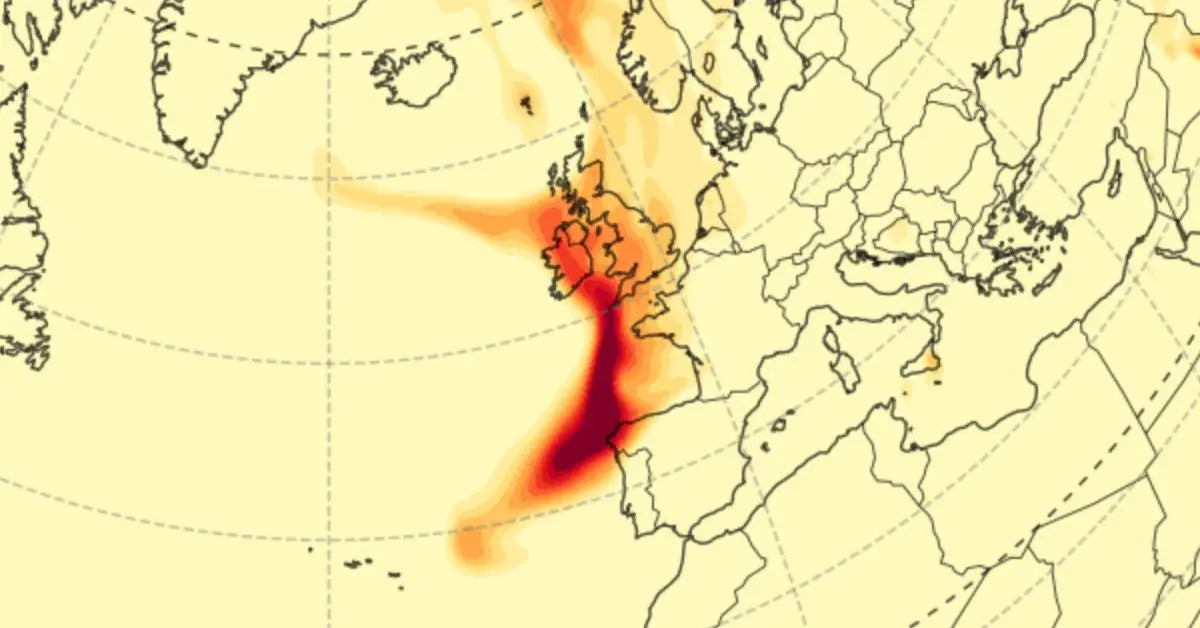
Image credit: CAMS
Sulfur dioxide (SO2) emissions produced by the new eruption in Reykjanes Peninsula, Iceland have reached Europe. The forecast and measured SO2 concentrations are currently below the recommended exposure threshold with no major impact on air quality and health.
This year’s sixth eruption in Reykjanes Peninsula began on August 22, producing significant SO2 emissions that crossed the North Atlantic and reached NW Europe on August 24, before moving further east.
According to Copernicus Atmosphere Monitoring Service (CAMS), satellite observations of the plume height indicate that the highest concentration is between 5 – 8 km (3 – 5 miles) in the atmosphere, but forecasts and surface measurement sites have also shown some increased concentrations of SO2 (up to 20 μg/m³) at ground level.
The forecasted and measured SO2 concentrations are below the recommended exposure threshold of 350 μg/m³ set by EU air quality standards and are not expected to have significant impacts on air quality or health.
“The Reykjanes Peninsula has been experiencing increased volcanic activity and eruptions, resulting in large plumes of sulfur dioxide in the atmosphere,” said CAMS Senior Scientist Mark Parrington.
“In CAMS, near-real-time satellite observations of the plumes allow us to track the SO2 in the atmosphere and analyze the possible impacts on air quality. The emissions from this episode have not been severe enough to significantly impact global atmospheric processes or human health, but documenting and monitoring each episode is important.”
According to the Icelandic Met Office (IMO) report issued on August 26, all data suggest that this eruption is the largest in the area since the unrest period began in the autumn of 2023.
“This assumption is based on measurements of the lava field so far and model calculations that estimate the amount of magma that propagated from Svartsengi to the Sundhnúkur crater row when the eruption started,” IMO said.
The eruption continues in the area northeast of Stóra-Skógfell. The activity has confined itself somewhat to one area in the northern part of the fissure that opened on the evening of August 22. The lava now flows mostly to the northwest in two main streams and its progress has slowed down considerably.
References:
1 Copernicus: SO2 emissions from Reykjanes volcano reaches Europe – CAMS – August 27, 2024
2 The largest eruption in the Sundhnúkur crater row – IMO – August 26, 2024

I'm a dedicated researcher, journalist, and editor at The Watchers. With over 20 years of experience in the media industry, I specialize in hard science news, focusing on extreme weather, seismic and volcanic activity, space weather, and astronomy, including near-Earth objects and planetary defense strategies. You can reach me at teo /at/ watchers.news.

Commenting rules and guidelines
We value the thoughts and opinions of our readers and welcome healthy discussions on our website. In order to maintain a respectful and positive community, we ask that all commenters follow these rules.