
Violent thunderstorms hit Switzerland
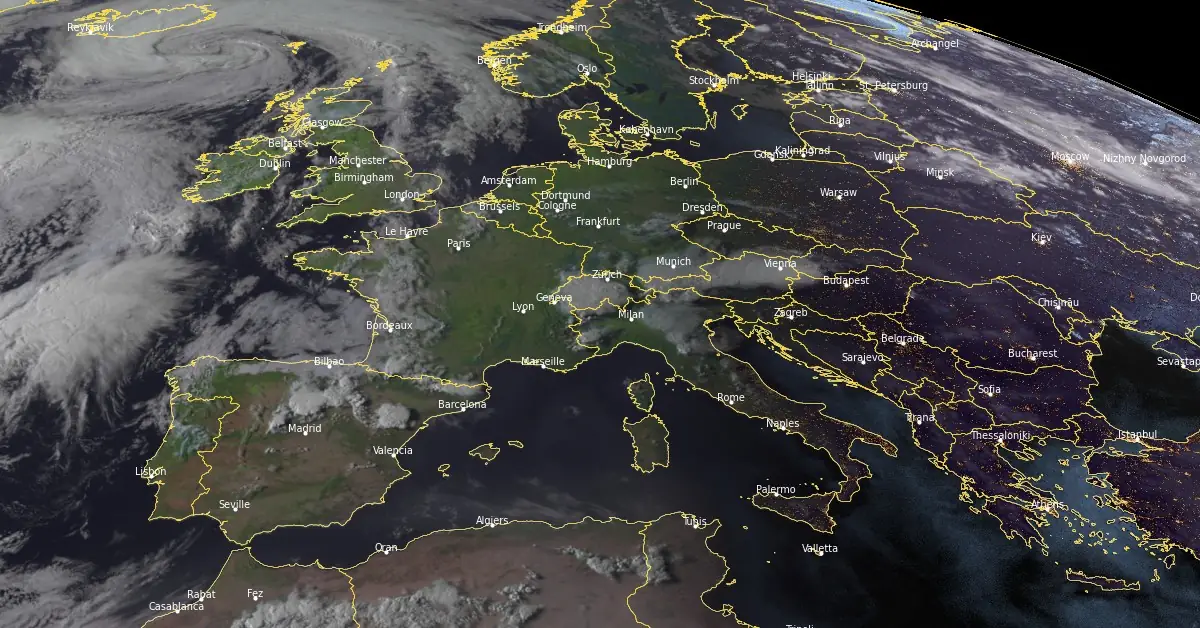
Image credit: EUMETSAT/Meteosat-10. Acquired at 17:00 UTC on August 12, 2024
Violent thunderstorms swept through Switzerland on Monday evening, August 12, 2024, causing significant disruptions, damage, and the evacuation of residents. The storms were accompanied by over 70 000 lightning strikes, heavy rainfall, and strong winds, resulting in widespread flooding, landslides, and mudslides.
MeteoSwiss recorded over 70 000 lightning strikes during Monday evening’s thunderstorms, a rainfall rate of 50 mm (1.97 inches) an hour and wind speeds up to 90 km/h (56 mph).
The village of Brienz, approximately 75 km (46.6 miles) southeast of Bern in Bern Canton, was among the hardest-hit areas. At around 18:30 local time (LT), the small Milibach River, swollen by torrential rains, burst its banks, carrying debris, boulders, and wood from higher elevations, and causing flooding and significant damage in the village. Cars were swept away, and the local train station was inundated.
Seventy residents were evacuated as a precautionary measure. No one was reported missing, and there were no injuries, according to the Regional Leadership Organization Upper Brienz (RFO).
However, some buildings sustained severe damage from the rushing waters, and the town’s passage was closed. Train and ferry services to Brienz were suspended, with buses providing replacement services.
Residents were advised to boil their drinking water for safety reasons. The full extent of the damage to infrastructure, including roads and bridges, remains to be assessed.
A landslide occurred on the Axenstrasse, a key road along the shores of Lake Lucerne between Flüelen and Sisikon, on Monday evening. The landslide forced the closure of the road, which is a crucial access point to the A2 freeway.
السيول شديدة على سويسرا اليوم
— Rashid_Almethen (@rashidalmethen) August 12, 2024
امطار شهر هطلت في يوم Brienz pic.twitter.com/jFPcTrMNYh
Switzerland: Scenes from the recent floods in Brienz, canton Bern on August 13, 2024 #floods #flooding #Flood pic.twitter.com/qsXgOTZeHo
— Dragonfly (@DragonflyTimes) August 13, 2024
#BREAKING #SWITZERLAND #SUISSE #LÉMAN #SUIZA
— LW World News (@LoveWorld_Peopl) August 13, 2024
SWITZERLAND : POWERFUL STORM HIT THE SHORES OF LAKE LÉMAN LAST NIGHT,
causing significant material damage.#Ultimahora #Storm #Tormenta #Tempête #Tempesta pic.twitter.com/bDIgyzhDvB
The Swiss Federal Roads Office (FEDRO) reported that helicopter flights were being used to assess the damage, particularly to check the integrity of rockfall protection nets and other infrastructure.
Monitoring instruments detected ground movements in the “Gumpisch” area at around 20:00 LT on Monday, leading to the road’s closure and traffic diversion.
Preliminary assessments indicated that no roads or bridges were damaged, and no injuries were reported.
The storms forced the diversion of 20 flights at Zurich Airport, and several departures were delayed. Airport employees could not continue preparing aircraft for departure due to safety regulations that prevent outdoor work during heavy thunderstorms.
In the canton of Aargau, emergency services were overwhelmed by the severe thunderstorms that struck between 20:30 and 23:00 LT on Monday. The region experienced heavy rain, gusty winds, and widespread flooding.
Around 30 fire departments responded to 150 emergency calls across the region. While there were no reports of injuries, the storm caused significant disruptions to transportation. On the morning of August 13, the railroad underpass at Wildegg and a secondary road at Murgenthal remained closed, with traffic detours in place.
References:
1 Swiss storms force evacuation of 70 people in Brienz – Swissinfo – August 13, 2024
2 More than 70,000 lightning strikes in Switzerland during storms – ASB – August 13, 2024

Rishav Kothari is Editor-in-Chief of The Watchers, where he runs the newsroom and covers earthquakes, volcanoes, severe weather and space weather.
Published in the last 24 hours
- In September 1859, a solar storm lit up the night sky so brightly that gold miners in the Rocky Mountains woke up after midnight and started cooking breakfast, convinced the aurora glowing over their camp was the sunrise Epicenter
- A patch of warm Pacific water that could become the strongest El Niño in more than 70 years sits thousands of miles from any American town, yet it is already the main reason NOAA expects a wetter winter across the South and a milder one across the North
- A 19-year-old Nebraska teacher reportedly tied her pupils together with twine and led them to safety through a blizzard in January 1888 Epicenter
