
Antarctica experienced record-low temperatures in late winter 2023, affecting critical operations
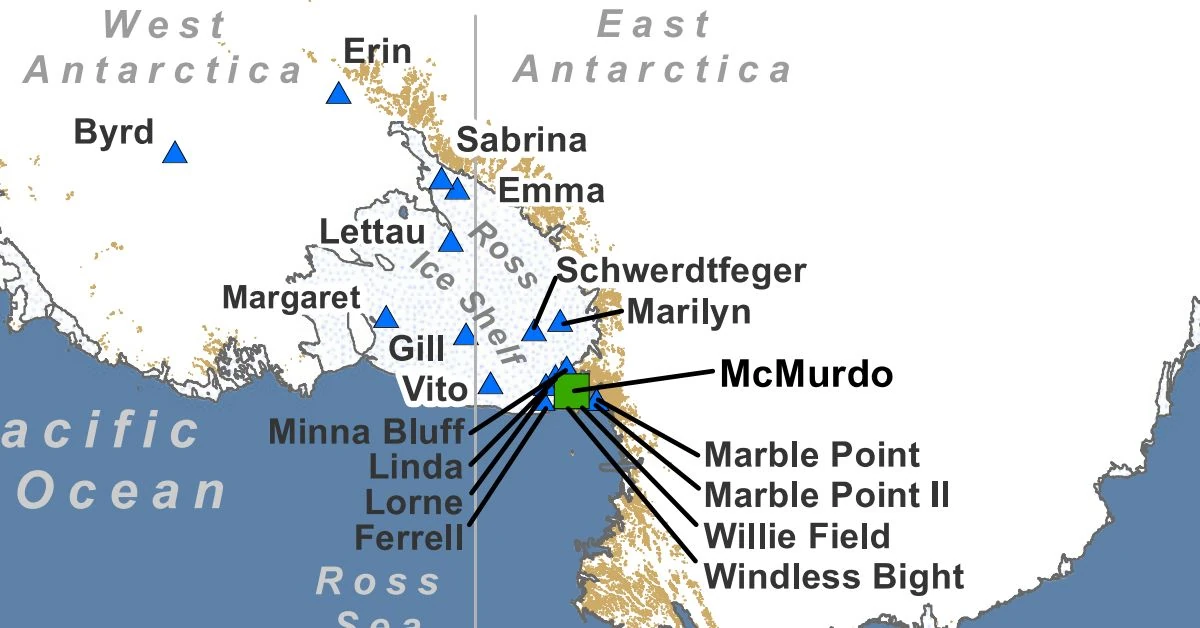
Image credit: AAS/Authors
In late winter 2023, Antarctica saw extraordinary cold spells that shattered local temperature records, with temperatures as low as -66.4°C (-87.5°F). The freezing weather affected critical operations, such as flights and cargo supplies to Antarctic research outposts.
- International researchers led by Anastasia J. Tomanek of the University of Wisconsin-Madison, studied the extreme cold in Antarctica between July 21 and August 24, 2023.
- West Antarctica, Marie Byrd Land, and the Ross Island Vicinity were all hit hard by the extreme cold. Atmospheric abnormalities, such as negative geopotential height deviations, contributed to record-low temperatures.
Antarctica endured extraordinary cold in July and August 2023, with record-low temperatures observed in many regions.
The cold wave was characterized by four distinct periods of severe temperatures, which mostly affected West Antarctica (WA), Marie Byrd Land (RIS), and the Ross Island Vicinity (RIV). Margaret AWS recorded the most extreme cold episode, with a minimum temperature of -66.4°C (-87.5°F), the region’s second-coldest on record.
These severe temperatures not only affected the weather patterns but also had a significant effect on logistics, which resulted in delayed flights due to risks of fuel gelling and hydraulic failure and hampered cargo supplies to McMurdo Station.
According to a study published in Advances in Atmospheric Sciences, this extreme cold occurred while temperature records were being broken worldwide, suggesting a significant climatic oddity.
The University of Wisconsin-Madison’s Antarctic Meteorological Research and Data Collection (AMRDC) network and the State Key Laboratory of Severe Weather AWS program monitored and recorded Antarctica’s extreme cold temperatures.
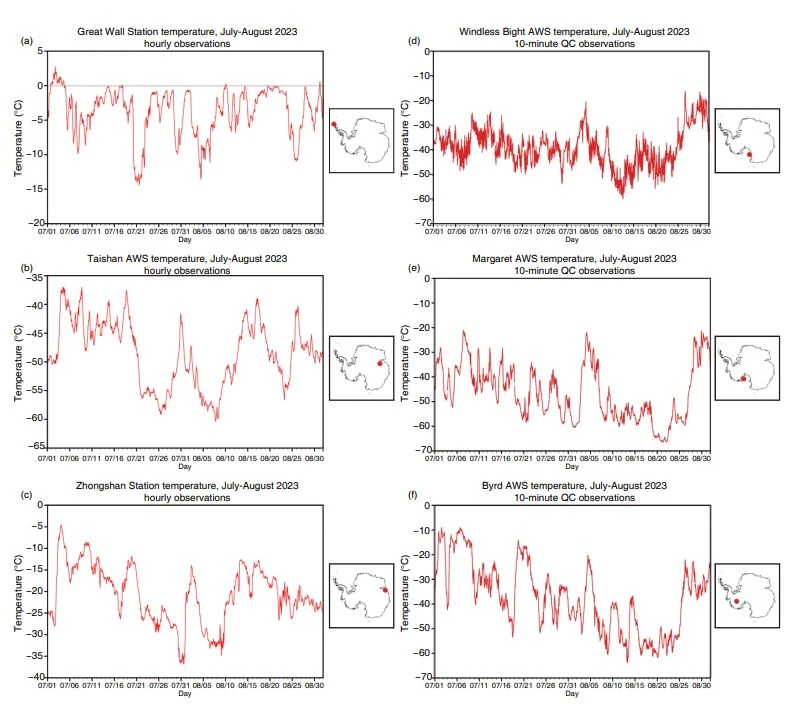

Many international researchers such as Matthew A. Lazzara of the University of Wisconsin-Madison and Professor Minghu Ding of the State Key Laboratory of Severe Weather at the Chinese Academy of Meteorological Sciences played important roles in this observation. Their findings were significant in documenting these cold periods and also their effects on Antarctic activities.
Certain areas within the three primary regions, such as Byrd AWS, Margaret AWS, and Windless Bight AWS, suffered some of the most extreme temperatures. The geographical dispersion of these cold anomalies demonstrated their impact across the Antarctic continent. Furthermore, Kunlun Station recorded its lowest temperature, -79.4°C (-110.9°F), which contrasted significantly with record-high temperatures in South America.
The frigid temperatures were observed over four major periods: July 21–23, July 31–August 1, August 10–13, and August 19–24, 2023. During each period, Antarctica as a whole experienced dramatic drops in temperature, contributing to the overall cold period witnessed throughout the winter. This extreme cold coincided with record-breaking high temperatures in South America, particularly in Chile where temperatures reached -40 ℃ (-40°F).
“A brief analysis of 500-hPa geopotential height anomalies shows how the mid-tropospheric atmospheric environment evolves in relation to these extreme cold temperatures. The monthly 500- hPa geopotential height anomalies show strong negative anomalies in August. Examination of composite geopotential height anomalies during each of the four cold phases suggests various factors leading to cold temperatures, including both southerly off-content flow and calm atmospheric conditions,” the researchers stated.
The severe cold was caused by important atmospheric anomalies. The ERA5 500-hPa geopotential height anomalies show that negative height anomalies over Antarctica occurred during the coldest temperatures.
The anomalies included strong negative deviations over the Bellingshausen Sea, Wilkes Land, and parts of East Antarctica. These atmospheric patterns caused severe and persistent cold, influencing weather systems and temperature variations across the continent. The study also found that southerly flows from the continent and calm air conditions contributed to these cold spells.
During the cold phases, substantial negative geopotential height anomalies were recorded, indicating lower air pressure and cooler temperatures. These anomalies were accompanied by positive height anomalies in some regions, such as the Ross Sea, which aided in the duration of cold weather.
The extreme cold conditions witnessed were the result of interactions between these atmospheric anomalies and Antarctica’s underlying topographical features. Data from the AWSs, together with atmospheric analysis, aided in understanding the reasons underlying the unusual temperature reductions.
“A further investigation into the origin of these anomalies may be worthy of future pursuit. Considering the monthly 500- 500-hPa geopotential height anomalies investigated in this study, the development of negative height anomalies, across the entire Antarctic, in August 2023, corresponded with when these extreme cold phases occurred,” the researchers concluded.
References:
1 Extreme Antarctic Cold of Late Winter 2023 – Tomanek, A.J., Mikolajczyk, D.E., Lazzara, M.A. et al. – Adv. Atmos. Sci. (2024) – https://doi.org/10.1007/s00376-024-4139-1

Harsha Borah is an experienced content writer with a proven track record in the industry. Harsha has worked with LitSpark Solutions and Whateveryourdose, honing skills in creating engaging content across various platforms. A gold medalist in a state-level writing competition organized by Assam Tourism, Harsha’s travelogue on Tezpur was widely appreciated. Harsha’s article, "The Dark Tale of the Only Judge in India to Be Hanged," ranks second on Google and has garnered over 11 000 views and 8 900 reads on Medium. Outside of writing, Harsha enjoys reading books and solving jigsaw puzzles.

Love the coverage on Antarctic cold snaps, but I spotted a few temperature mix-ups that need fixing. For instance, -40℃ is not -104℉ — it’s actually -40℉, where both scales do their handshake. Kunlun Station’s record low of -79.4℃ definitely isn’t 175℉ (that would be one hot cold!), but about -111℉. Also, the South America/Chile temps should be called record-breaking lows, not highs. Getting the numbers right matters — especially when trying to keep the climate conversation cool and credible!
Thank you, JK. Not sure how this passed through. Much appreciated!